[pci-cat-slider slidestoshow="4" exclude_cat="4" show_count="false"]
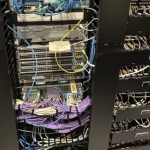
Futuristic data centre.

On-Site vs. Remote Smart Hands: Choosing the Right Support for Modern Data Centres

Futuristic data centre.

On-Site vs. Remote Smart Hands - Choosing the Right Support for Modern Data Centres

Data centres are crucial for modern digital operations, from streaming services to essential financial transactions. Their upkeep requires more than automated tools or remote software intervention. Smart hands—trained professionals who can handle physical tasks—are a valuable resource for maintaining smooth operations. This article examines two main approaches to smart hands support: on-site teams versus remote services, and how to decide which is best for your data centre.

What Are Smart Hands?

Smart hands are technical support personnel capable of carrying out hands-on tasks within a data centre environment. They may assist with installing or removing hardware, handling rack-and-stack operations, managing cables, and rebooting devices. Even routine jobs become pivotal when time zones, location constraints, or strict time-to-resolution goals come into play. While some organisations keep these smart hands on the premises, others rely on remote providers or local partners who can handle work on demand.

On-Site Smart Hands

Having professionals physically present in the data centre offers a few notable advantages. An on-site team can respond immediately to emergencies without waiting for external parties. By inspecting the infrastructure directly, they can quickly assess cable connections, identify hardware faults, and make rapid repairs. In addition, in-person interaction fosters stronger collaboration with an internal IT team.


However, there are potential drawbacks. Maintaining an on-site workforce can become expensive, especially if operating in regions with high labour costs. Each data centre location may need its own dedicated staff, and expanding to new facilities often requires additional hires. This approach may also lack flexibility if a company’s footprint spans multiple continents.

Remote Smart Hands

Remote smart hands rely on technology-driven processes and service-provider networks to support your data centre without being physically present at all times. This can be a cost-effective solution since you only pay for the services you need. It also eliminates the geographical barriers that come with an internal team; issues can be addressed in data centres around the globe without deploying new employees or contractors. This approach is particularly scalable and makes it easier for organisations to launch or maintain multiple facilities.


On the other hand, remote solutions have certain limitations. Extremely detailed or complex physical problems—like major cable rewiring or diagnosing unusual hardware damage—may require on-site expertise. Coordination can sometimes slow down if staff, local partners, or third parties are in different time zones or subject to scheduling conflicts. A high level of trust is also essential because you’re relying on external professionals to carry out critical procedures on your behalf.

Key Factors to Consider

When deciding between on-site and remote smart hands, there are several factors worth weighing. Infrastructure complexity is an important consideration: highly specialised deployments with unique hardware may benefit from on-site experts, whereas standardised environments often work well with remote services. Budget constraints also play a role, with on-site teams typically demanding more overhead in areas such as salaries, benefits, and training. Service-level agreements can affect your choice if downtime is prohibitively expensive; on-site teams may offer faster direct interventions, but a well-organised remote service might meet the same needs. Finally, the geographic distribution of your data centre footprint influences costs and logistics. If your business manages facilities across continents, a remote or hybrid approach might balance flexibility and efficiency.

To recap:

Smart hands are indispensable for addressing the physical components of data centre management. The choice between on-site and remote support hinges on an organisation’s budget, operational complexity, and response time requirements. Evaluating these needs and conducting a thorough cost-benefit analysis will help determine whether an in-house team or a remote service is the more fitting option. A careful approach ensures your data centre remains reliable, scalable, and well-equipped to meet the ever-growing demands of today’s digital landscape.

Future of data centres thumbnail.

The Future of Data Centres: Relocation, AI-Driven Management, and Sustainable Growth

Future of data centres.

The Future of Data Centres: Relocation, AI-Driven Management, and Sustainable Growth

Data centres are the engines of our digital world. They power everything from streaming platforms to financial transactions and cloud computing services. As data processing and storage demands grow, many organisations consider data centre migration to optimise costs, ensure compliance with local regulations, and access more sustainable energy sources.

AI at the Core of Data Centre Management

AI is transforming how data centres operate. Traditional manual oversight is giving way to sophisticated machine learning systems that automate processes, predict failures, and respond to threats in real time.

Automated Resource Allocation

  • AI monitors server workloads dynamically
  • Algorithms detect bottlenecks and rebalance tasks
  • Idle servers enter low-power modes to conserve energy

Predictive Maintenance

  • Sensors track temperature, vibration, and fan speed
  • Machine learning identifies hardware issues early
  • Pre-emptive repairs reduce downtime and costs

AI-Enabled Security and Threat Detection

  • AI models analyse network traffic for suspicious activity
  • Systems learn from prior attacks to identify evolving threats
  • Automated responses swiftly isolate compromised resources

The Need for Relocation and New Deployment Strategies

High demand for data processing capacity drives new data centre construction. However, cost, sustainability, and latency considerations heavily influence where facilities are built—whether in remote, cooler areas for energy efficiency or nearer to large user bases for reduced latency.

Proximity to Renewable Energy

  • Powering and cooling servers consumes large amounts of electricity
  • Locating facilities near hydro, solar, or wind power can lower carbon footprints
  • Cool climates naturally reduce cooling requirements

Lower Latency and Edge Computing

  • Not all data centres can move to remote areas; some must remain near dense user populations
  • A “core-and-edge” model places large-scale processing in centralised hubs and smaller edge facilities close to cities

Regulatory Considerations and Data Sovereignty

  • Governments regulate where and how data is stored
  • Operators must plan network routes that meet jurisdictional requirements
  • Smaller, region-specific facilities may be built to comply with local laws

Sustainability and Energy Efficiency

Environmental responsibility and cost management are key in modern data centre design and operations.

Innovative Cooling Techniques

  • Liquid, evaporative, and submersion cooling reduce power consumption
  • AI pinpoints hotspots and applies targeted cooling
  • Weather data helps optimise cooling strategies daily and seasonally

Smarter Facility Design

  • Thermal modelling shapes building orientation and heat dispersion
  • High-efficiency materials and layouts reduce environmental impact
  • AI simulations predict energy usage before expansions or major layout changes

End-of-Life Hardware Management

  • AI tracks hardware performance, suggesting upgrades or replacements
  • Eco-friendly disposal or recycling supports corporate sustainability goals
  • Older GPUs can be repurposed for specialised tasks once they’re no longer needed for primary workloads

Collaborative Ecosystems

Modern data centres rarely operate in isolation. They function within a wider network that includes:

  • Hybrid Cloud Solutions: Managing workloads across public and private clouds
  • Colocation Services: Shared facilities maintained by specialised operators
  • Research Collaboration: Academic and corporate partnerships reliant on high-performance computing clusters

The Next Decade: A Convergence of Technologies

As IoT, 5G/6G, and AI evolve, data centres will adapt in several ways:

  • Modular Construction: Easily deployed and scaled facilities
  • Green Initiatives: Zero-carbon goals and advanced cooling measures
  • Edge Intelligence: AI-driven processing at the edge for real-time local results
  • Hyper-Scalable Architecture: Automatic provisioning of resources based on predictive analytics

Recap

Data centres form the digital backbone of a rapidly interconnected world. Their future depends on AI-driven management, sustainable infrastructure, and strategic expansions or redesigns. By embracing cutting-edge cooling techniques, robust security, and compliance with evolving regulations, the next generation of data centres will stand ready to meet growing global demand.