
Project Manager – EMEA – DataMove
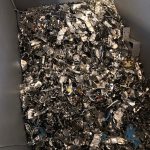
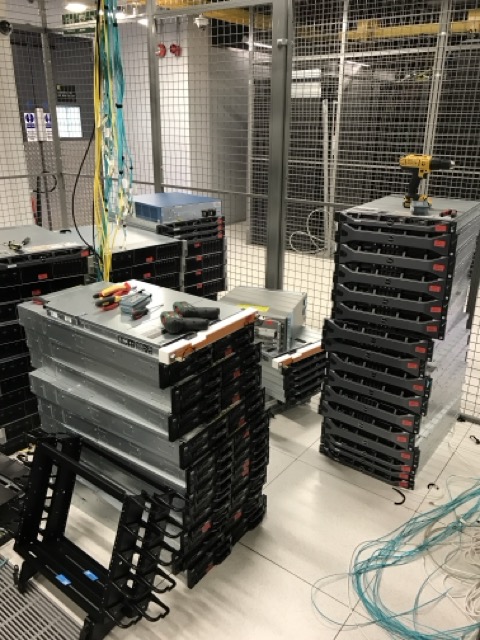
I once watched a client shred a full 42U rack of fourteen-month-old servers.
Not the drives. The lot. Chassis, rails, PSUs, memory, the whole rack. The contract they’d been bought for changed, the kit was surplus, and someone in the chain advised that the safe thing was to destroy it. So they paid to destroy hardware that had been in service for just over a year.
Nobody involved did anything wrong, exactly. That’s what makes it worth writing about.
Why “destroy everything” is the default answer
Ask most IT asset disposal providers what to do with redundant kit and you’ll get a very consistent answer: secure collection, certified destruction, a certificate, WEEE compliance, done.
It’s a good answer. It’s also the easy one.
Destruction is simple to price, simple to deliver and simple to evidence. There’s no market to read, no condition assessment, no buyer to find. It’s billable work with a predictable margin and it ends the conversation.
Resale is the opposite. It requires knowing what the kit is worth this month rather than last year, whether the configuration is one anybody wants, and who is actually buying. That’s harder, and it’s a conversation a lot of providers would rather not open.
So the advice you get is rarely wrong. It’s just rarely the whole picture.
The economics have moved, and most disposal policies haven’t
Here’s what’s changed. Memory is scarce. The AI build-out is consuming every chip being made, and that has pushed up the value of components that were close to worthless eighteen months ago.
I don’t say that as market commentary. I say it because we get cold-called by brokers wanting decommissioned servers and parts, unprompted, on a regular basis. People are ringing round looking for exactly the kind of equipment most companies are paying to have destroyed.
Meanwhile a lot of disposal policies were written when replacement hardware was cheap and abundant. Those policies are still being followed. The market has moved underneath them.
The actual decision
There are really only three questions.
Does it hold data? If it does, nothing happens until that’s resolved. This is the part nobody should compromise on.
What is it worth in the condition it’s in? Not what it cost. What someone will pay for it now, in that configuration, with that age on it. A populated storage array, a rack of current-generation switches and a five-year-old 1U server are three completely different conversations.
What does destruction cost you? Both the fee and the value you’re writing off. If you’re paying to destroy something with a resale value, you’re paying twice.
Most organisations answer the first question properly and skip the other two.
Certified erasure is what makes the choice possible
This is the part that gets missed.
You cannot sell a data-bearing drive you can’t prove was wiped. No credible buyer will take it, and if they do you’ve created a problem worse than the one you solved.
So certified erasure isn’t an alternative to destruction — it’s what opens up the option. Wiped to a verifiable standard, with a certificate against the serial number, a drive becomes an asset again. Without that, destruction genuinely is the only responsible route.
Which means the erasure decision comes before the disposal decision, not after it. Get that order wrong and you’ve already chosen destruction whether you meant to or not.
Sometimes destruction is right
I’m not arguing that everything should be resold.
Some kit is genuinely finished. Some configurations nobody wants. Some contracts and some regulators require physical destruction regardless of what the hardware is worth, and where that’s the case the conversation is over.
The expertise isn’t in always recovering value. It’s in knowing which pile something belongs in — and being willing to say so even when the easier answer pays better.
The question worth asking
If someone is advising you to destroy an entire estate, it’s worth asking what else they considered, and what it would have been worth if they hadn’t.
You might get a good answer. Plenty of kit really is scrap. But if the answer is vague, or if nobody can tell you what the equipment is worth, that’s telling you something too.
What’s the most valuable thing you’ve watched a company put in a skip?