Data centre decommissioning is the controlled shutdown and removal of IT infrastructure — servers, storage, network equipment, racks and the power and cooling that supports them — with the data dealt with securely and every item accounted for. DataMove decommissions everything from a single rack to a full facility across the UK, Europe and 58+ countries. And because relocation is our core business, we can move what’s staying and decommission what isn’t in the same project.
When decommissioning is needed
Most decommissions happen because something else is changing:
- Consolidation — several sites or suites reduced to fewer
- Cloud migration — workloads moving off owned hardware
- Colocation exit or lease end — a contract finishing, with a fixed handback date
- Technology refresh — older equipment replaced with newer, denser kit
- Closure — a site, office or business shutting down
Each comes with a hard date, which is why decommissioning is best planned alongside the move rather than after it.
What we decommission
Rack and blade servers, storage arrays and NAS, tape libraries and backup appliances, switches, routers, firewalls and load balancers, KVMs and console servers, cabling, PDUs, racks and cabinets — and the infrastructure that supports them: UPS systems and batteries, cooling units and power distribution. Where a project needs specialist mechanical and electrical removal, we bring in trusted partners, so it still runs as one project with one point of contact.
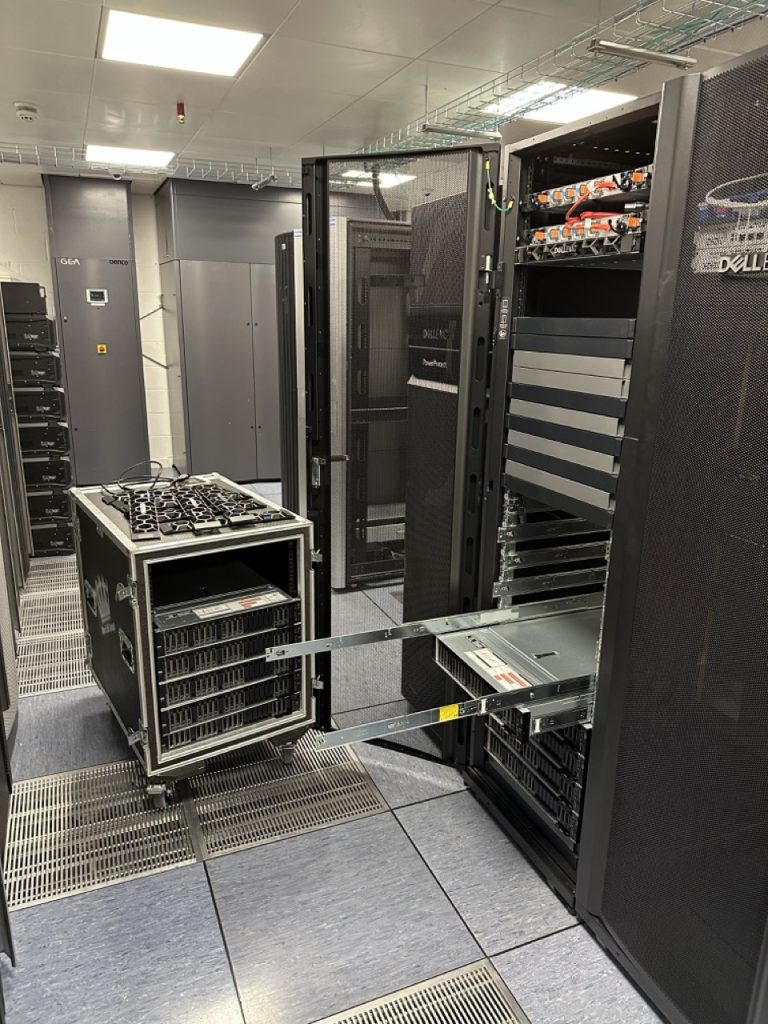
How we decommission a data centre
1. Survey and plan. We walk the site, confirm access, loading and lift arrangements, and agree the sequence — including anything that has to stay live while the rest comes out.
2. Audit before anything moves. Every item is recorded individually — make, model, serial number and condition — so there’s a complete record of what was there before a single cable is pulled.
3. Power down and de-rack. Equipment is powered down to an agreed plan, de-cabled and removed. In live environments we work in phases to your change control, so running systems aren’t disturbed.
4. Deal with the data. Data-bearing drives are erased to a recognised standard or physically destroyed, with a certificate for every drive.
5. Move, resell or recycle. Equipment you’re keeping is relocated in our own flight cases. Equipment with value is sold through our buyer network. Everything else is recycled under the WEEE Regulations, with batteries handled as hazardous waste.
6. Hand back. The space is left clear and you receive the full documentation pack.
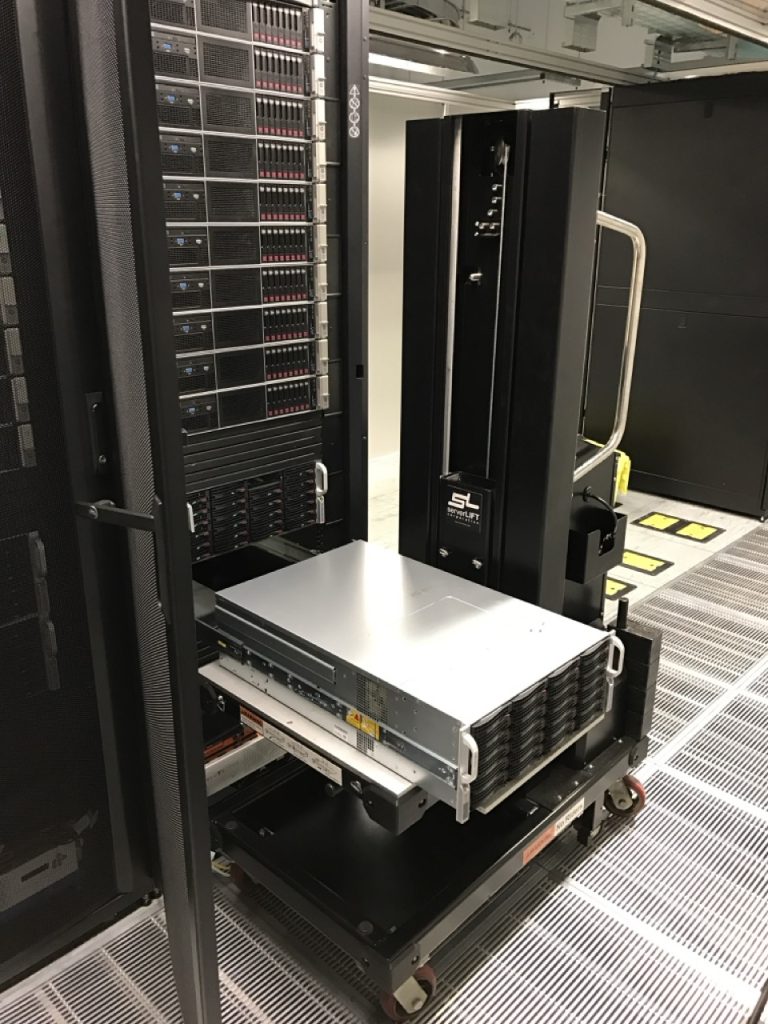
Decommissioning and relocation in one project
Most decommissioning specialists are recycling or disposal firms. They’re good at removing what’s leaving, but they don’t move what’s staying. Data centre relocation is what we do, so a consolidation or colocation exit can be handled by one team: the equipment you’re keeping goes to its new home, the rest is decommissioned, and there’s one chain of custody across both.
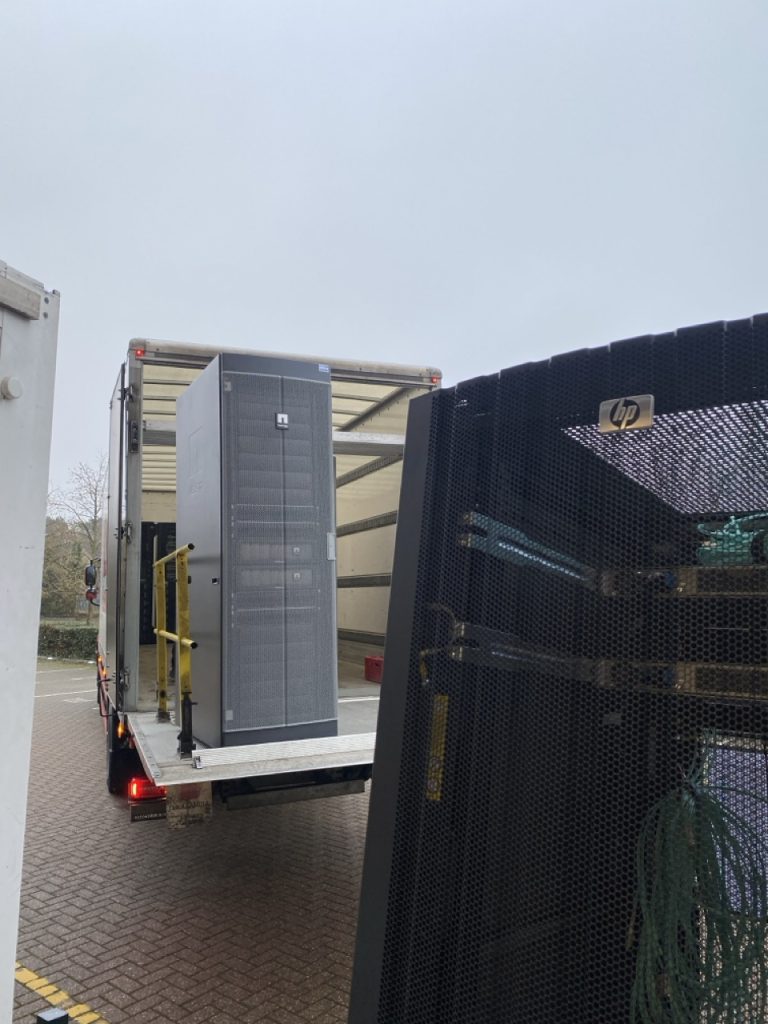
Certified data erasure and destruction
Data-bearing media is erased to NIST SP 800-88, in line with NCSC guidance, using Blancco and ZipErase. Where a drive can’t be erased successfully, it’s physically destroyed to DIN 66399. Every drive gets its own certificate, recorded against its serial number, with a tamper check so it can be verified later.
Recovering value from decommissioned equipment
Decommissioned doesn’t mean worthless. Servers, storage and network equipment a few years old often have real resale value, and scarce memory and components have pushed prices up. Rather than offer a single figure, we take offers from several trusted buyers suited to the hardware, put them in front of you, and pass the proceeds on. Where equipment is genuinely at end of life, it’s recycled — and we’ll tell you honestly which is which.
What you receive
- A full asset register with serial numbers and condition
- Erasure and destruction certificates for every data-bearing drive
- WEEE waste transfer documentation
- Hazardous waste consignment notes for UPS batteries
- A signed chain of custody from collection to final destination
Cross-border decommissioning
For organisations exiting sites in more than one country, we decommission across the UK and Europe as a single project, handling the export paperwork where equipment is moved or resold across borders.