
Project Manager – EMEA – DataMove
A secure IT clearance turns on one question, and it is not the one most people expect. Here is a situation that comes up more often than you would think.
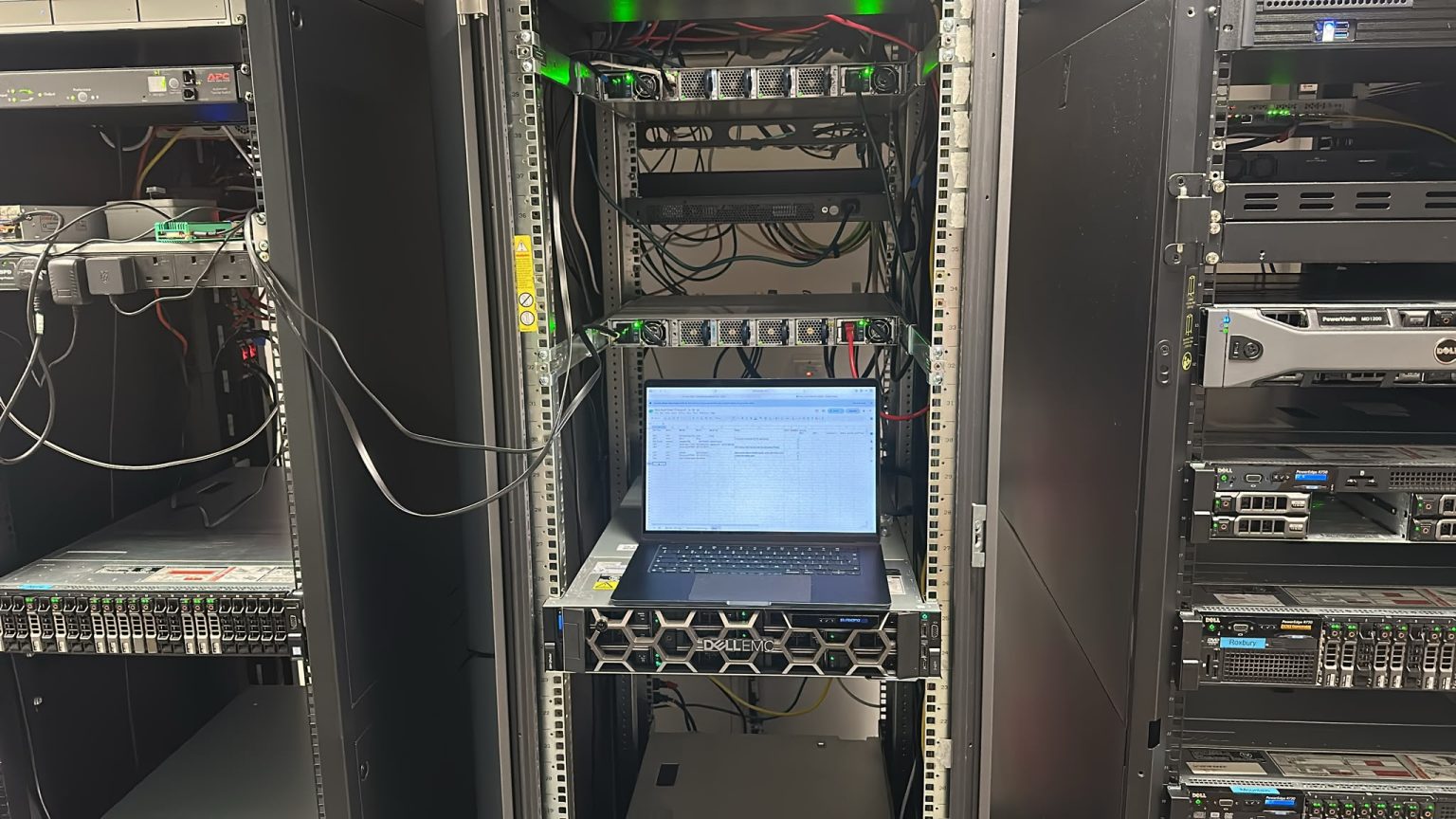
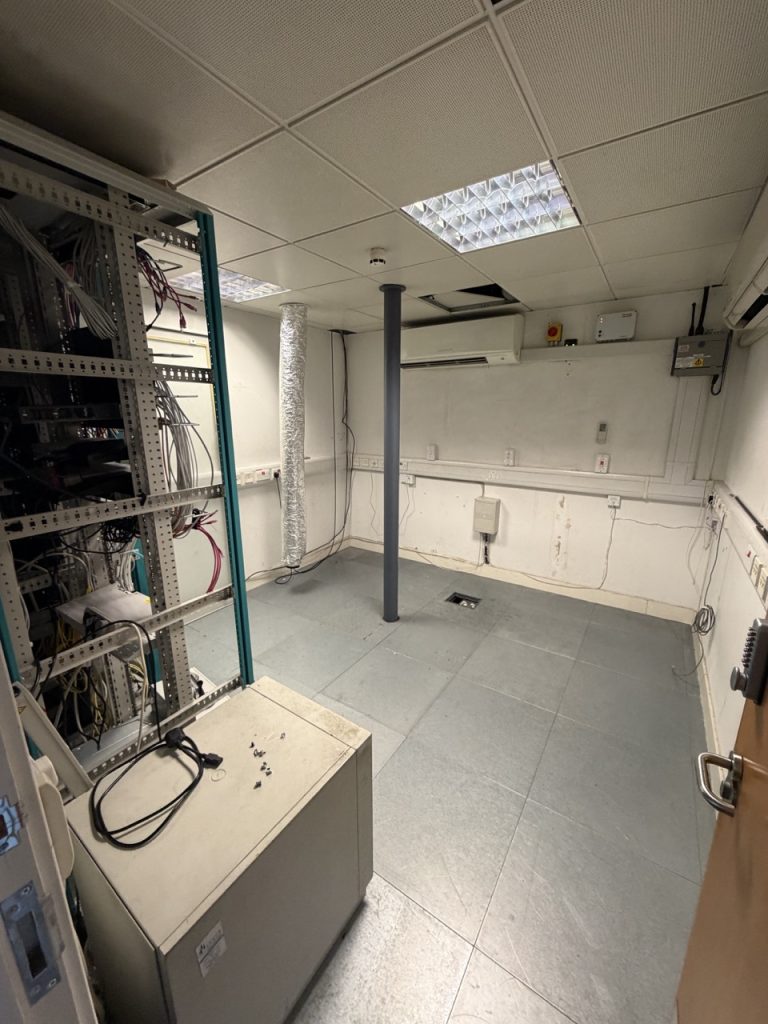
A commercial tenant leaves a building. Sometimes the lease ends cleanly. Sometimes it does not – the tenant goes under, or is removed, or simply walks away. And they leave behind a comms room: racks of servers, switches, storage, a tangle of cabling, and somewhere in there a stack of drives with data on them.
Now someone has to deal with it. Usually that someone is not the person who bought the equipment, installed it, or has any idea what is on it. It is the landlord, or the managing agent, or a developer who has just taken possession of a building with somebody else’s data centre still humming away in the basement.
And the first question — before anything is unplugged, boxed or moved – is deceptively simple. Who actually owns this, and who is allowed to say what happens to it?
Get that question wrong and a routine clearance becomes a legal problem. Get it right, and it is one of the more straightforward jobs we do. The difference is entirely in the paperwork, not the lifting.
Why a secure IT clearance is not like a normal clearance
Clearing furniture from an abandoned unit is low-risk. A desk is a desk. Nobody’s personal data is on it, and its value is obvious and low.
IT equipment is different on both counts.
It may hold data that belongs to someone else entirely – not the landlord, not the departed tenant, but that tenant’s own customers. A server in a repossessed office could contain personal data covered by UK GDPR, client records, financial information. Whoever moves or destroys that equipment has to be able to show they did so properly, because the obligations attached to that data do not vanish when the tenant does.
It has value that is not obvious. A populated server can hold significant resale value in its memory and drives. So this is not junk to be skipped – it is an asset of uncertain ownership, which is a more delicate thing.
And its ownership is genuinely unclear. The equipment might be owned outright by the former tenant. It might be leased, in which case a finance company owns it and will want it back. It might be subject to a dispute between landlord and tenant. Until that is established, the safest assumption is that it is not yours to destroy.
The document that makes it safe
When we take on a clearance like this, the work does not start with a van. It starts with a written instruction that establishes three things.
Who is instructing us, and on what authority. We take direction from one party — the landlord, the agent, the appointed representative — and that authority is stated in writing before we attend. If the former tenant turns up on site claiming the kit is theirs, we do not adjudicate that on the loading bay. We stop, and we refer it back to the party who instructed us. That protects everyone, including us.
What is actually there. Before anything moves, we build an equipment record on site — make, model, serial number, condition, item by item. This is not administrative padding. It is the thing that lets everyone prove, later, exactly what was removed from the building and what condition it was in. If ownership is disputed after the fact, that record is the evidence.
Where it is going, and who signs for it. Whether the equipment goes into storage, to secure erasure, or to resale, custody passes at a signature against that same record. A named person receives it and signs for each item. Our responsibility for the equipment ends at that signature, and begins at the one taken when we collected it. In between, it is a documented chain with no gaps.
The data question, specifically
If there are data-bearing drives — and in a comms room there always are — destroying or wiping them is not a decision to take lightly on someone else’s behalf.
The defensible route is certified erasure or destruction, carried out to a recognised standard, with a certificate issued per drive by serial number. That certificate is what allows the instructing party to demonstrate, if anyone ever asks, that data was disposed of properly and not simply tipped into a skip or, worse, sold on with the information still readable.
This matters even when – especially when – the equipment is then resold. A drive that still holds a previous occupant’s data cannot be resold until it has been provably wiped. Certified erasure is not just good practice; it is the thing that turns an awkward liability back into a saleable asset.
The practical order of events
For anyone who finds themselves holding a building with someone else’s IT still in it, the sequence that keeps you safe is:
- Do not let anyone remove anything informally. The moment kit leaves the building undocumented, you have lost control of both the asset and the data.
- Establish who has authority to instruct — and get it in writing before work begins.
- Have the equipment audited on site before it moves, so there is a record of exactly what was there.
- Deal with the data properly — certified erasure or destruction, evidenced per drive.
- Pass custody on a signature, against the audit, to a named recipient at a known destination.
None of this is difficult. It simply has to be done in the right order, and it has to be written down, because the value of doing it properly only becomes apparent if something later goes wrong.
The point
The lifting and the driving are the easy part of a clearance like this. Anyone can move a rack.
What actually matters is the chain of custody — knowing whose equipment it is, proving what was there, disposing of the data defensibly, and being able to show a clean, signed record from the moment the work started to the moment responsibility passed to someone else.
That is the difference between a clearance that closes a problem and one that opens a new one.
DataMove carries out secure IT clearances, decommissioning, certified data erasure and asset recovery across the UK, Europe and 58+ countries — with a documented chain of custody from first attendance to final sign-off. Get in touch to discuss a clearance.