
Project Manager – EMEA – DataMove
Moving a storage array is not like moving a server. Most servers can travel with their drives in place. High-density storage cannot.
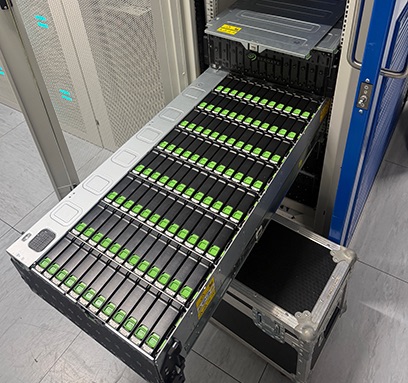
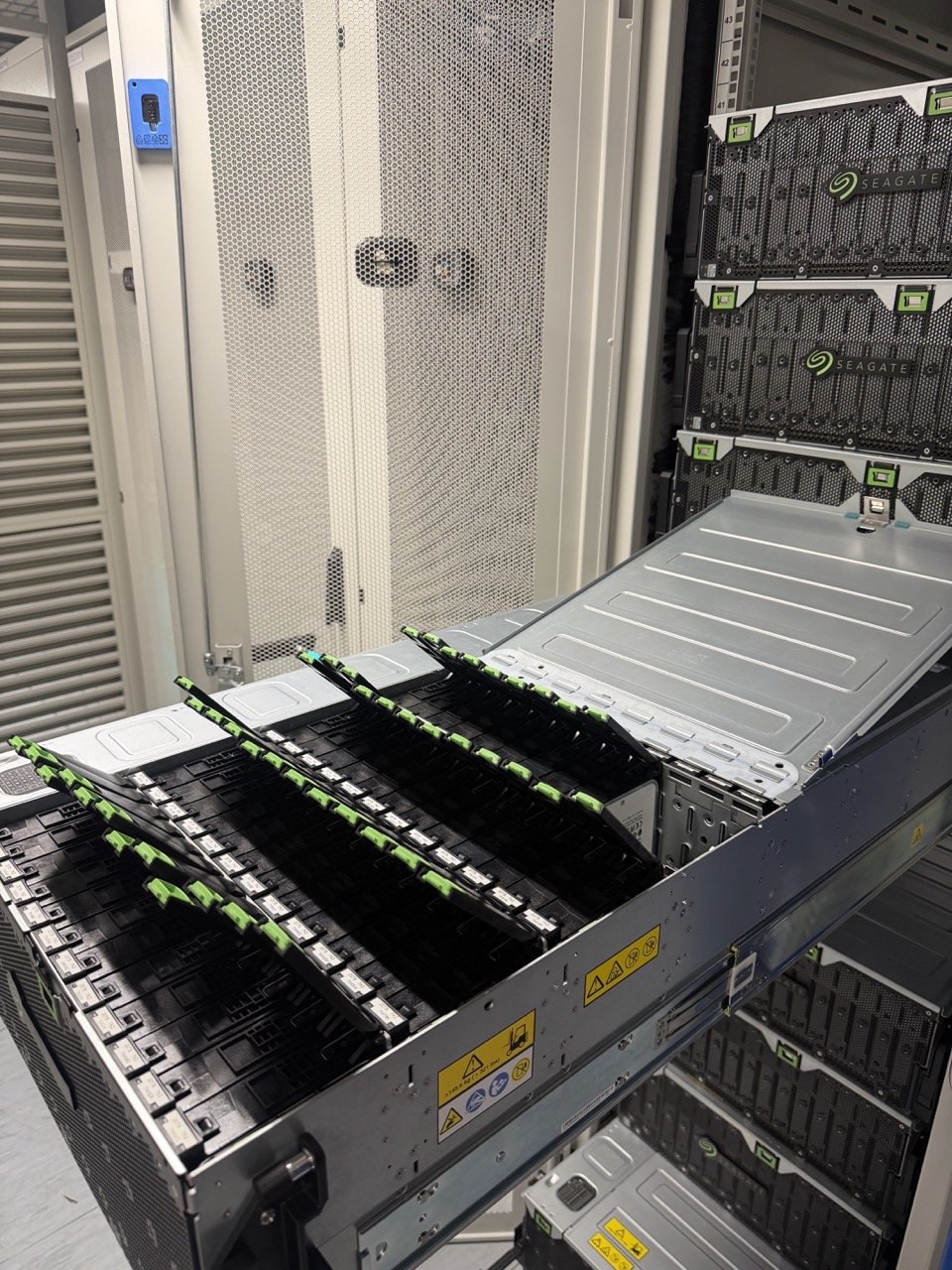
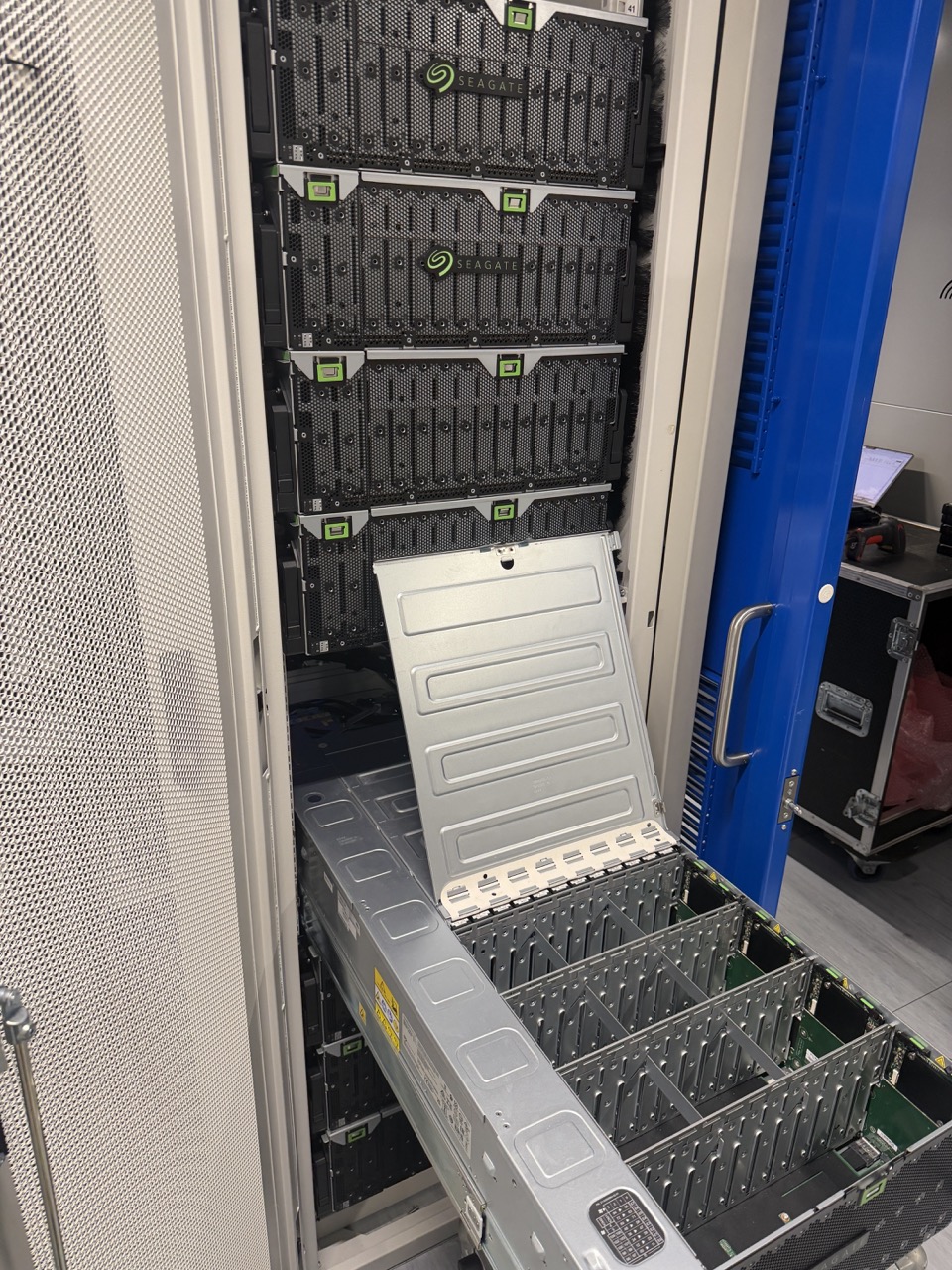
A modern 4U storage chassis can hold over a hundred hard drives. Fully populated, a single chassis weighs around 100 kg, against roughly 43 kg empty. The drives are loaded from the top rather than hot-swapped from the front, and the chassis is not built to carry their weight on the road or in the hold of an aircraft. So before anything moves, every drive has to come out.
That is where most of the risk sits. Not in the lifting, but in what happens when the drives go back in.
Why drive position matters
Arrays like these do not treat drives as interchangeable. Data is spread across them using erasure coding, and the controller expects each drive in a known position. Put the right drives back in the wrong bays and, at best, the array spends days rebuilding. At worst, you are restoring petabytes from backup.
So the job when moving a storage array is not simply to remove the drives. It is to remove them in a way that guarantees each one goes back exactly where it came from.
How we approach moving a storage array
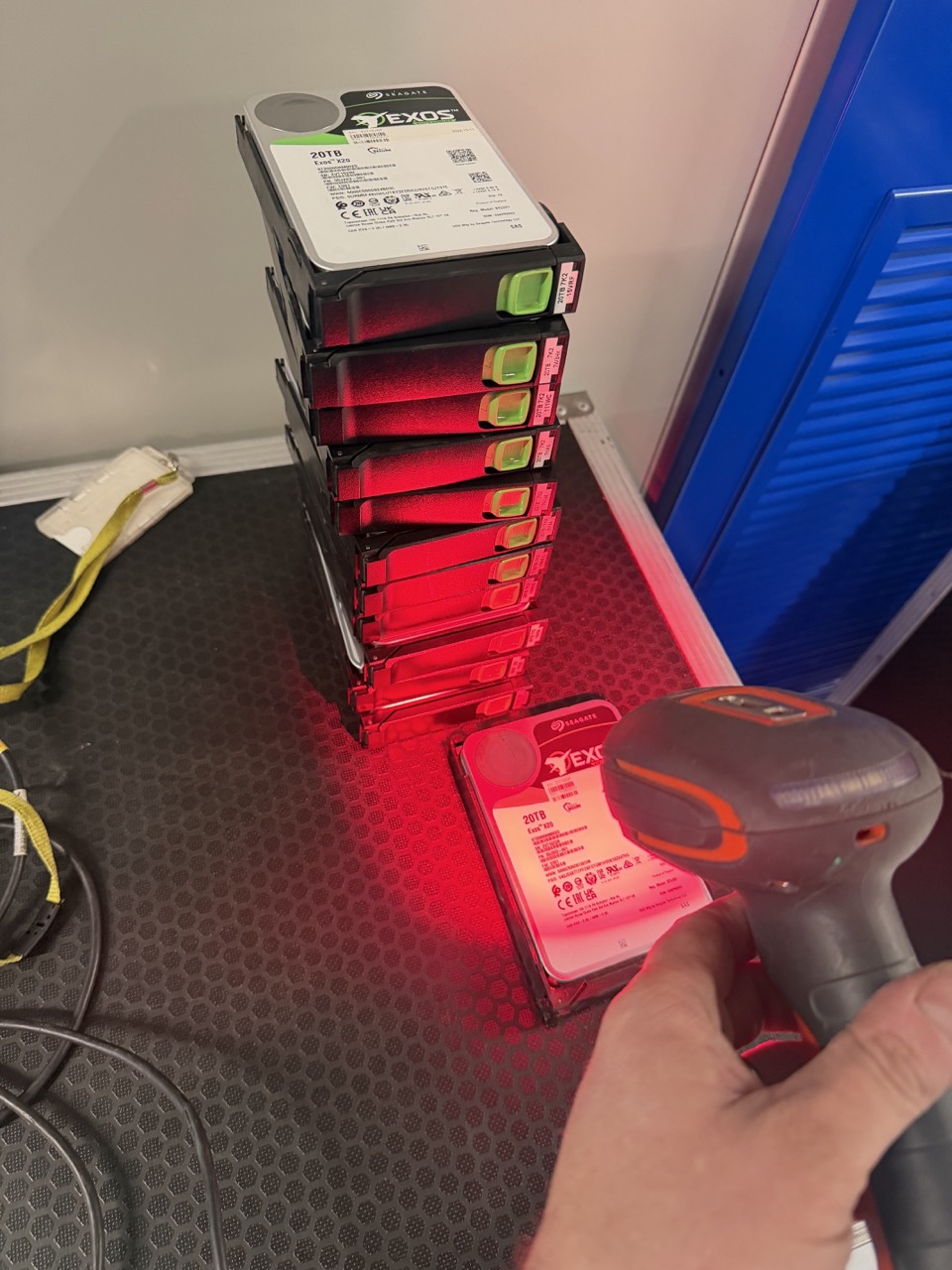
Every drive is scanned by serial number as it comes out of the chassis and recorded against two things: the chassis it came from and the bay it sat in.
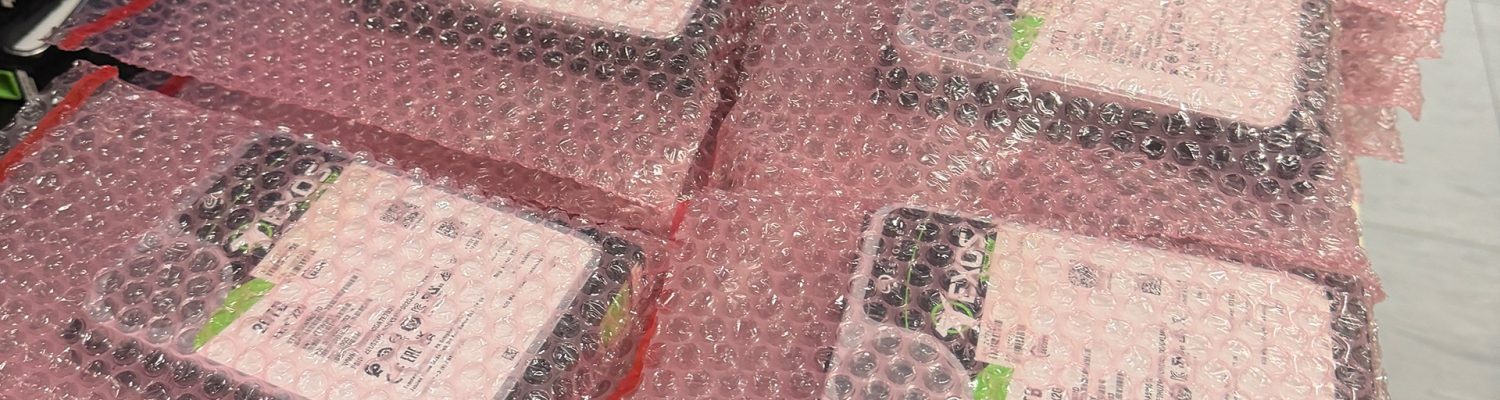
Each drive is then individually anti-static bagged and labelled with that chassis and bay position. The record and the label say the same thing, so the drive can be placed correctly whether you are reading the paperwork or the bag.
The drives are boxed in purpose-made hard drive cartons and travel on the same pallet as their own chassis. Nothing is consolidated across chassis. If a pallet is delayed, the drives for that chassis are delayed with it, rather than arriving separately and waiting to be matched up.
At the destination, the record works in reverse: chassis by chassis, bay by bay, against the serial numbers captured at origin.
Packing for the journey
Empty chassis are packed in anti-static protective material, two to a pallet, with their drive cartons secured alongside. Pallets are built to standard airliner belly-hold dimensions, with no oversize freight and no untreated timber, so there is no reason for the airline or customs to hold them.
What the client is left with
The drive record does not stop being useful once the array is back up. It is a complete inventory of every drive by serial number, chassis and bay, captured on the day the equipment left. That gives the client an audit trail for insurance, a reference if a drive fails in the weeks after the move, and a baseline for the next time the platform is expanded or retired.
The useful question
If you are moving a storage array, ask whoever is moving it how they will make sure every drive goes back in the bay it came out of. If the answer is “carefully”, keep asking.