
Project Manager – EMEA – DataMove
Server resale value has changed more in the past year than in the five before it. Equipment that would have gone for scrap in 2024 is now worth recovering, and in some cases worth more than the cost of taking it out of the rack.
Why prices have moved
The AI build-out is absorbing the world’s memory supply. Manufacturers have shifted production towards high-bandwidth memory for AI accelerators, leaving less capacity for the standard server memory everyone else uses. Counterpoint Research forecast that server memory prices could double by the end of 2026, and TrendForce expected server DRAM prices to rise by around 90% in the first quarter of 2026 alone.
When new memory gets that expensive, buyers turn to the used market, and the price of recovered memory rises with it.
What holds value
Not everything coming out of a data centre is worth the same. As a rough guide:
- Memory: the biggest change. DDR5 especially, but DDR4 has risen too. A server full of memory can be worth more for its RAM than as a whole unit.
- Recent servers: equipment from the last three or four generations (for example Dell PowerEdge 15th and 16th generation, HPE ProLiant Gen10 Plus and Gen11) sells well, particularly with high-core-count CPUs.
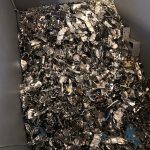
- Enterprise SSDs and NVMe drives: valuable, but only if they have been securely erased rather than shredded.
- GPUs and accelerators: strong demand, depending on model and condition.
- Networking: switches and routers hold some value, depending on model and support status.
Equipment more than eight to ten years old is usually worth little beyond its component and scrap value.
What reduces the price
A few things consistently pull values down:
- Trade, not retail: trade buyers typically pay around a third of used retail prices, because they carry the cost of testing, refurbishing and reselling.
- Volume of identical units: selling hundreds of the same model at once depresses the price.
- Shredded drives: a destroyed drive has no resale value. If your data policy allows certified erasure, drives can be sold with the hardware.
- Licences: software and support licences don’t usually transfer with the equipment.
- Timing: prices driven by a supply shortage won’t stay high forever. Equipment sold sooner is likely to fetch more.
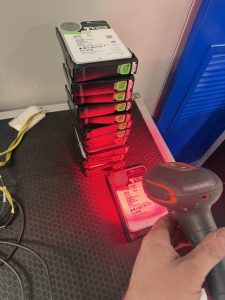
Recyclers price by weight. Engineers price by spec.
A standard recycler will often quote by the kilo or offer a flat collection. That’s fine for genuinely end-of-life equipment. For anything still in its useful life, it throws value away.
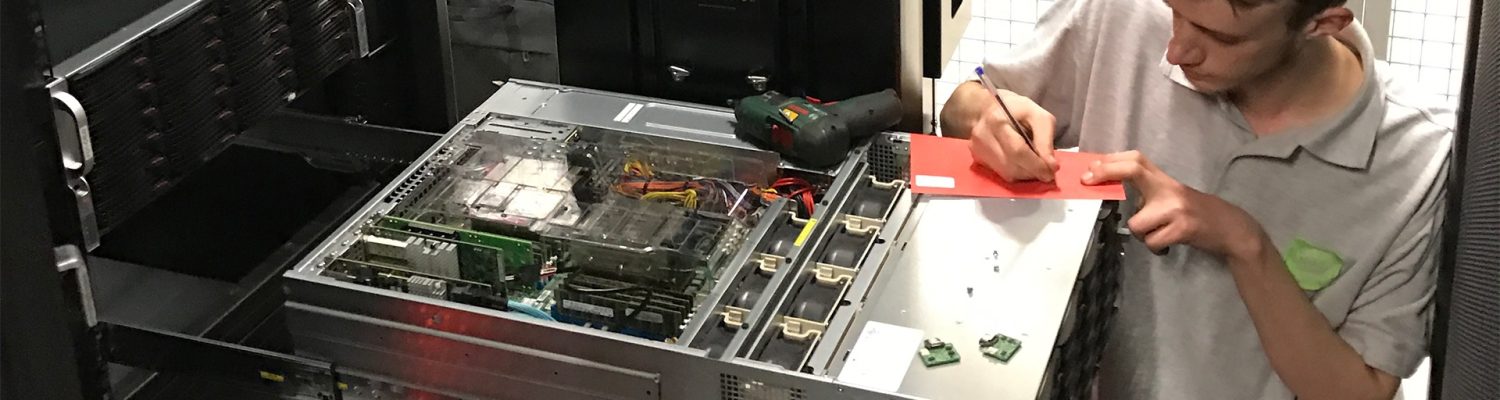
An engineer-led decommission works differently. Each device is audited by serial, model and configuration before anything is unplugged. You get a valuation against a real inventory, not a pallet weight.
Why the value matters even if you’re not selling
Hardware value isn’t only about resale. It also decides:
- Insurance: goods in transit cover normally pays out on declared value. Undervalue a shipment and that’s all you can claim.
- Customs: for cross-border moves, the declared value must reflect what the equipment is worth today. Under-declaring is a liability for the exporter, not a saving, and shipments can be held while customs check it.
- Accounts: finance teams need a defensible figure when equipment is retired.
Moving or retiring kit across a border? Read why shredded drives can’t travel before you plan the route.
Decommissioning that pays for itself
On a recent decommissioning quote covering around 500 devices across two European data centres, our estimate of the hardware’s trade value ran to several hundred thousand pounds, many times the cost of the decommissioning work.
That changes how a decommission should be planned. Instead of treating the hardware as disposal, it becomes an asset to be recovered:
- Every asset audited: serial, model, CPU, memory, condition and grade
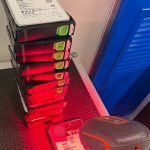
- Drives securely erased with a certificate per drive, or shredded where policy requires, with serials recorded
- Hardware sold through established trade buyers, with the proceeds offset against the cost of the project
See the certificates and reports we provide for every job.
Getting a valuation
To get a realistic estimate, have the following ready:
- An asset list with make, model and quantity
- CPU, memory and drive configuration for each model, or a sample of each
- Whether drives must be destroyed or can be erased
- Where the equipment is, and when it needs to be out
Read more about our data centre decommissioning service, how we approach AI hardware decommissioning, or get in touch for a valuation.