Equinix Slough to the USA: Preparing Servers for Air Freight
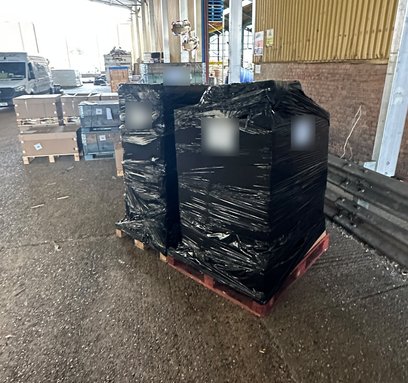
In August we de-installed servers and storage for a US IT company at Equinix LD5 in Slough and prepared the servers for air freight to the United States. The equipment left the data centre on three pallets and was handed to the air freight agent at Heathrow the same day.
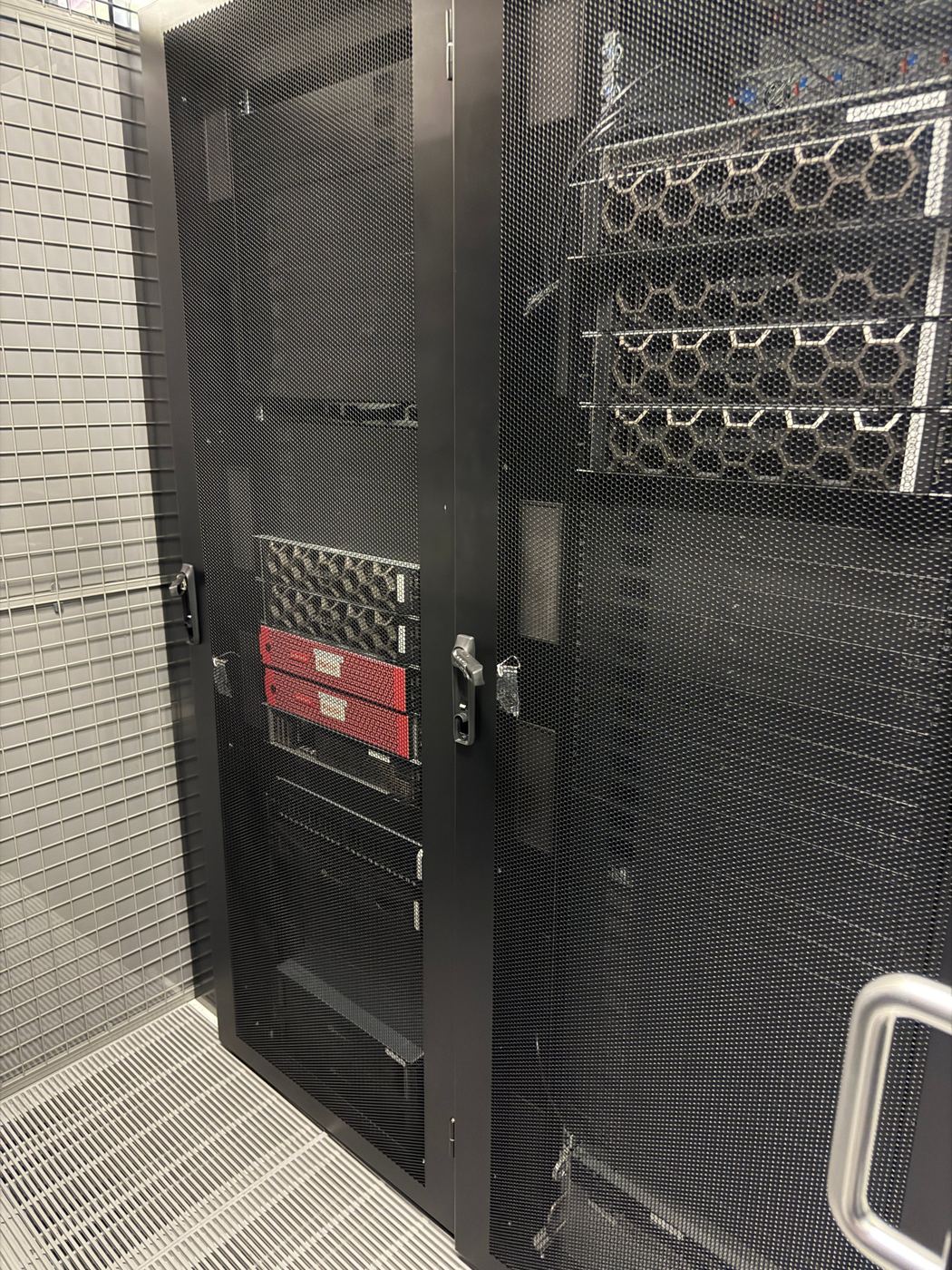
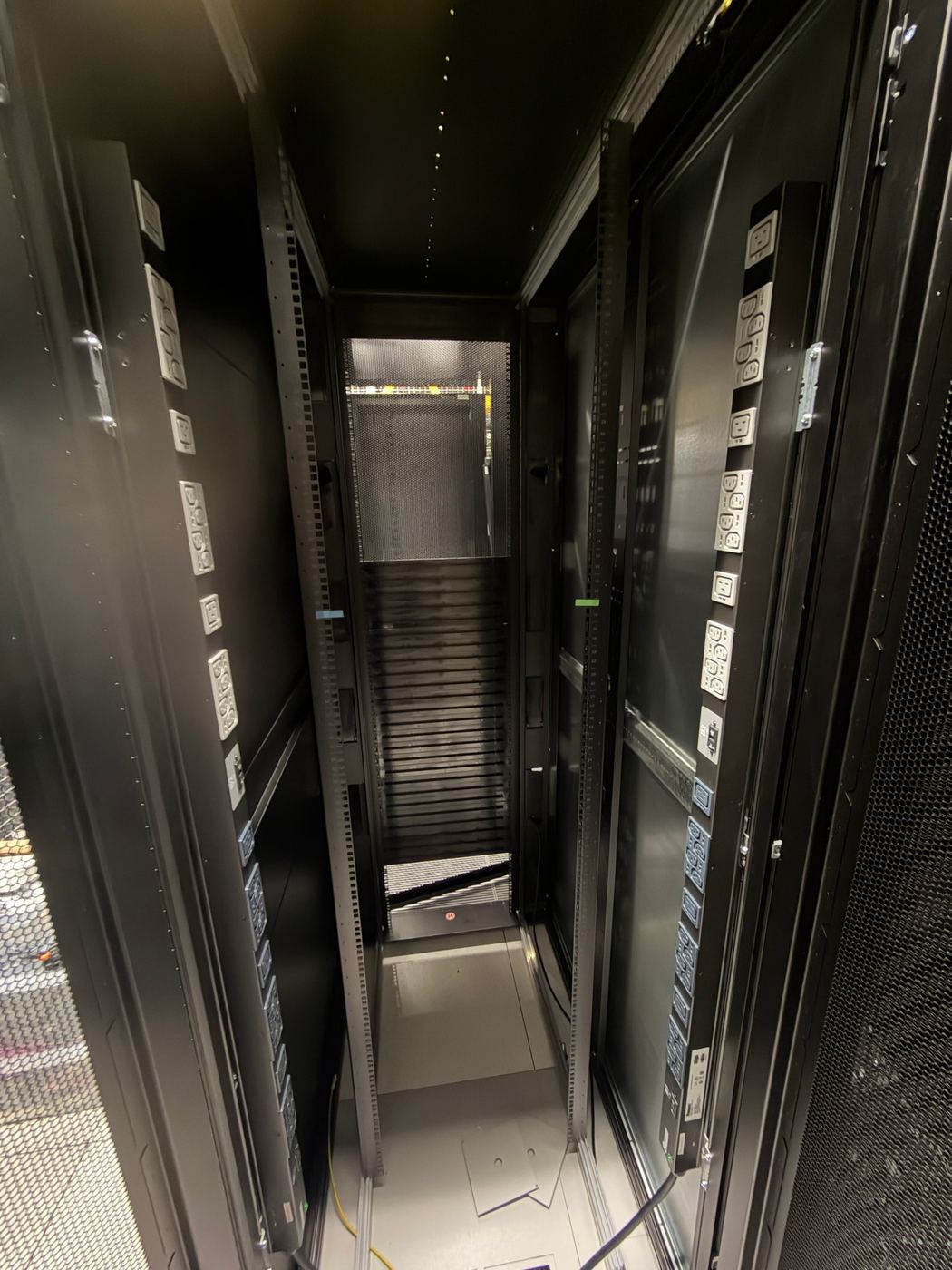
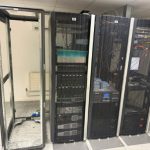
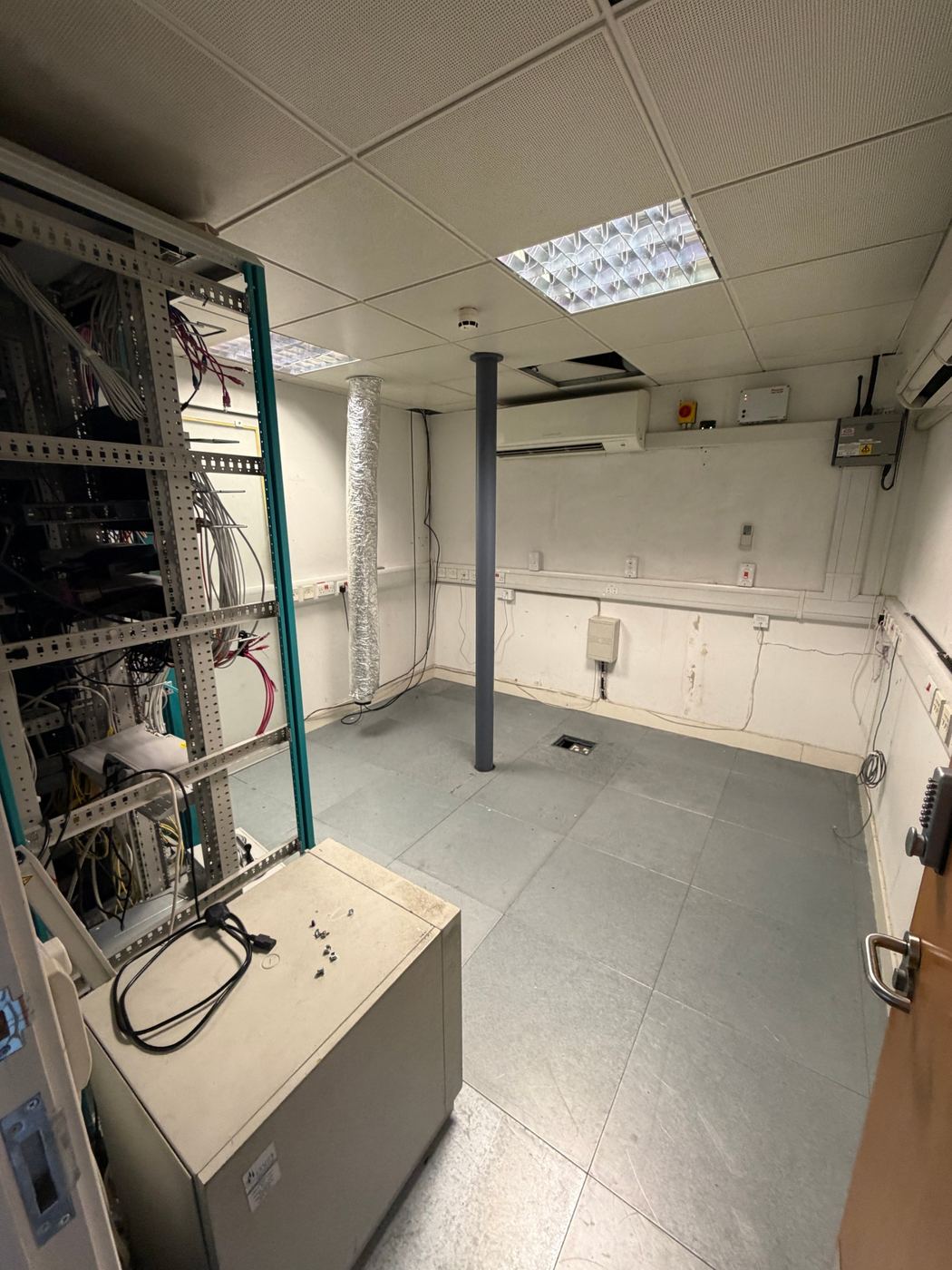
The racks at Equinix Slough before we started
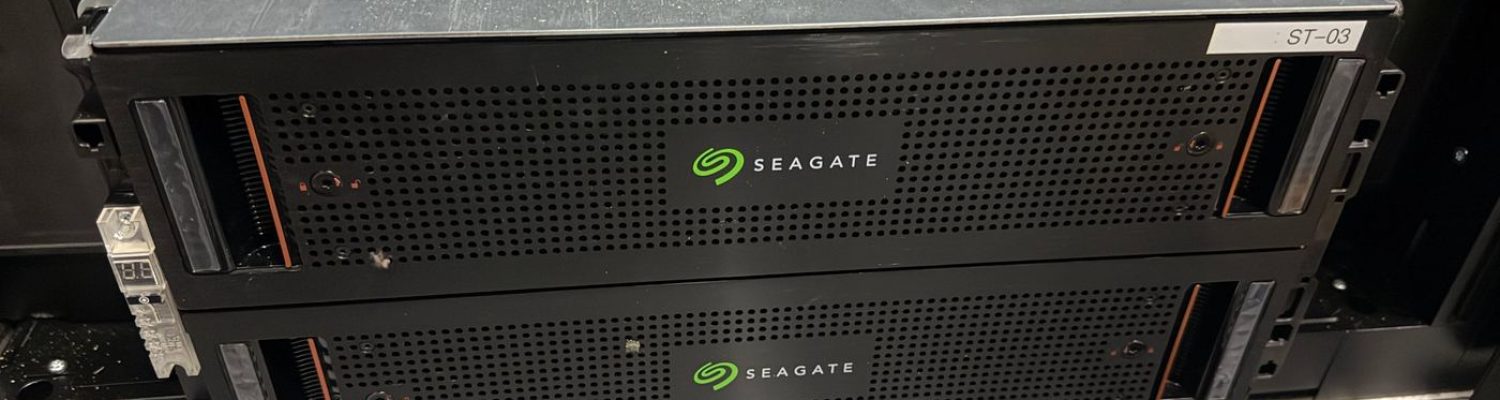
What came out
Rack servers and two Seagate 4U storage enclosures, each fully loaded with drives. A populated enclosure is a two-person lift at the very least.
Preparing servers for air freight
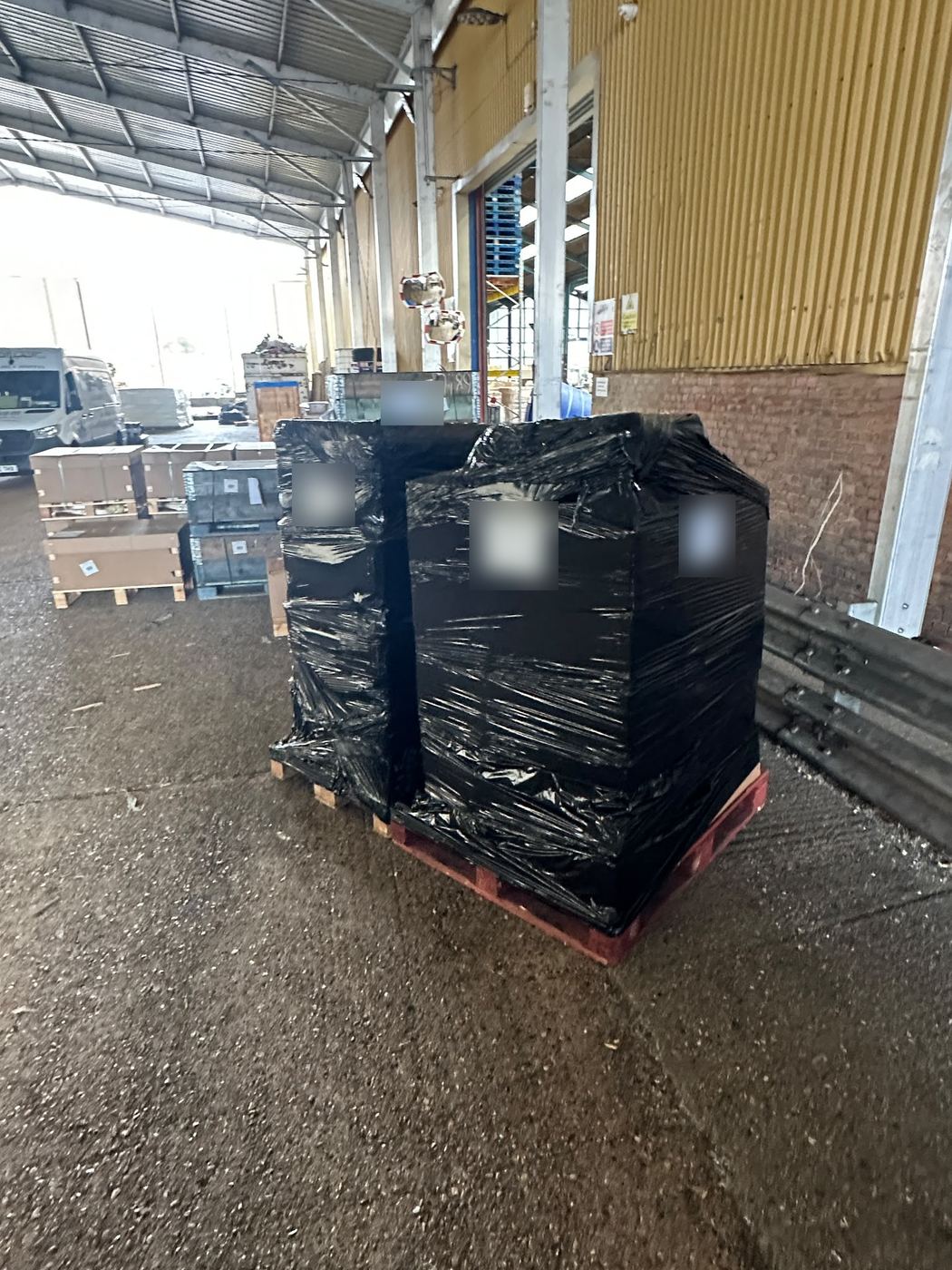
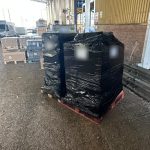
Servers for air freight have to be packed for the aircraft and the handling either side of it, not just the road. Everything was de-racked, packed and built onto pallets, then shrink-wrapped and labelled for the airline.
Each pallet is weighed and measured before it goes, because air freight is charged on whichever is greater, the actual weight or the volume. A tightly built pallet costs less to fly than a loose one.
Three pallets, wrapped and labelled for air freight
The paperwork that decides the trip
The hard part of sending servers to the USA is rarely the flight. Before anything leaves, someone has to be the importer of record, the declared value has to reflect what the equipment is worth today rather than what it cost, and the duty at the US end has to be understood. Get those settled before the kit is packed, not once it is sitting at the airport.
Comms Room Clearance in Poplar: From Audit to an Empty Room
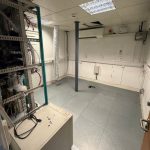
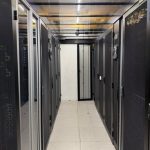
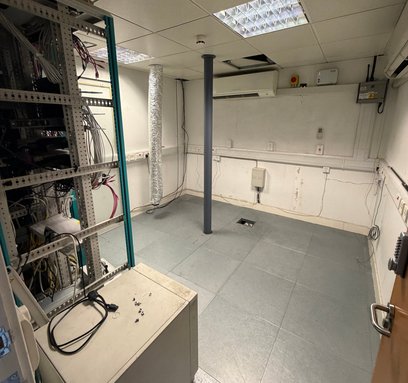
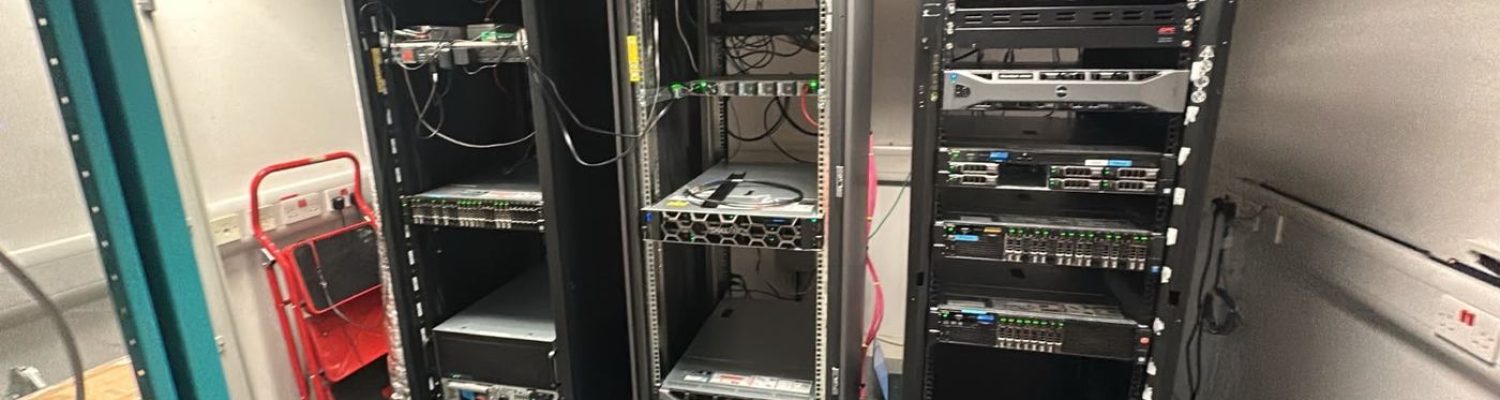
In August we cleared the comms room at a residential developer’s site in Poplar, east London. The job had two parts: an audit of the three racks in the room, then a comms room clearance that moved everything into secure storage in Bow and left the room empty.
Audit first
We audited the room on 10 August, recording the make, model, serial number and rack position of every item, and what was connected to what.
The client’s equipment list had more on it than the room did. Some kit had been moved elsewhere over the years and never taken off the list. Finding that on audit day, rather than on clearance day, meant the clearance was planned against what was actually there.
Comms room clearance day
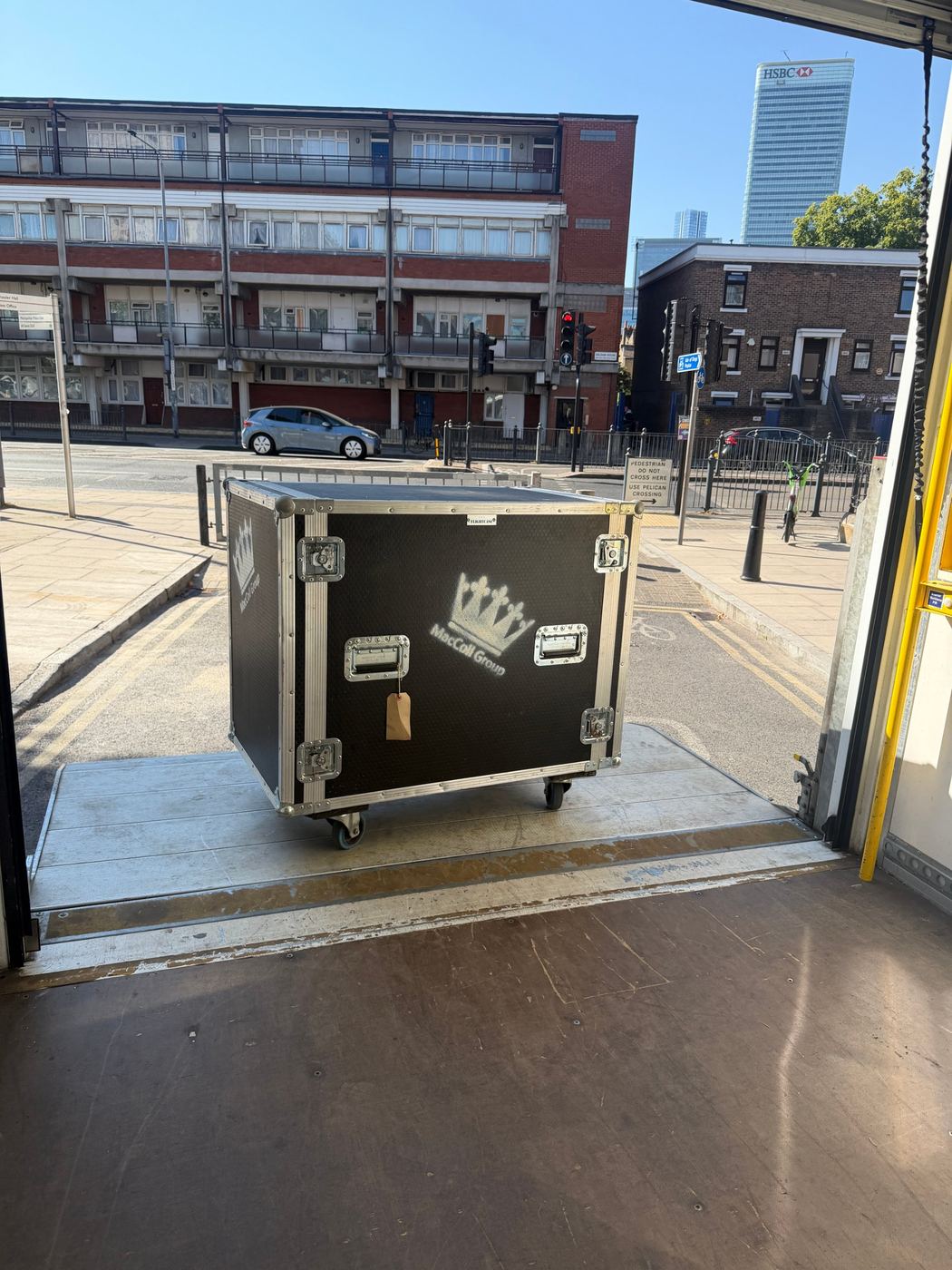
The clearance ran on 13 August. Everything was de-racked, packed into rack-format flight cases and carried out by hand on a hot August day, then loaded by tail-lift and driven to a self-storage facility in Bow.
Custody stayed with us from the comms room until the storage facility signed for the delivery.
Loading by tail-lift in Poplar
Handing the room back
With the equipment gone, the room was ready to hand back.
The Week Europe Locked Down: A Cross-Border Data Centre Relocation
In 2020 we took on what should have been one of the more straightforward cross-border data centre relocations on our books.
A gambling operator needed around three racks of HPE equipment moved from Leeds to its sites in Gibraltar and Malta, with a backload of old hardware coming home from both for disposal. Regulated sector, fixed destinations, well-understood route. We’d done variations of it before.
Twenty-four hours after our crew crossed into Europe with the outbound load, lockdown came into force.
The job didn’t change. Everything around it did.
The equipment was the same. The destinations were the same. The client still needed it delivered.
What changed overnight was every assumption the route was built on. Which borders were open.
Which roads a commercial vehicle could use. Whether a crew could stop, where they could rest, and what quarantine rules would apply at each crossing on the way back. Rules that had been stable for years were being rewritten by the day, and sometimes by the hour, in different ways in different countries.
The plan that left Leeds was obsolete before it reached its first drop.
Hardware being dropped off in Gibraltar in March 2020
What we actually did
Nothing dramatic. We kept checking.
Before every leg, the crew and our planning desk confirmed what was legal for that specific day — not what had been true when we set off. Where a rule was unclear, we got it clarified before moving rather than assuming and finding out at a border. The deliveries went ahead, the disposal backload was collected, and the question became getting the crew home.
That meant coming back through Italy, the country hit hardest and earliest in Europe at the time. It was the leg that took the most care: confirming the vehicle could transit, what the crew could and couldn’t do on the way, and what would apply when they reached the UK.
They made it home. The equipment was delivered. The old kit came back for disposal.
What it taught us about cross-border data centre relocation
The obvious lesson is that you can’t plan for a pandemic. That’s true and not very useful.
The more useful one is that the plan is only valid on the day you check it. We’d always treated the route as something decided at the start and then executed. Since 2020 we treat it as something re-confirmed before every leg, because the conditions a move depends on — borders, access, regulations, availability — can change underneath you while the vehicle is already moving.
The second lesson is about the crew. A route that changes daily needs people on the road who can think, not just drive. The crew that went out in 2020 were making judgement calls in real time, in contact with the office, on information that was hours old. That isn’t something you can script.
Hardware being dropped off in Malta
Why it still matters
It’s tempting to file this under a once-in-a-century event. It isn’t really.
Borders and rules still change quickly, just less dramatically. Brexit rewrote the paperwork for every UK-to-Europe movement. Tariffs have moved sharply in the last year. Facility access procedures change. Carriers fail — we’ve since had an air freight provider go into administration in the middle of a job. None of it makes headlines the way 2020 did, but all of it can change what’s possible between planning a move and completing it.
The discipline is the same: confirm conditions on the day, not at the start, and put people on the road who can adapt when they change.
The question worth asking
When you’re choosing someone to move equipment across a border, the useful question isn’t whether everything will go to plan. Across enough moves, something won’t.
It’s whether they’ll know on the day, and what they’ll do about it.
DataMove vehicle filling at a completely empty fuel station en route through France
Case Study: Crédit Agricole Bretagne Onsite Data Erasure
CLIENT OVERVIEW
Crédit Agricole “The Green Bank” is the second largest bank in France with 39 independent regional banks across France and 9,500 branches globally. The operation is a large one and naturally their data centre estate is significant.
THE CHALLENGE
DataMove were approached to help facilitate a data hall upgrade and disposal as well as secure onsite data erasure prior to activities starting. Due to staff shortages and a tight timescale with their new data hall going live, these activities needed to take place between Christmas and New Year.
DEPLOYMENT
Project Managers Andy and Tony worked together to deploy a crew, planning to travel overnight from Portsmouth to Caen on Boxing Day Evening and arriving ready to work onsite on 28th December equipped with our mobile erasure rigs, shredder (as a backup) and a fully equipped team of three engineers. The plan was to finalise erasure before returning for New Years celebrations and continuing with disposal and migration in the first week of the new year.
The six racks of Hitachi Virtual Storage Platform each containing hundreds of high capacity disks were erased using one of our three mobile Blancco rigs – designed from the ground up to be deployable within hours and able to erase hundreds of disks a day.
Being lightweight and flightcase based – we are able to express transport by Sprinter Van or even Airfreight these powerful server based rigs to our client sites globally.
With 24 hour access being issued to us by the client, our engineers were able to work in two shifts and have over 1,800 drives erased in just two days. Our rigs contain three powerful Dell servers communicating via PERC H800 cards and operating on their own temporary network, each capable of erasing hundreds of drives at a time. Any failed drives were pulled and marked and then securely erased and accounted for in our asset disposition reports. Blancco certificates are issued physically and digitally onsite.
OUTCOME
Our team were able to complete the clients data erasure requirements within the time threshold and at a tricky time of year.
The speed and accuracy of our project managers ability to fulfil the job is testament to the versatility of our engineering team and the flexibility of our modular onsite equipment that we have designed with the job – and the job only – in mind.
Our engineers even managed to stop by the Normandy beach memorial on their way back to the ferry port to pay their respects and reflect on the hardships others have suffered for our benefits.
For more information on our onsite erasure services or to get a quote, contact us today.
Failed drive
Erasure process
Ready to Get Started?
Our specialists are ready to tailor our security service solutions to fit the needs of your organization.