[pci-cat-slider slidestoshow="4" exclude_cat="4" show_count="false"]
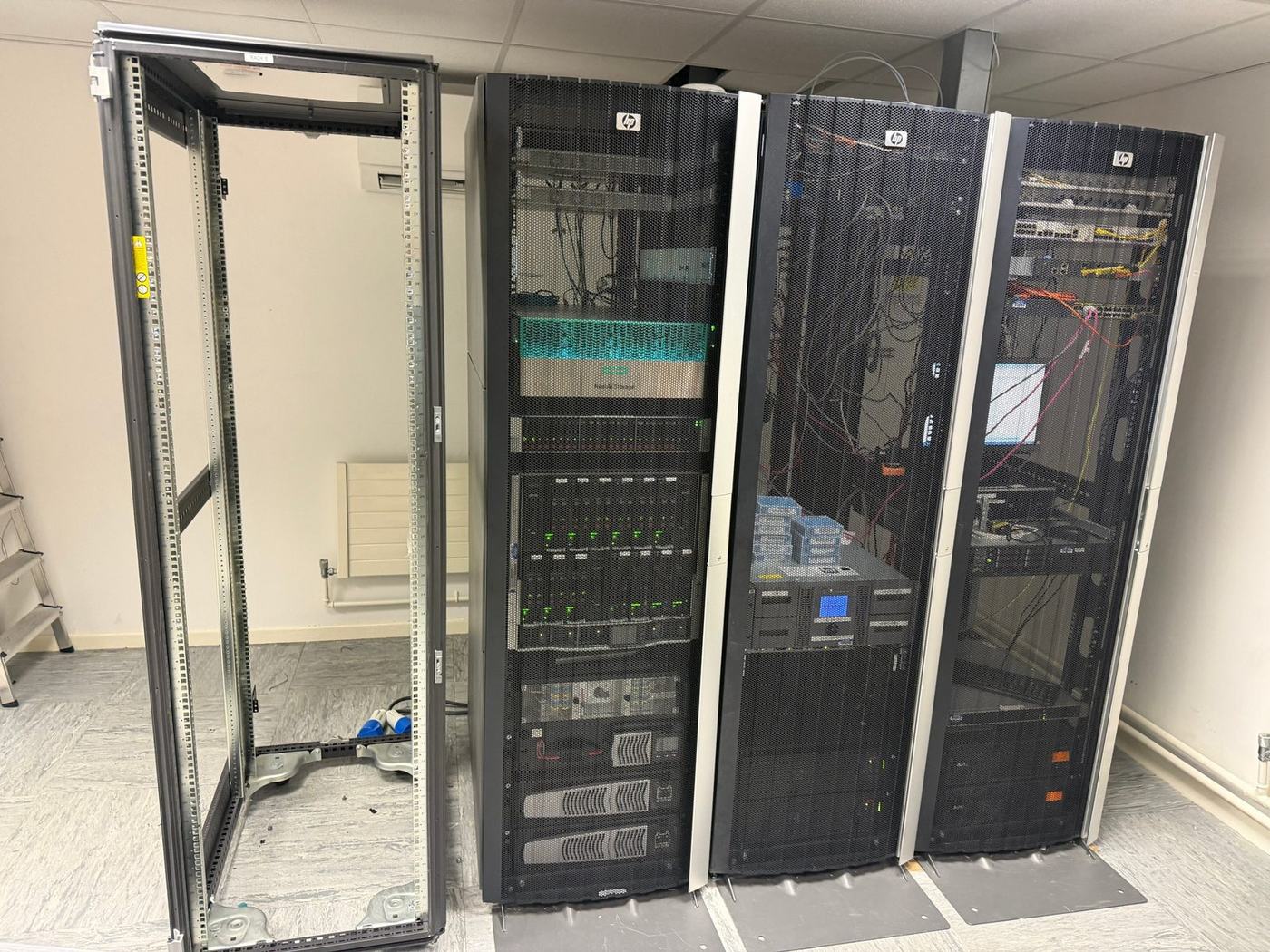
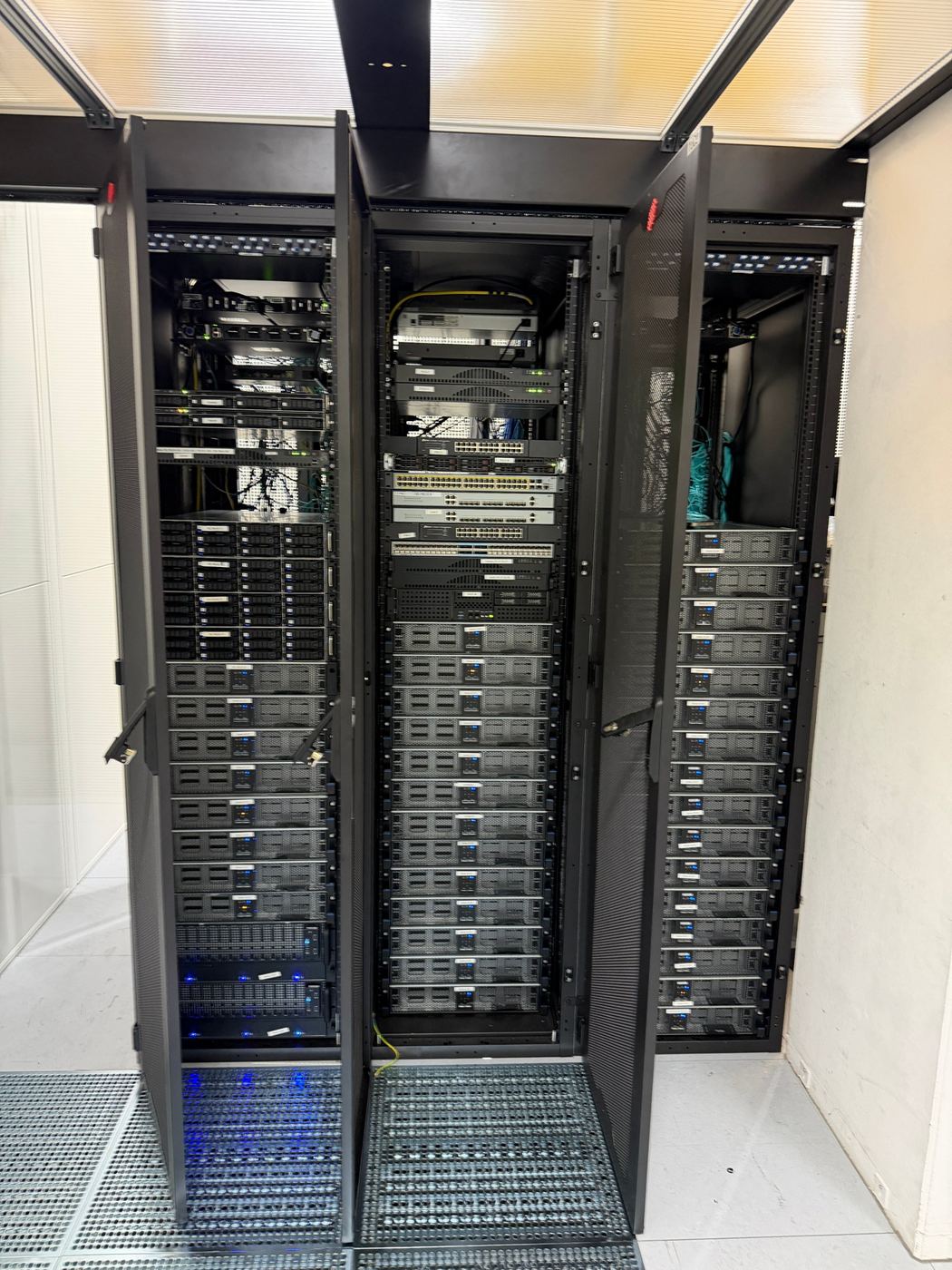
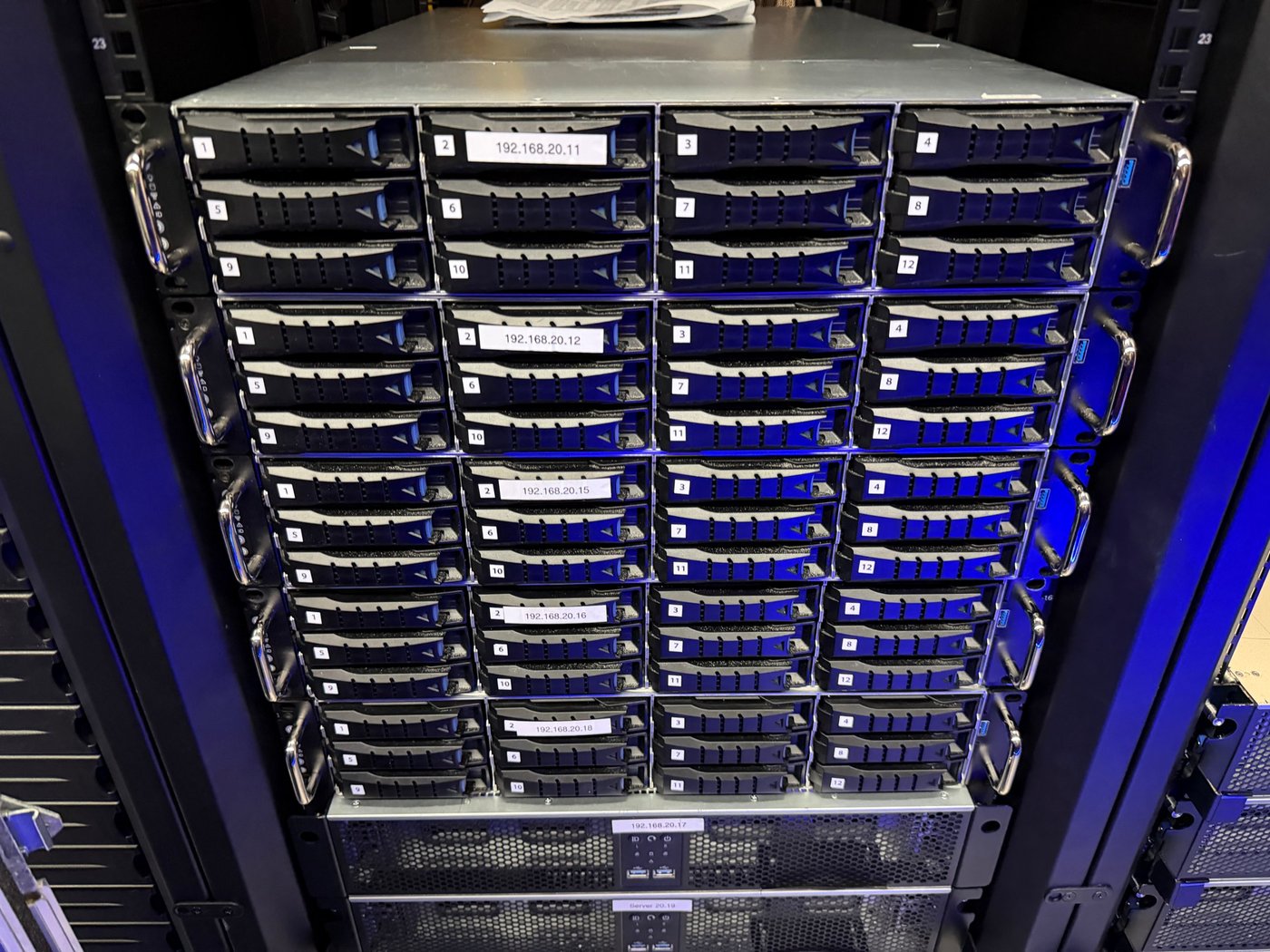
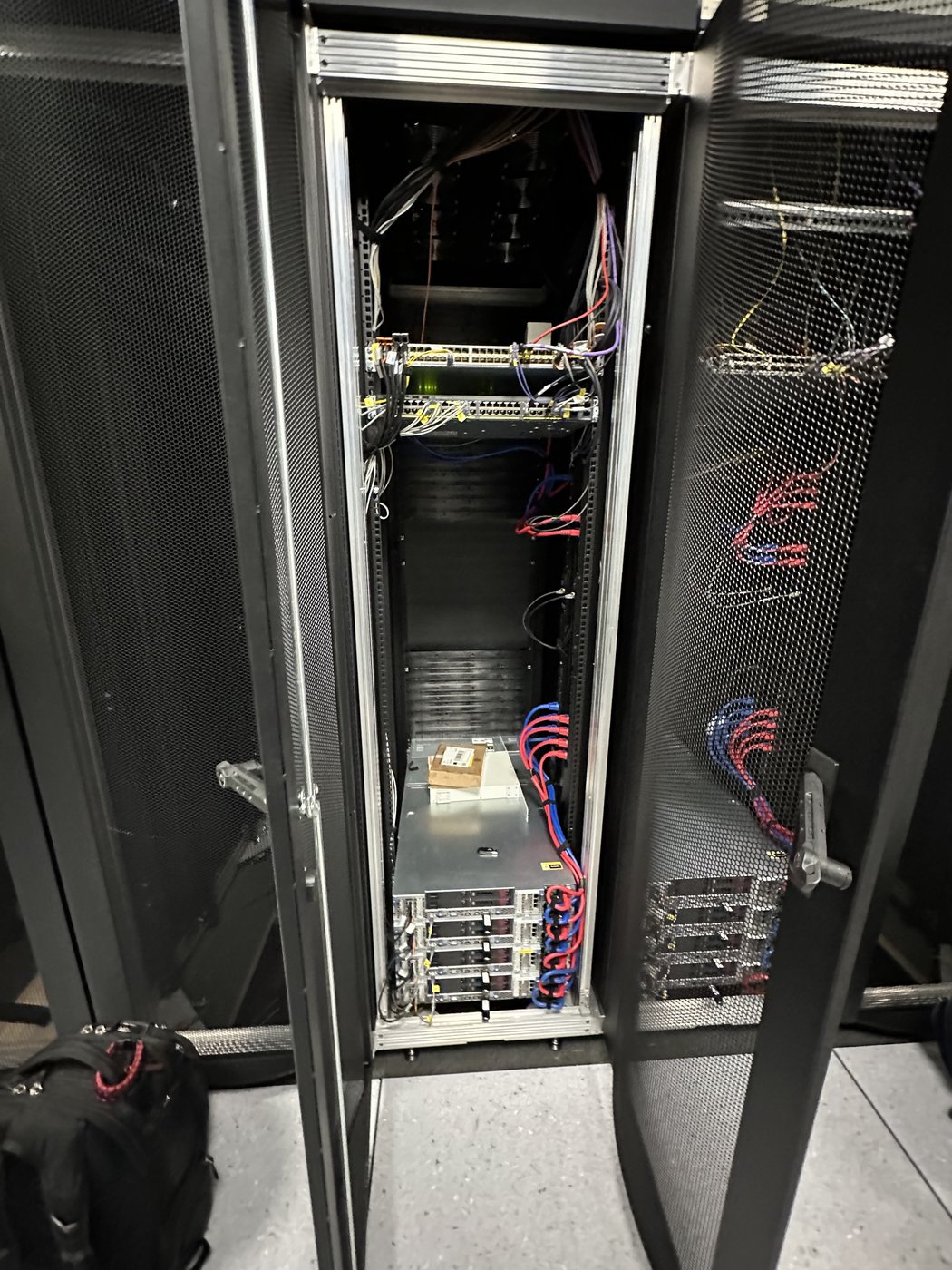
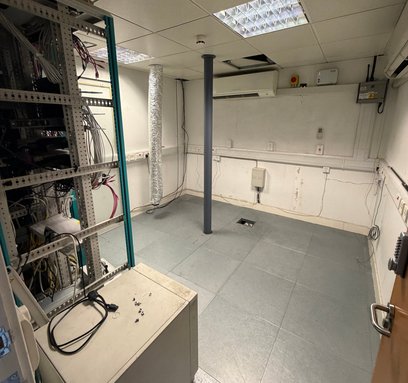
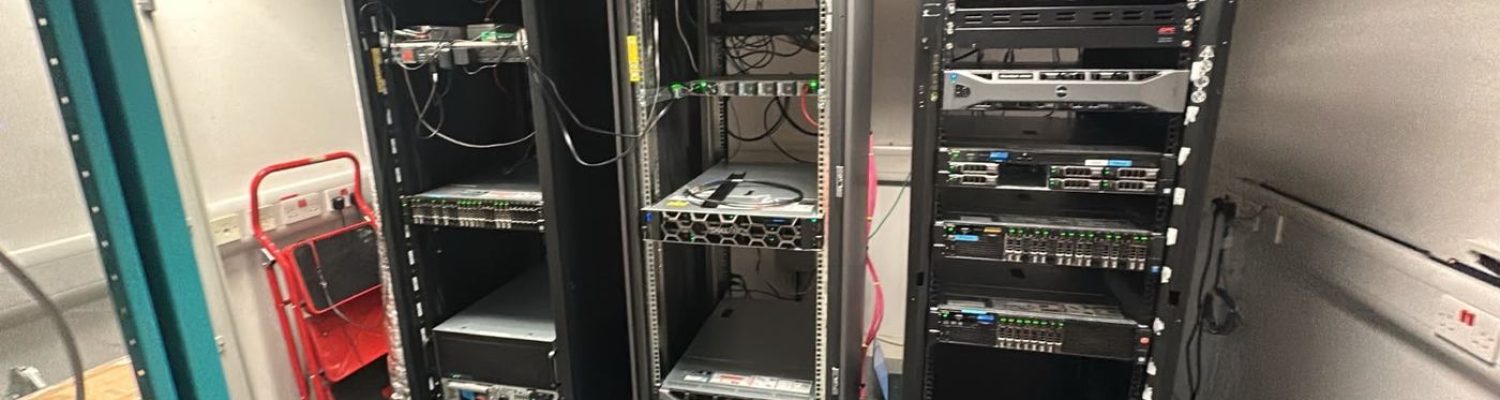
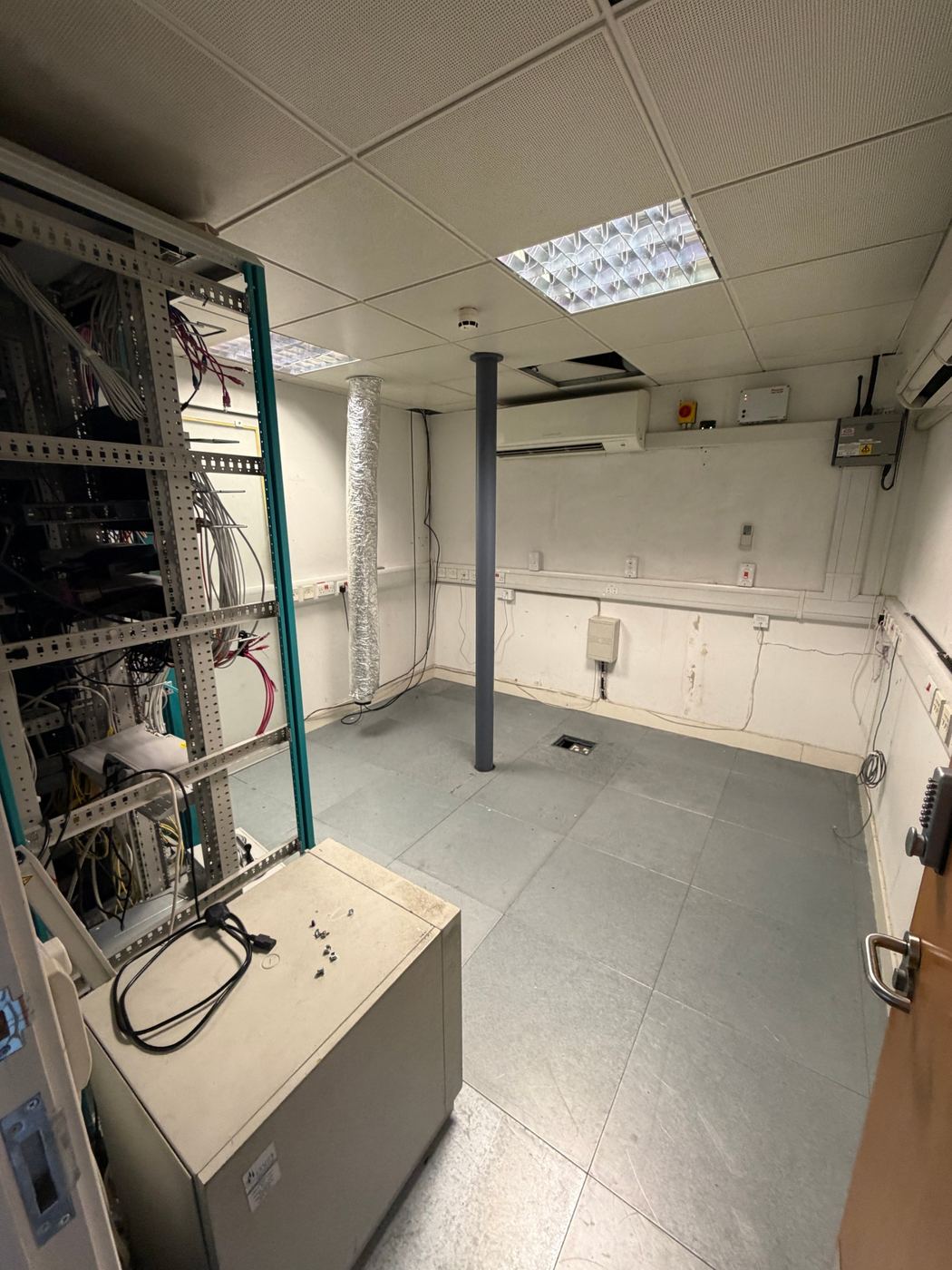
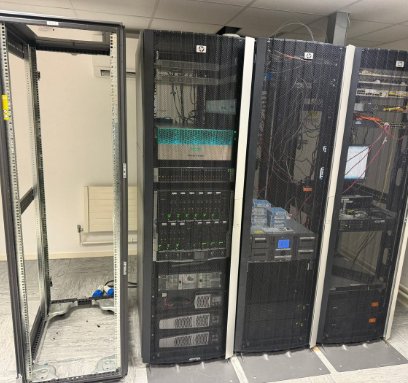
Office server room in Belfast before the move

Belfast to Dublin in a Day: Moving a Server Room into a Colocation Facility

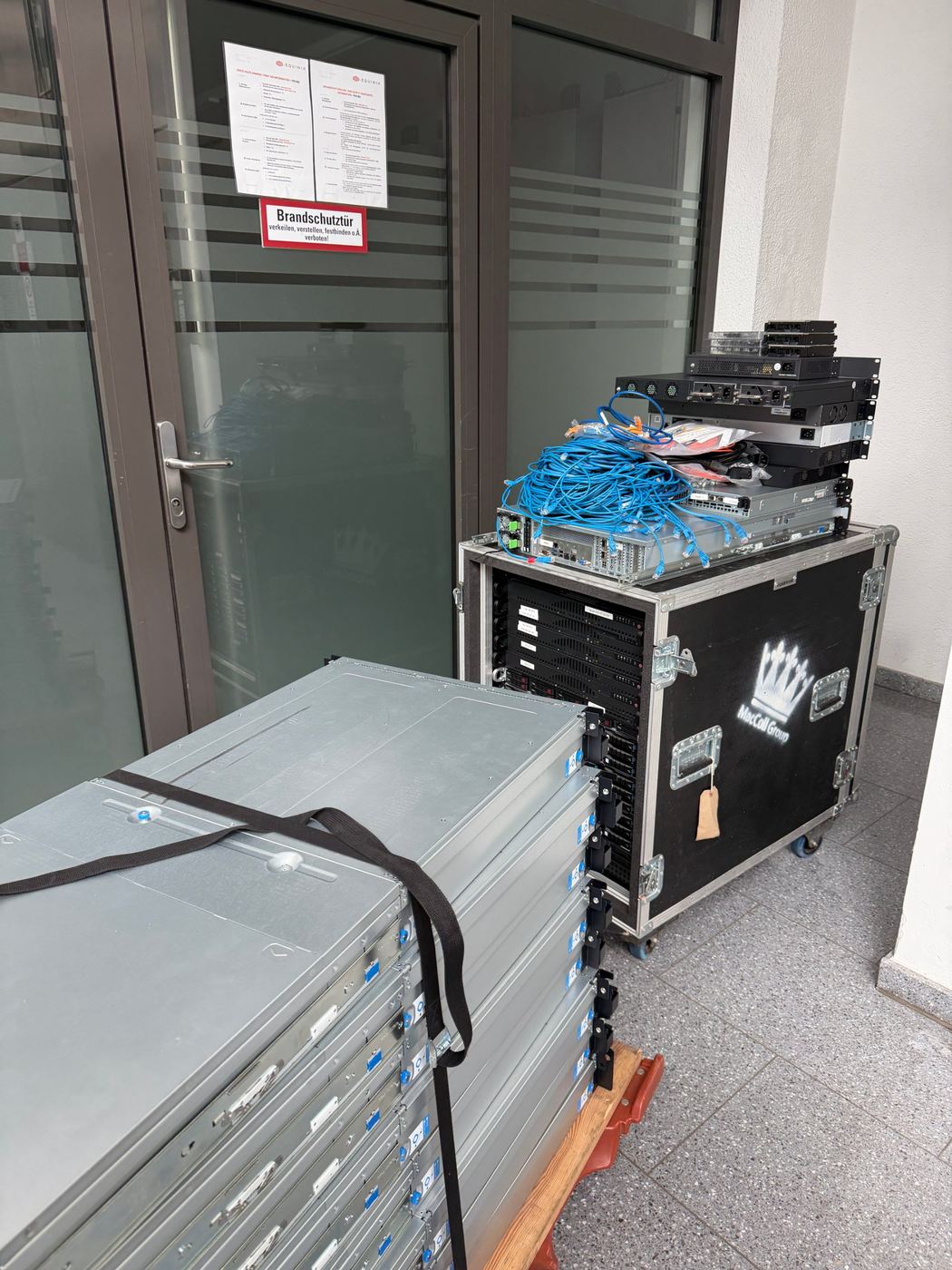
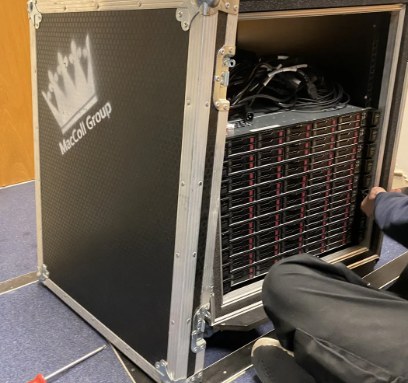
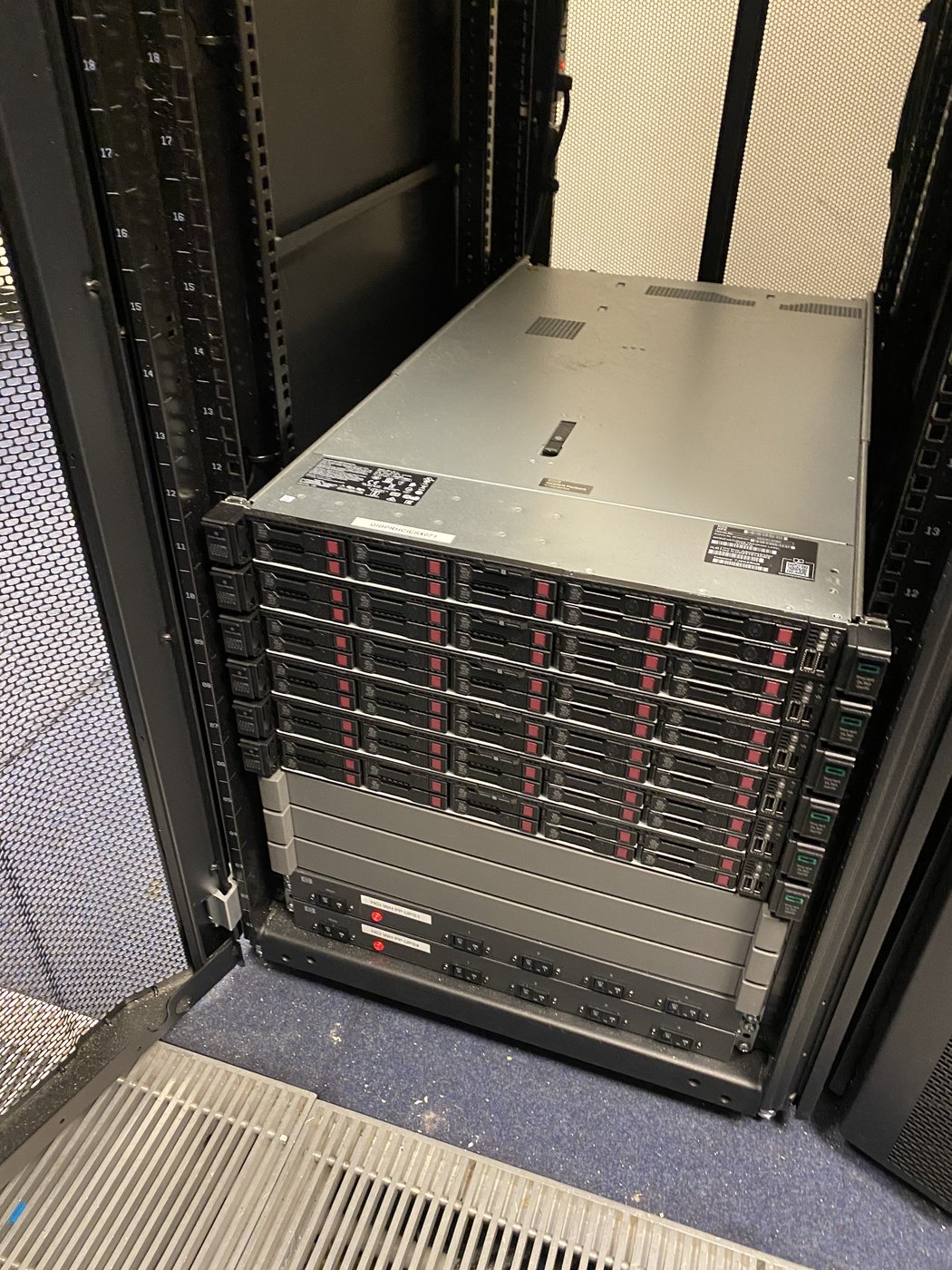
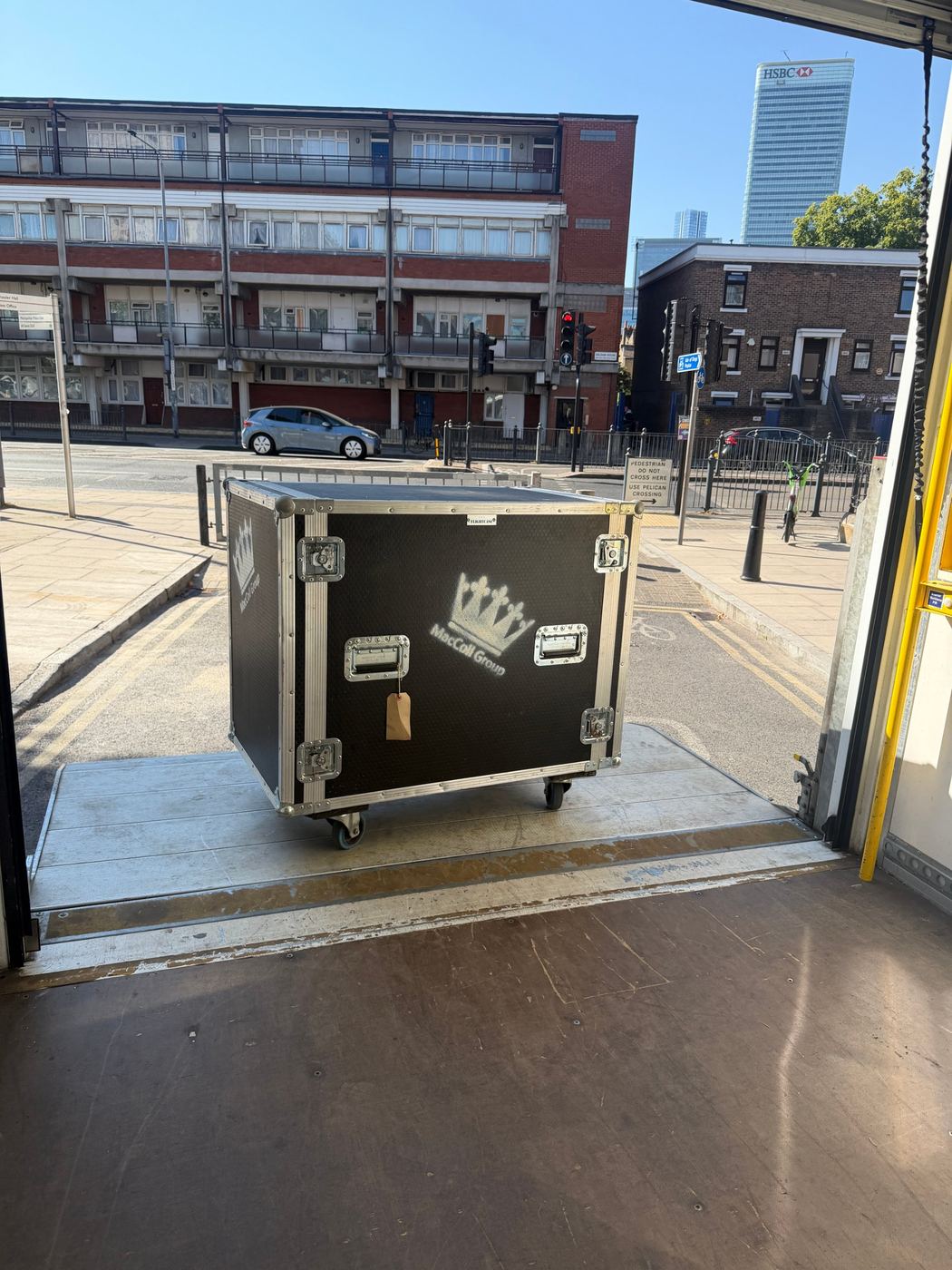
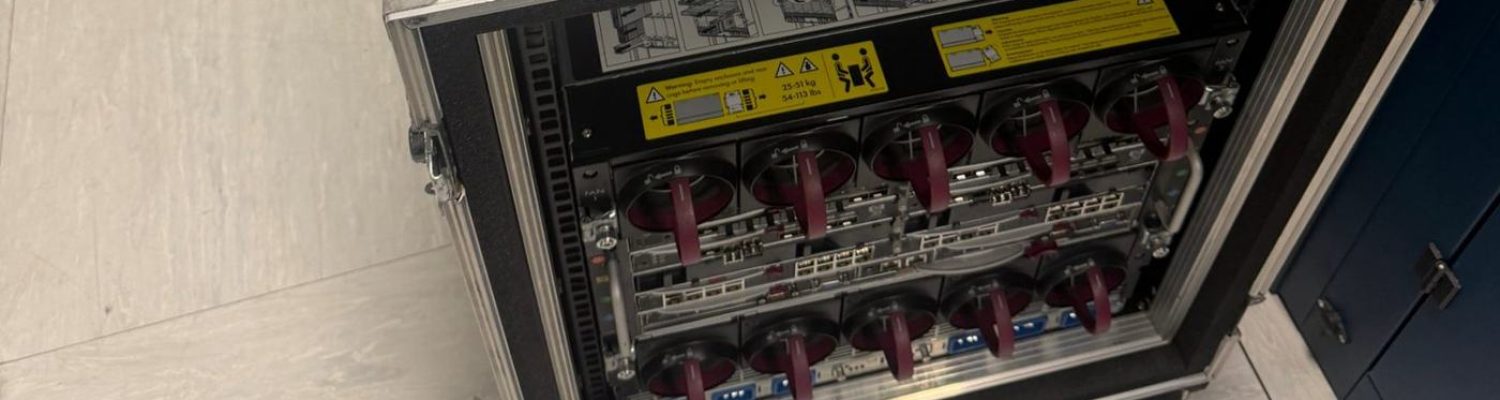
HPE c7000 blade chassis in a rack-format flight case

Belfast to Dublin in a Day: Moving a Server Room into a Colocation Facility

In November we moved an IT services company’s equipment out of its office server room in Belfast and into a colocation facility in Dublin. Collection, the drive south, racking and sign-off were all done in one working day, from 09:00 to 15:00.


This is how the Belfast to Dublin move ran, and the one thing on the day that didn’t match the plan.

What moved

  • An HPE BladeSystem c7000 chassis with 16 blades
  • Storage arrays
  • Switches and network equipment

Belfast to Dublin move: office server room in Belfast before the uplift
The office server room in Belfast, before the uplift

From an office to a data centre

The client was consolidating out of an office-based server room and into a proper colocation facility, with the power, cooling and security an office can’t match. That meant a full uplift: everything powered down and de-racked in Belfast, moved in a single run to Dublin, and re-racked the same afternoon.


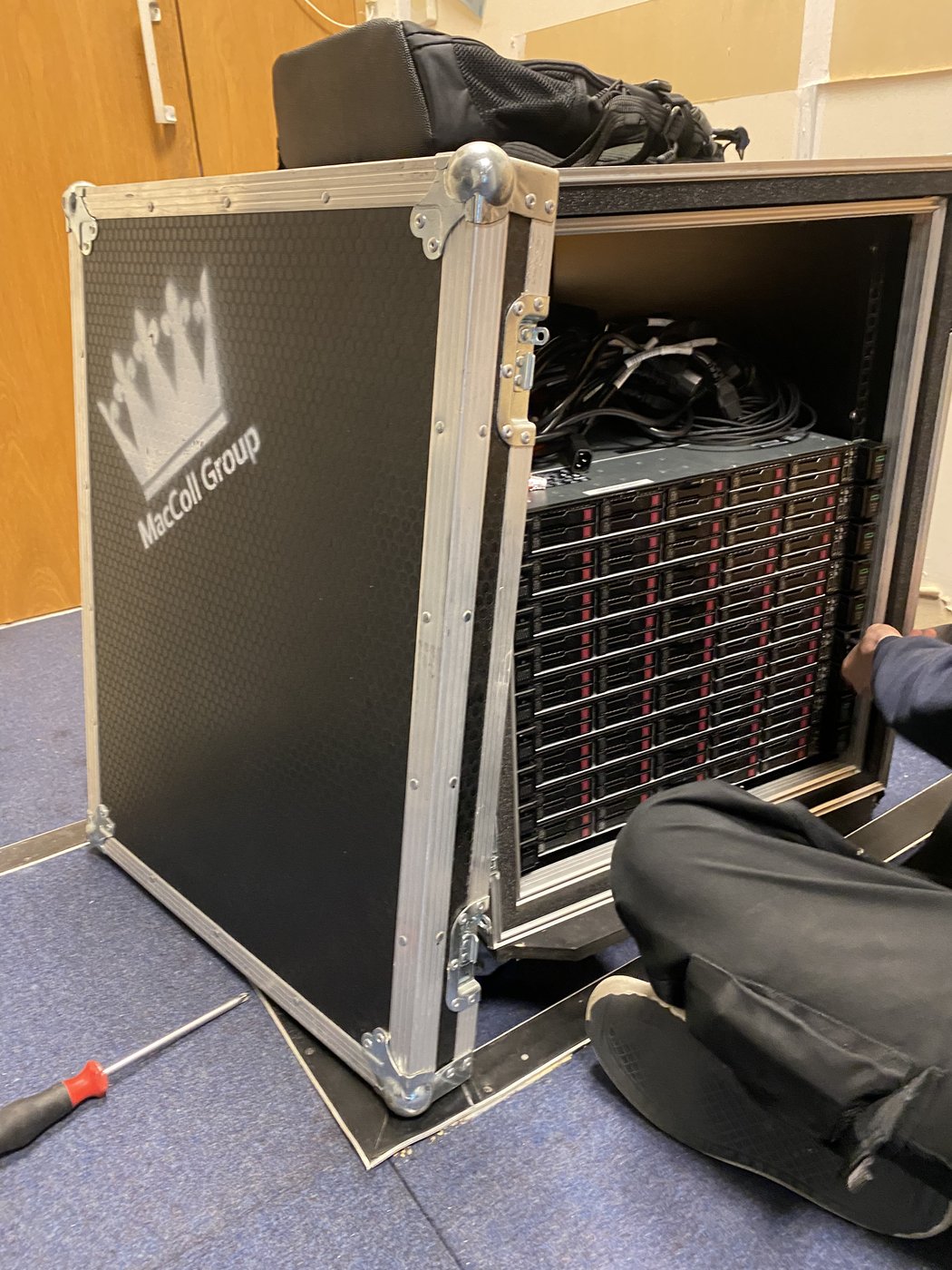
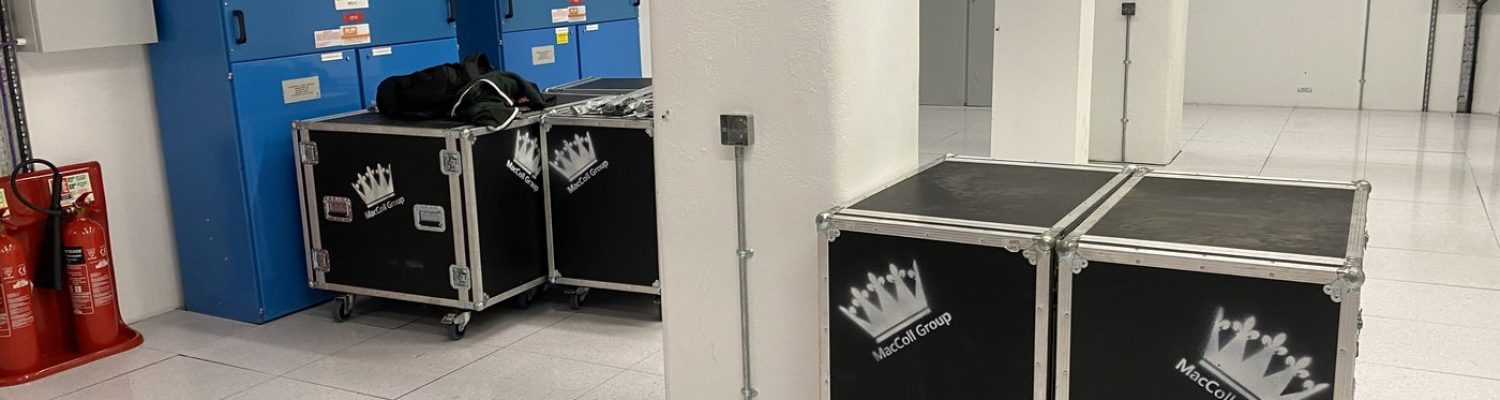
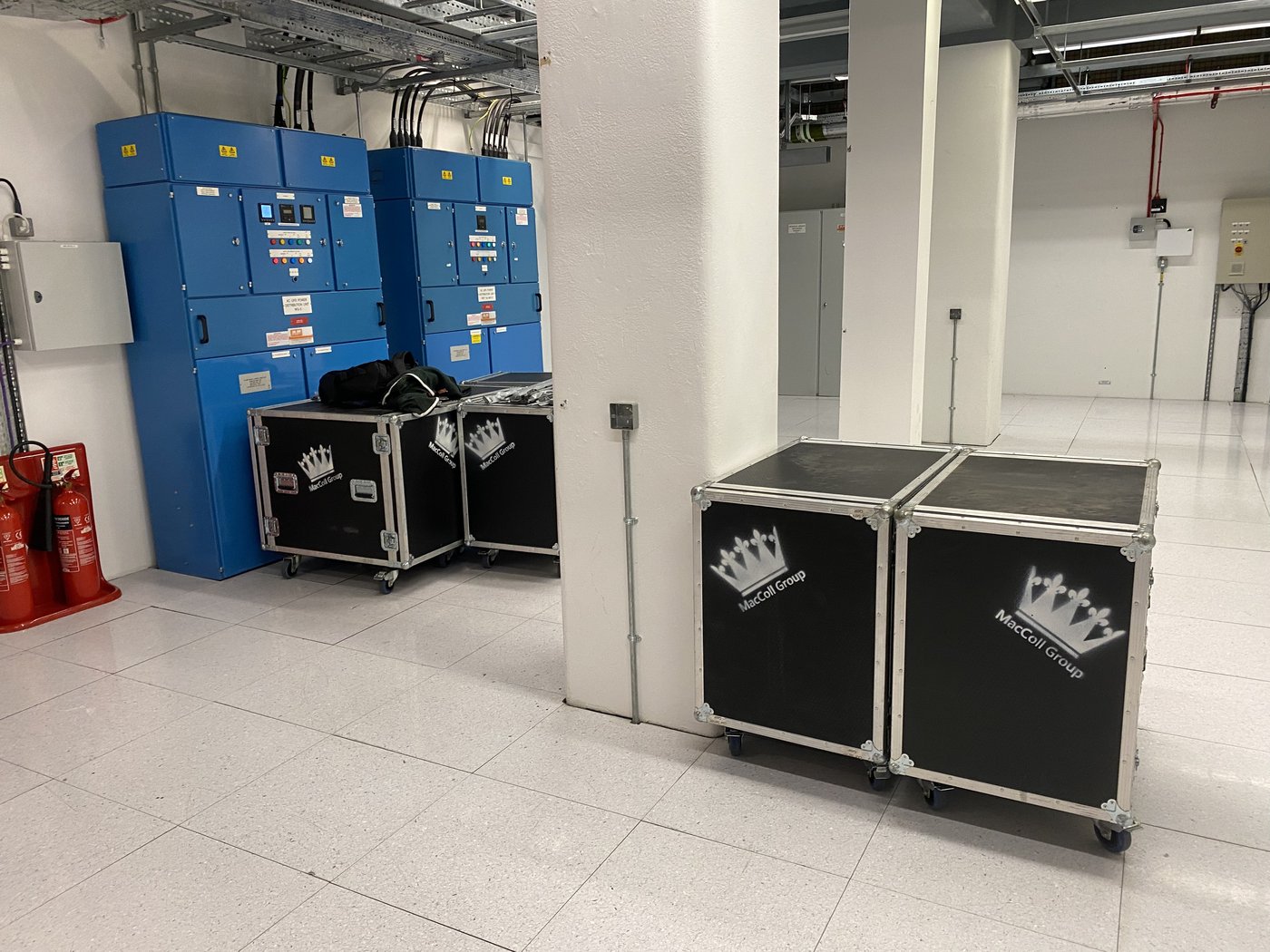
The blade chassis travelled in one of our rack-format flight cases, so it was never carried loose or stacked.
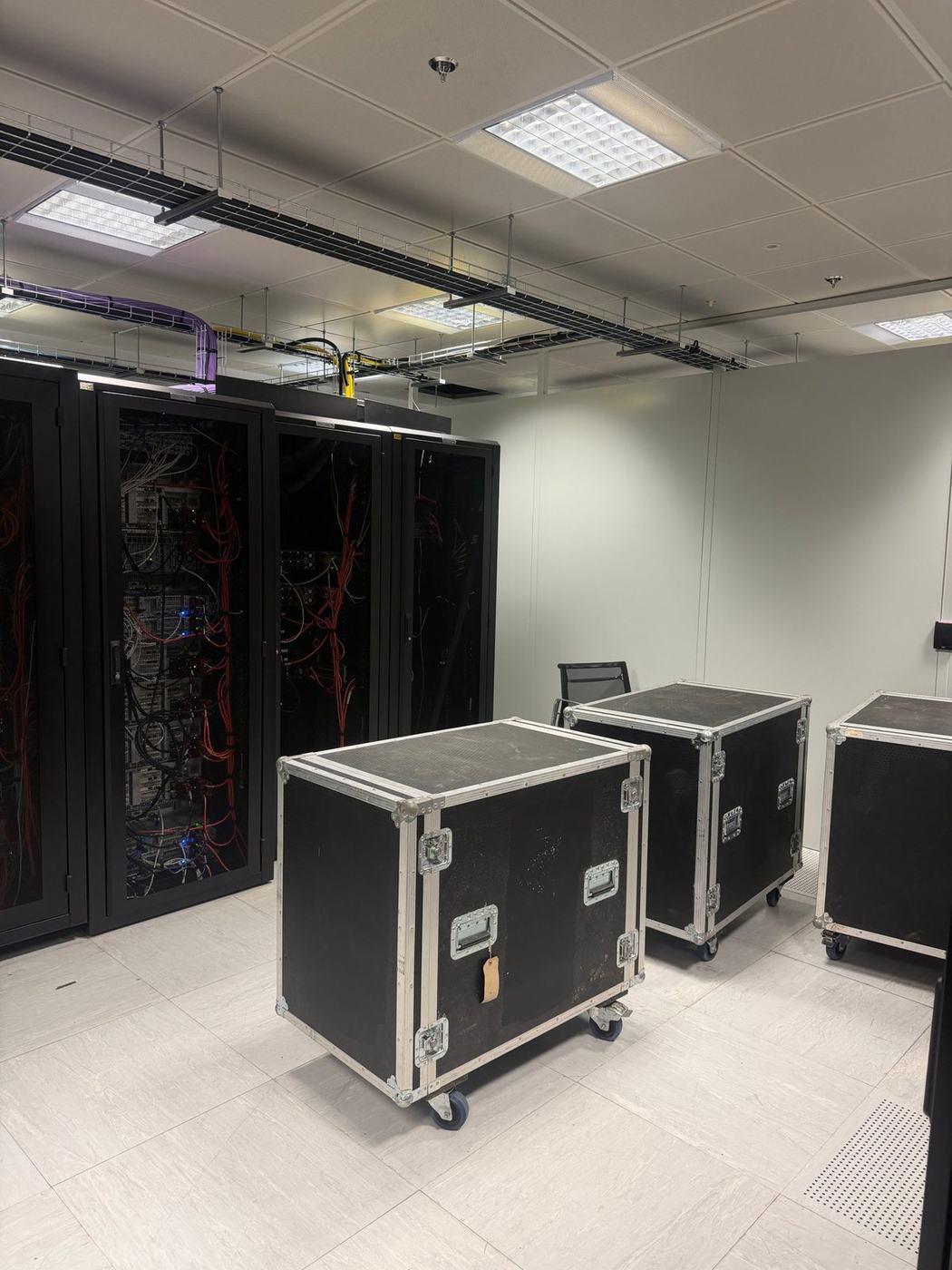
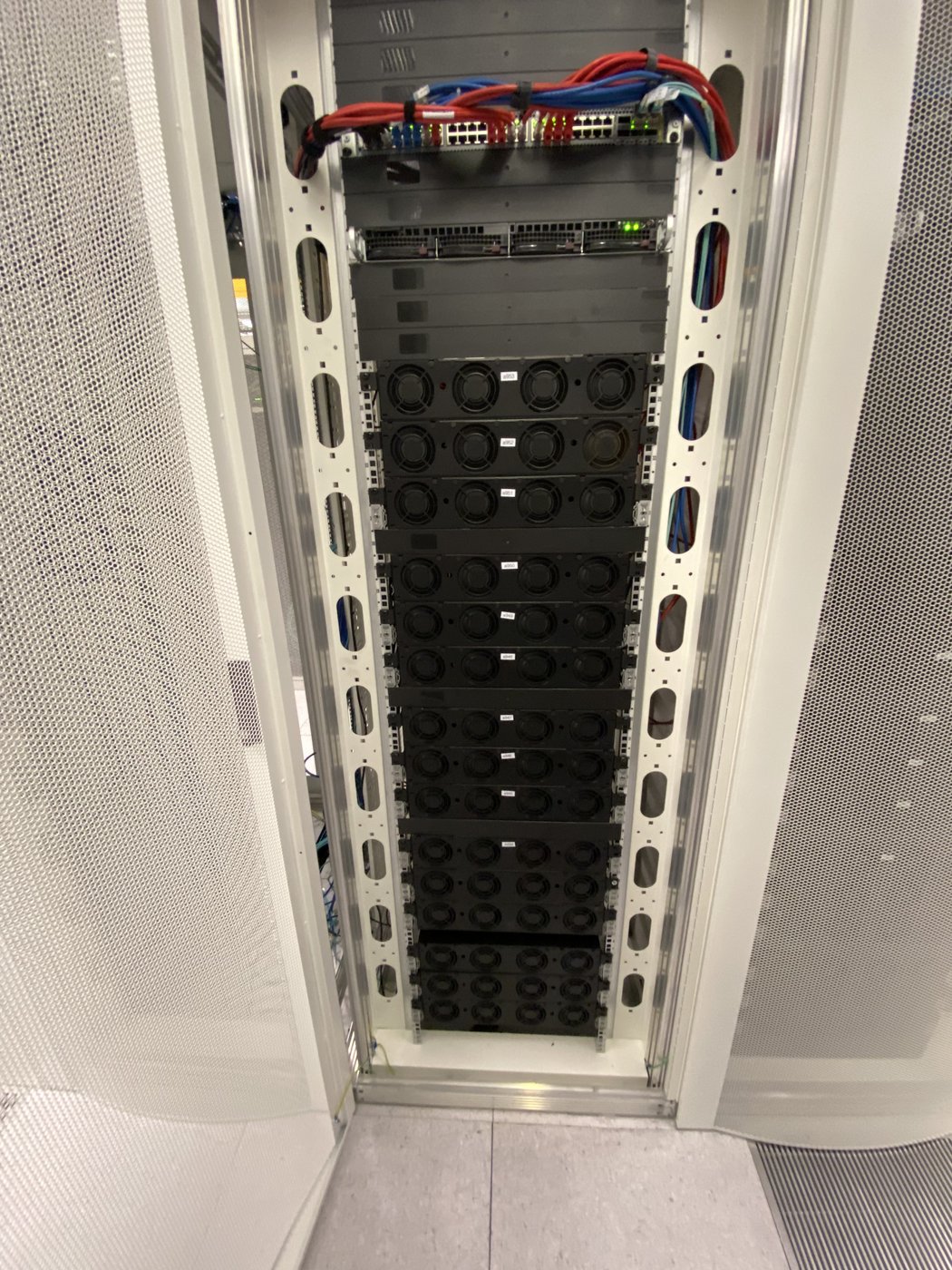
Rack-format flight cases in the Dublin colocation hall
Rack-format flight cases on the floor in Dublin

Every unit had a place before we arrived

Before the day, each device was given a position in the destination rack. On site we worked from the client’s rack drawings and from our own rack-planning tool on a tablet, which shows where every unit is going by U position and lets the crew scan a unit to find its slot.
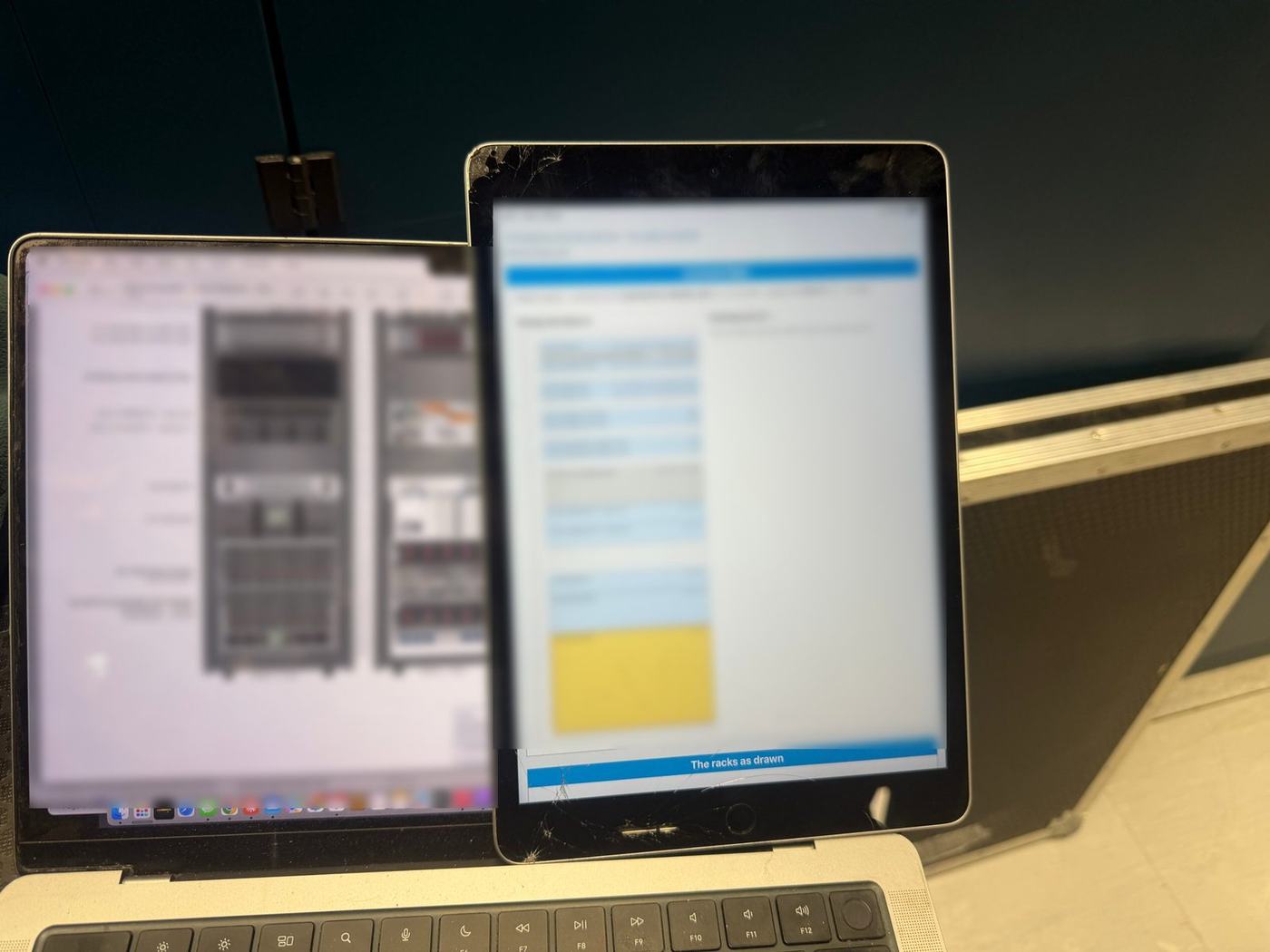
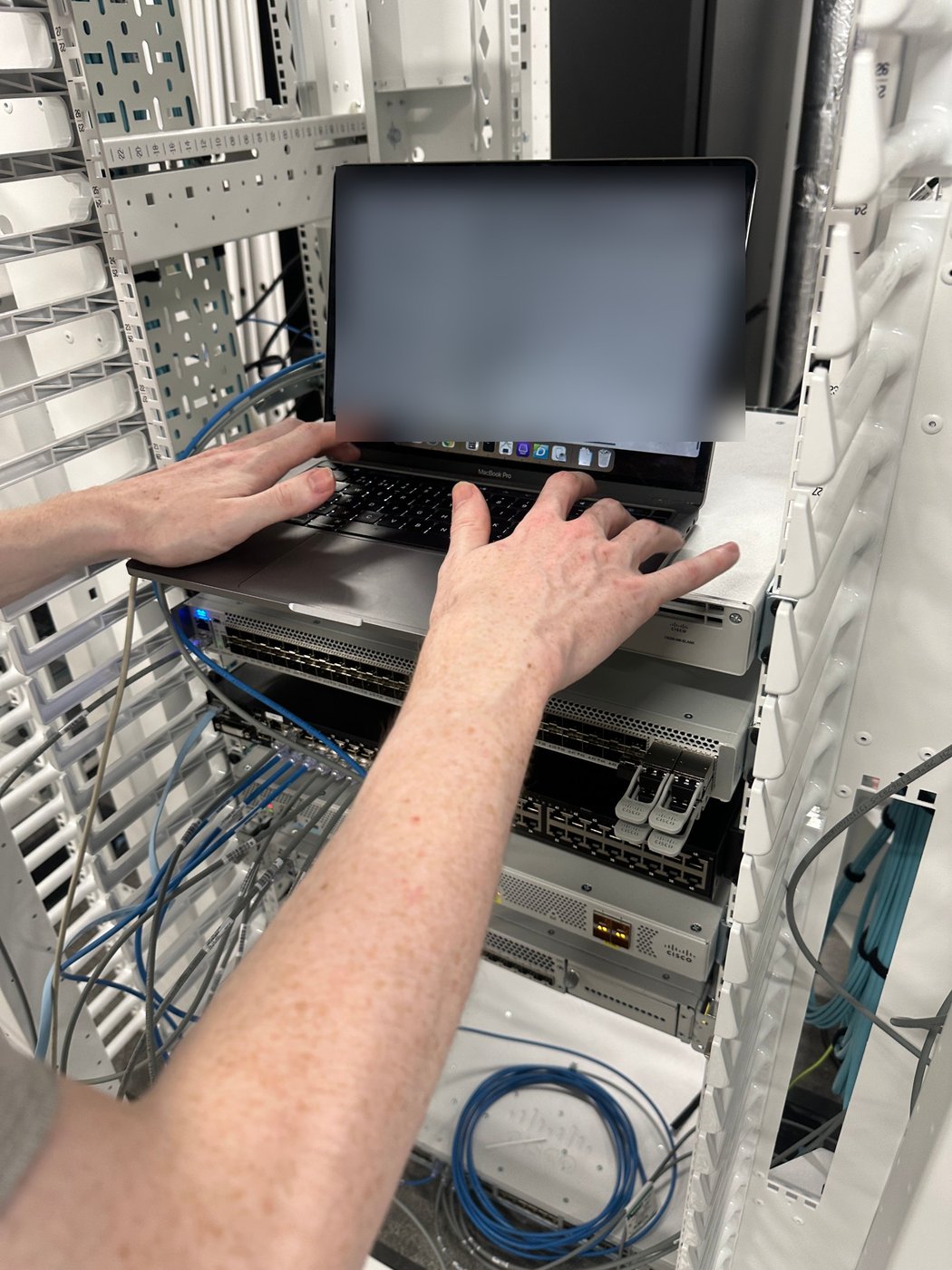
Rack drawings and rack-planning tool on a tablet
Rack drawings on the laptop, our rack-planning tool on the tablet (details blurred)

The one surprise: U2

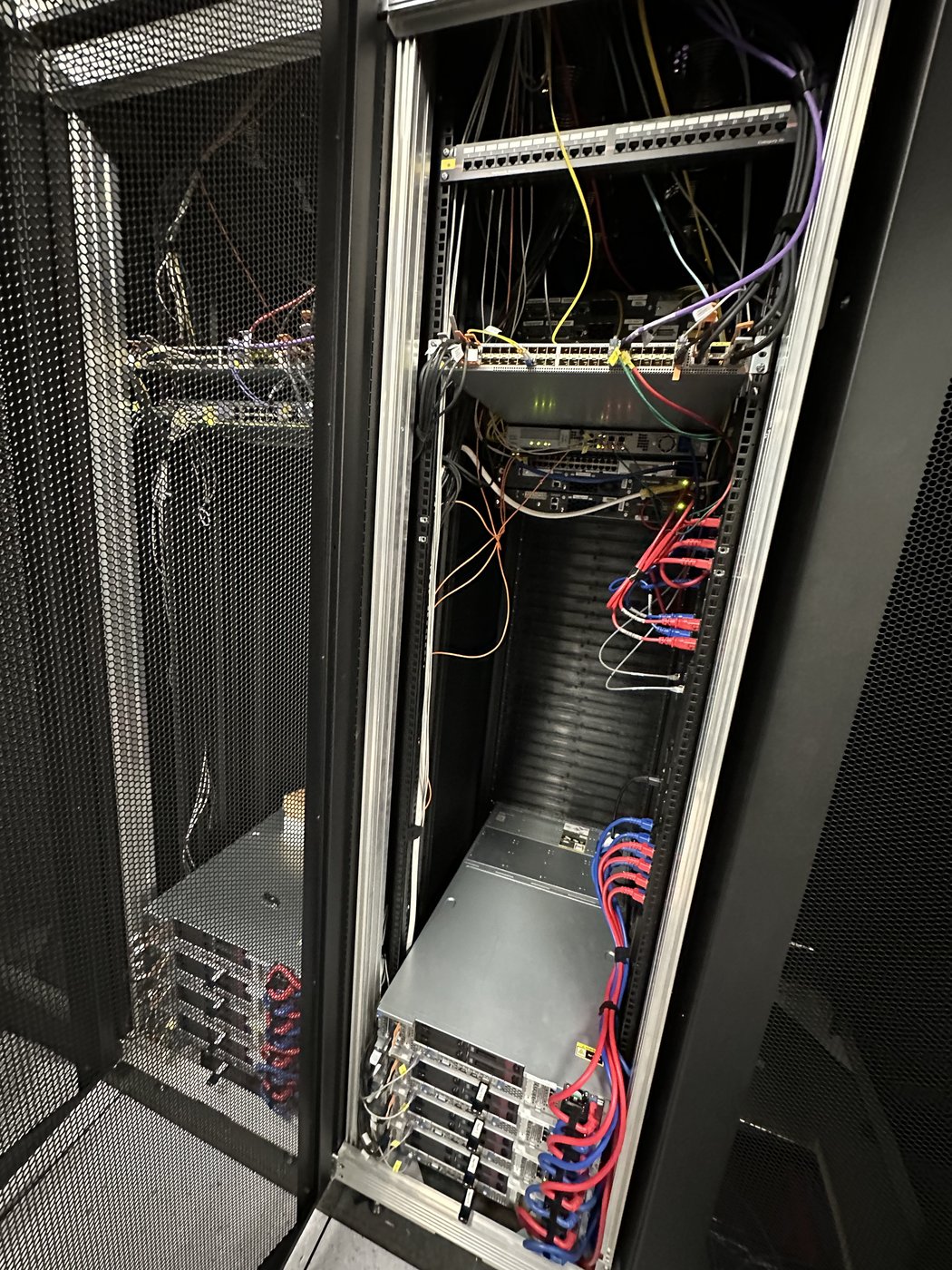
The plan had the blade chassis starting at U2. In Dublin, the rack’s rail adjustment brackets sat right beside the U2 position, so nothing could be mounted there. We raised everything to start from U3. There was room in the rack to absorb it, so the plan held and the day finished on time.


When you plan a move, check the first few units of the destination rack, not just the total space.

Belfast to Dublin: crossing the border

Belfast to Dublin is a cross-border move, but a simpler one than most. Under the Windsor Framework, Northern Ireland follows EU rules for goods, so there are no customs declarations between Belfast and Dublin, unlike a move from Great Britain into Ireland. VAT is a separate question: equipment moving from Northern Ireland to Ireland falls under the EU’s VAT rules, and the owner may need to report the movement, so check with your accountant before the day.

Planning a move to or from Ireland?

Read more about data centre relocation between the UK and Ireland and our cross-border relocation service, or get in touch to talk through your move.

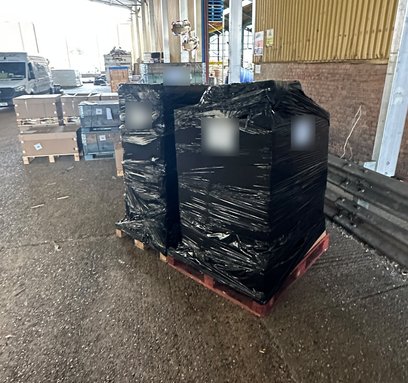
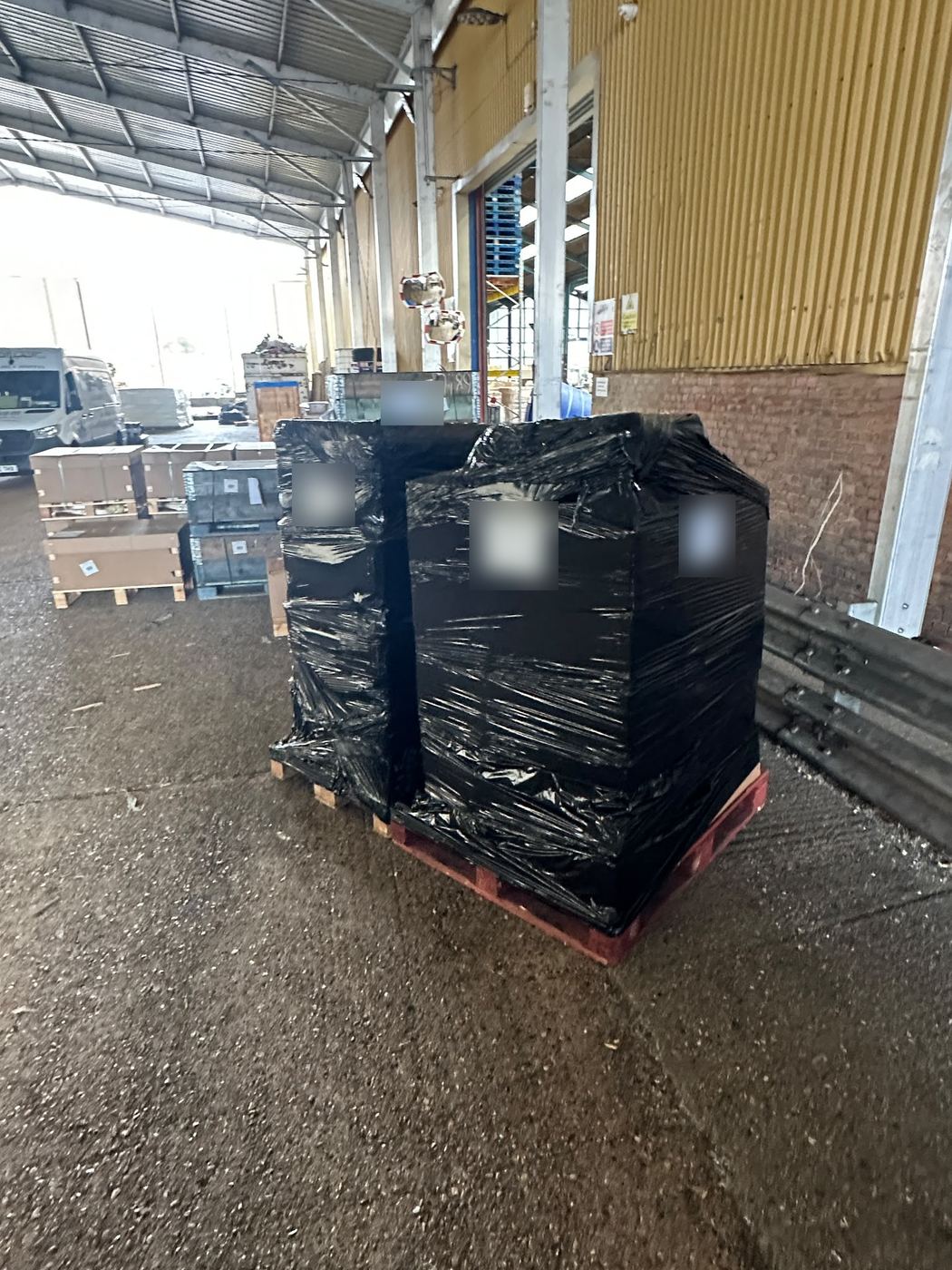
Wrapped pallets ready for air freight

Equinix Slough to the USA: Preparing Servers for Air Freight

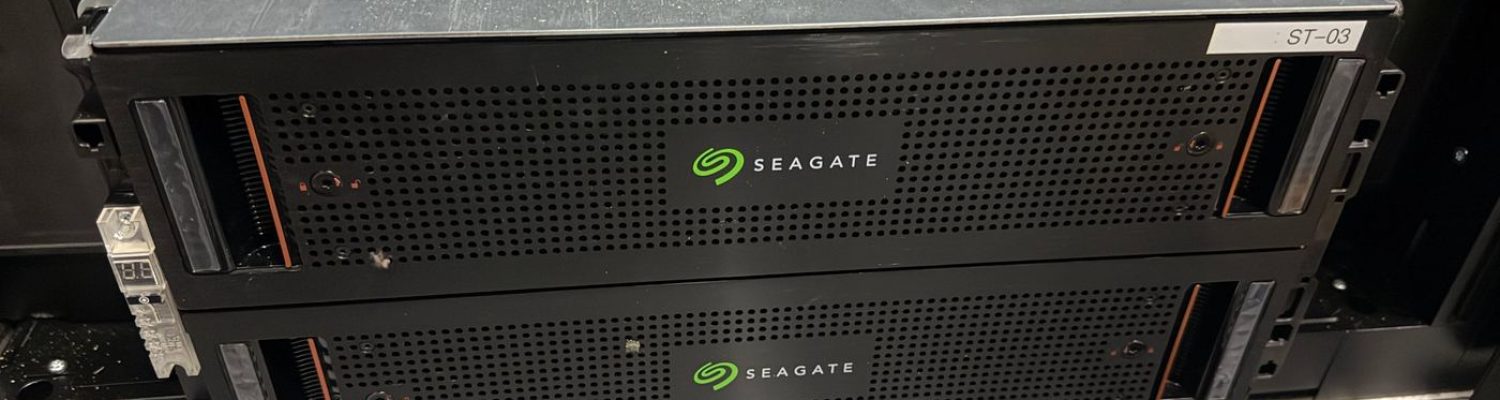
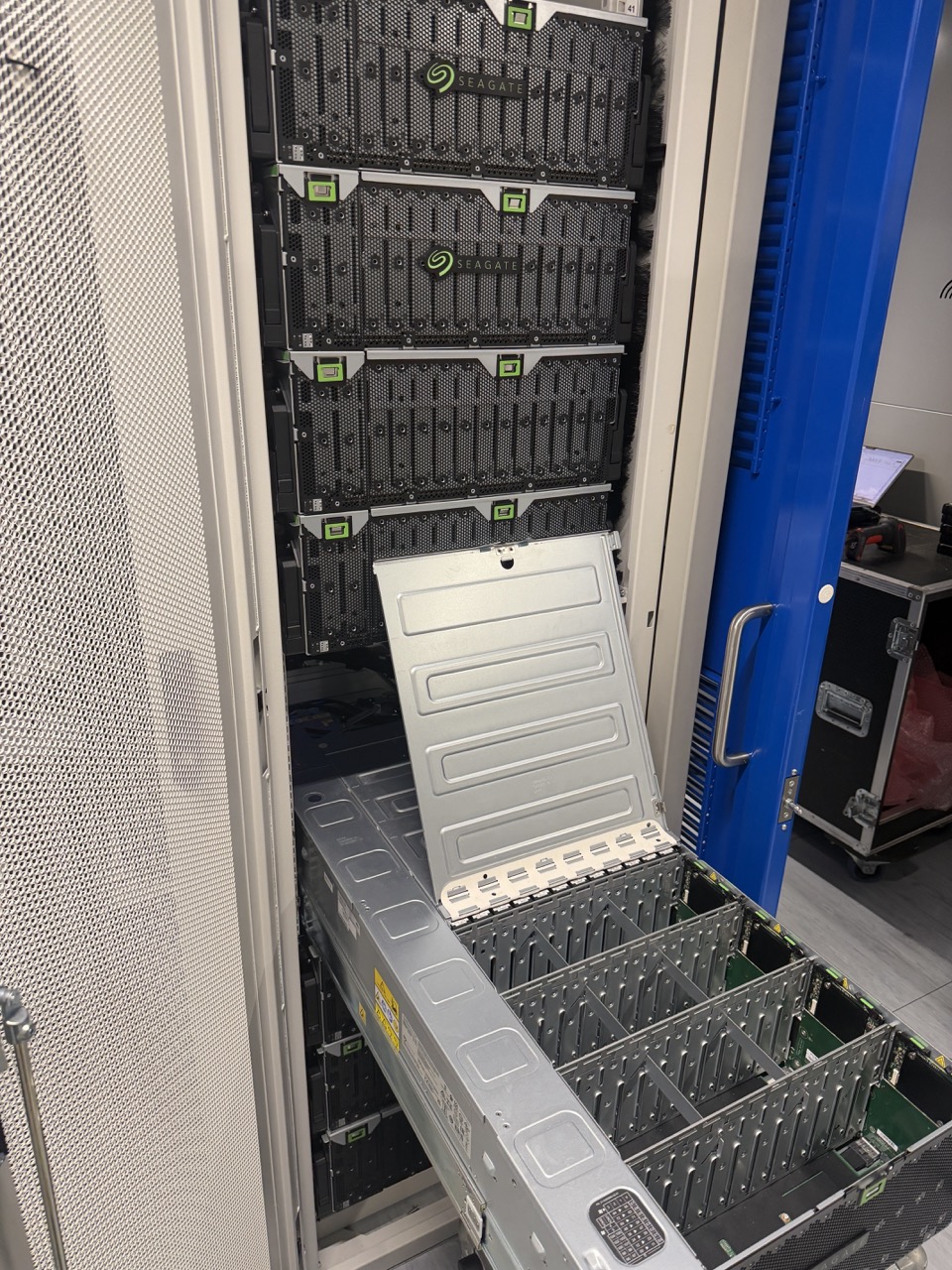
Seagate 4U storage enclosures

Equinix Slough to the USA: Preparing Servers for Air Freight

In August we de-installed servers and storage for a US IT company at Equinix LD5 in Slough and prepared the servers for air freight to the United States. The equipment left the data centre on three pallets and was handed to the air freight agent at Heathrow the same day.

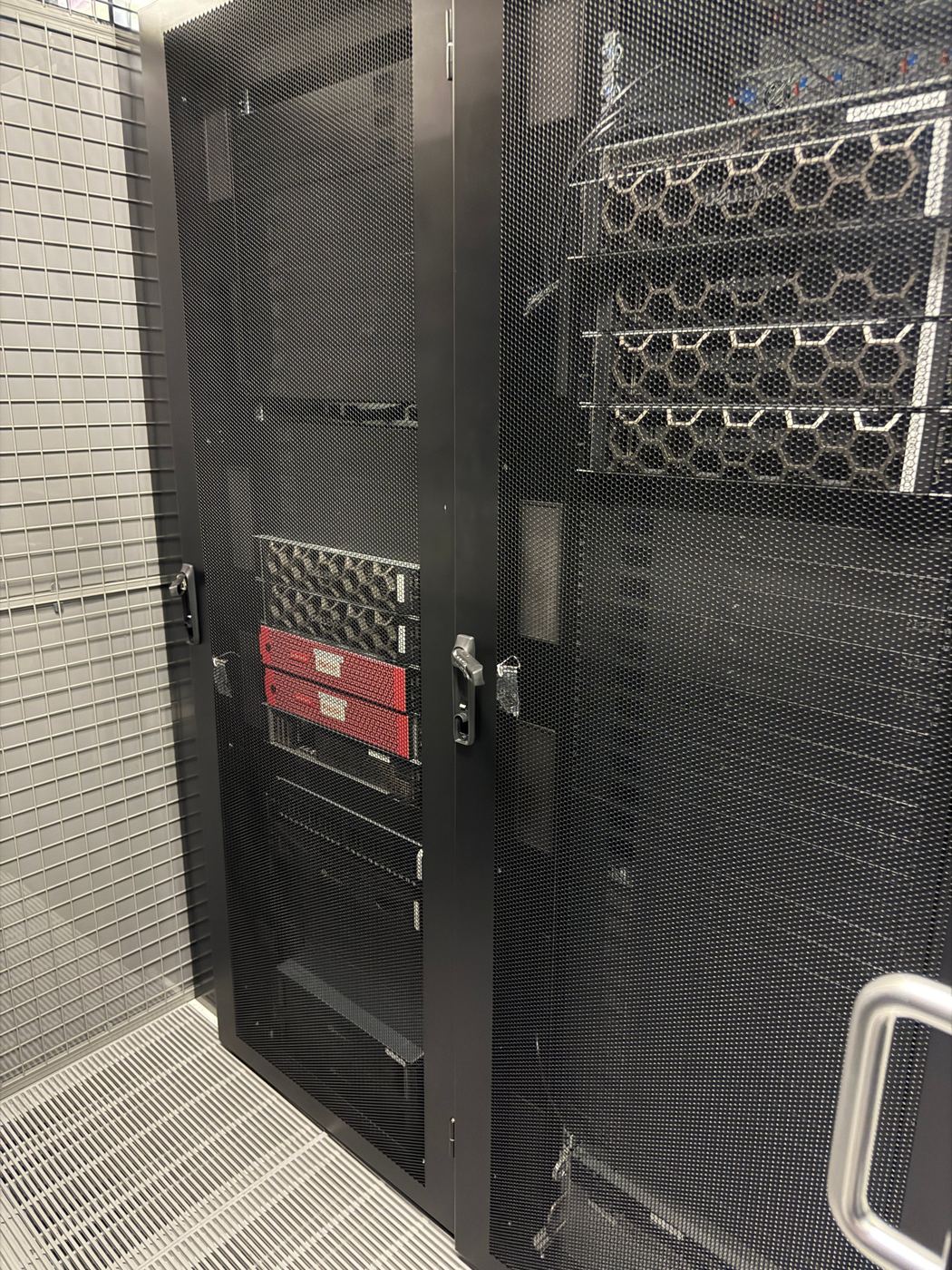
Racks at Equinix Slough before de-installation
The racks at Equinix Slough before we started

What came out

Rack servers and two Seagate 4U storage enclosures, each fully loaded with drives. A populated enclosure is a two-person lift at the very least.

Preparing servers for air freight

Servers for air freight have to be packed for the aircraft and the handling either side of it, not just the road. Everything was de-racked, packed and built onto pallets, then shrink-wrapped and labelled for the airline.


Each pallet is weighed and measured before it goes, because air freight is charged on whichever is greater, the actual weight or the volume. A tightly built pallet costs less to fly than a loose one.

Servers for air freight: wrapped pallets at the freight agent
Three pallets, wrapped and labelled for air freight

The paperwork that decides the trip

The hard part of sending servers to the USA is rarely the flight. Before anything leaves, someone has to be the importer of record, the declared value has to reflect what the equipment is worth today rather than what it cost, and the duty at the US end has to be understood. Get those settled before the kit is packed, not once it is sitting at the airport.

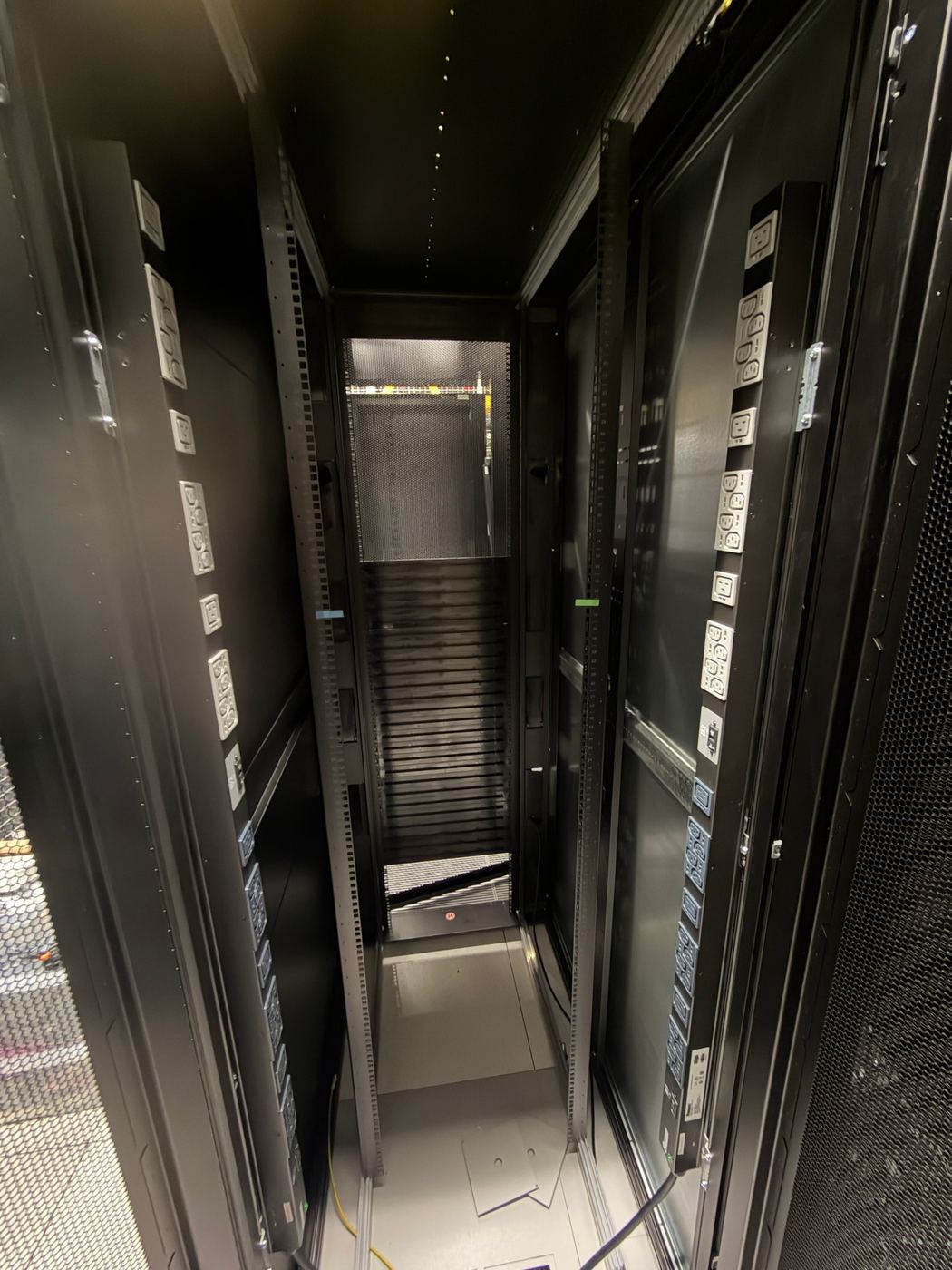
Empty racks at Equinix Slough after de-installation
Empty racks at Equinix Slough

Sending equipment overseas?

Read more about our cross-border relocation service and moves to and from the USA, or get in touch.

Smart Hands at Kao Data Harlow: 418 Drives Installed in Two Days

smart-hands-supermicro-rack

Smart Hands at Kao Data Harlow: 418 Drives Installed in Two Days

In October 2026 a client building out capacity at Kao Data’s Harlow campus needed drives fitted at scale, without tying up their own engineers. We supplied smart hands for two days.

Day one: 320 HPE drives

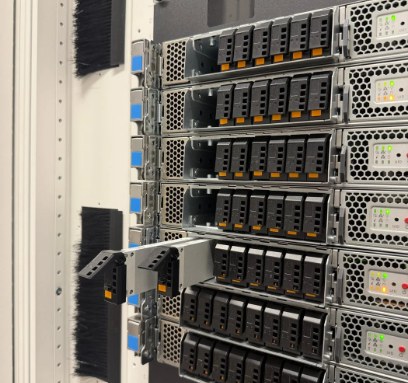
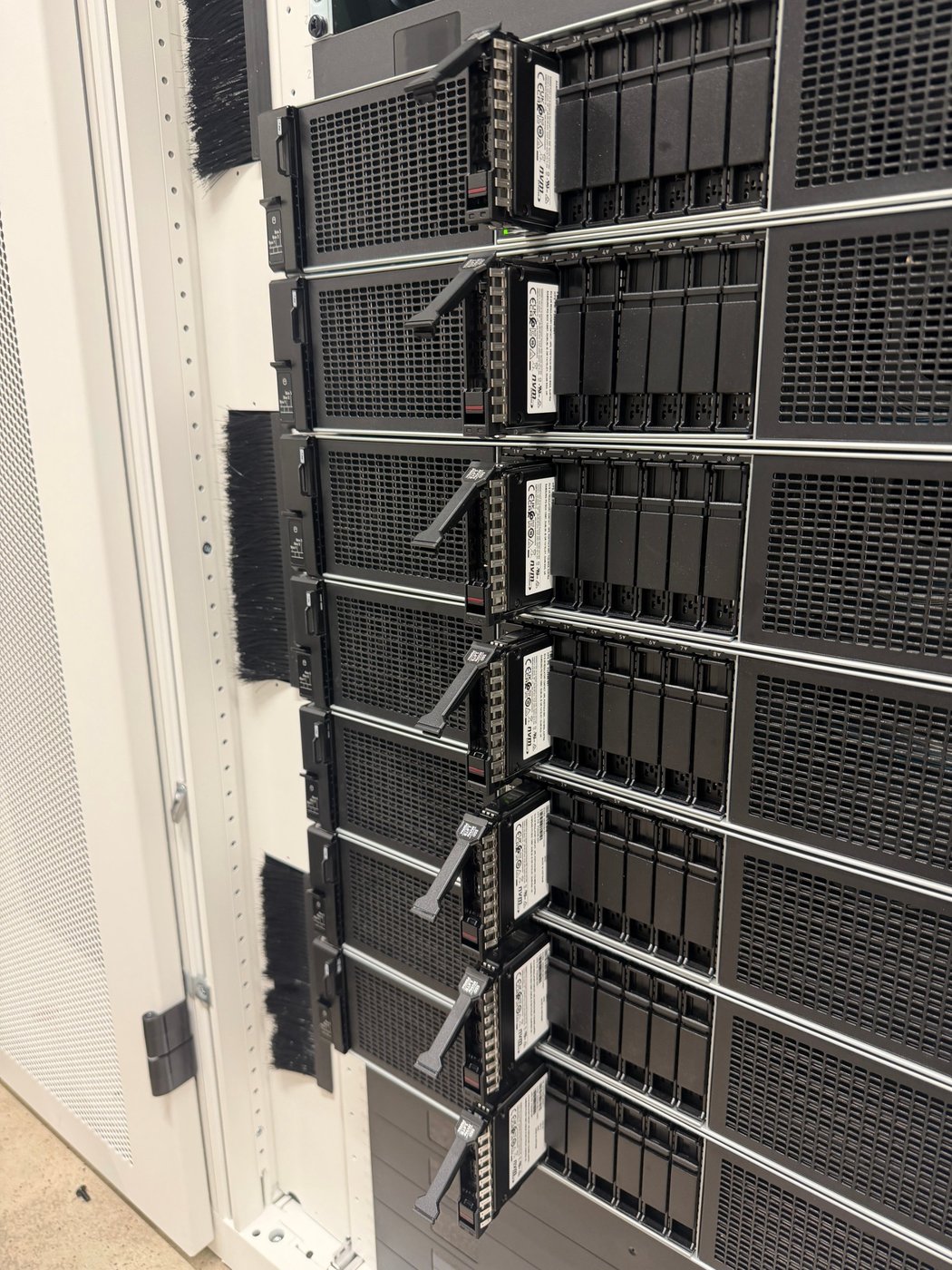
We installed 320 HPE 1.6TB NVMe SSDs into the client’s receiving servers, unpacking each drive from its delivery and seating it in its tray.

Pallet of HPE drive deliveries
Drive delivery on the pallet

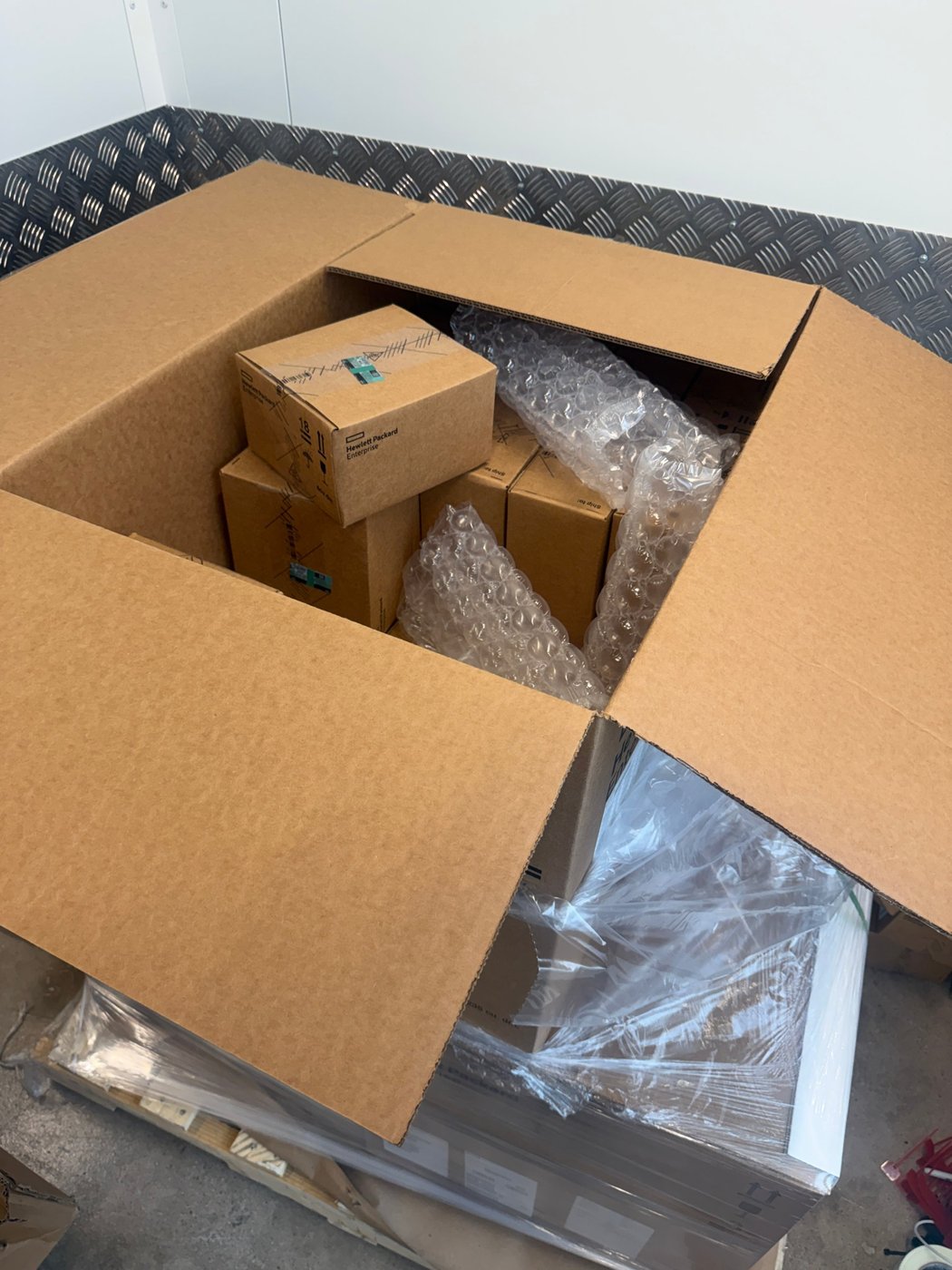
Unpacking HPE drive boxes
Unpacking the drive shipment

HPE NVMe SSDs being seated into servers
Seating drives into the receiving servers

Day two: 98 NVMe sleds

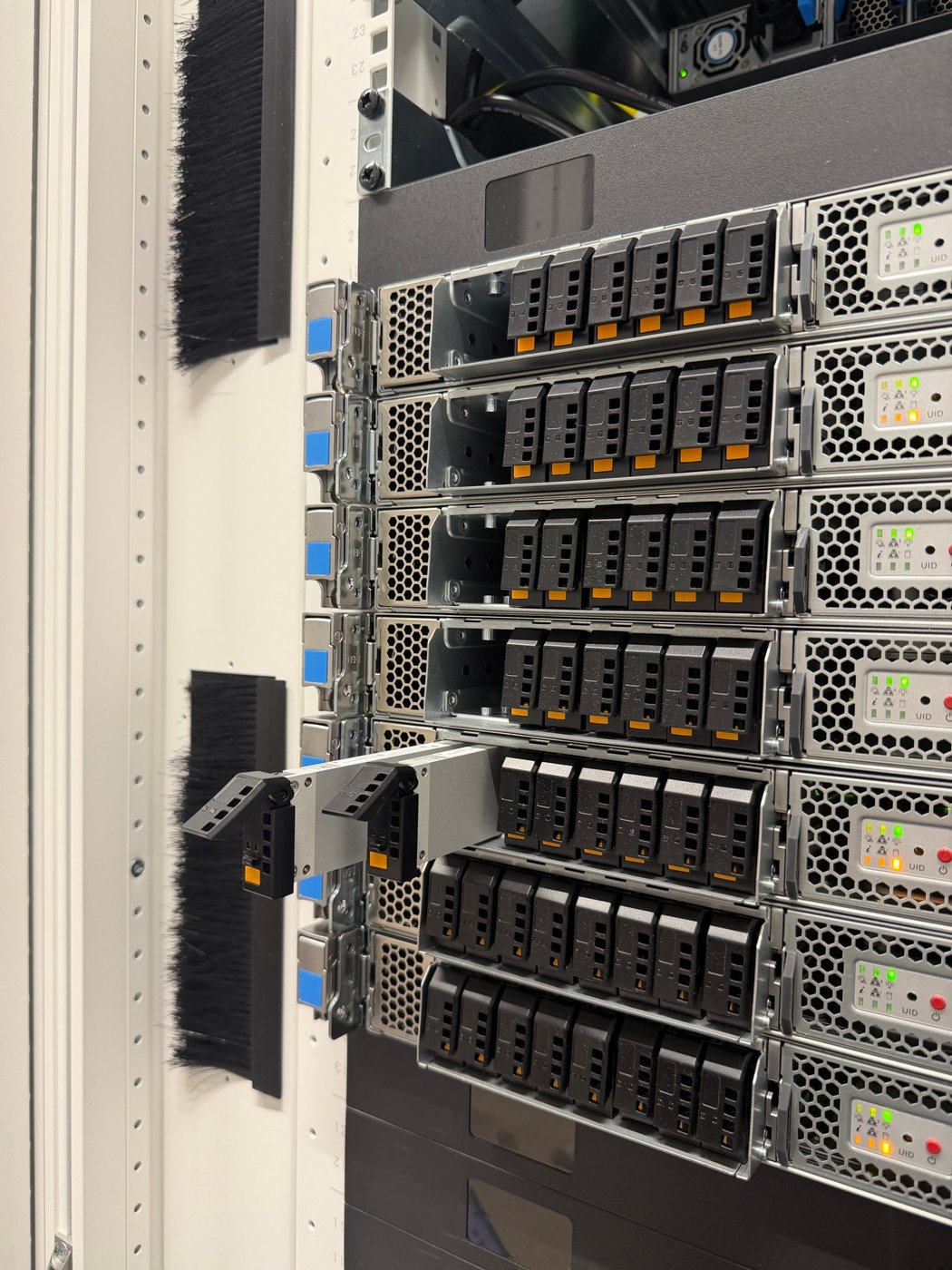
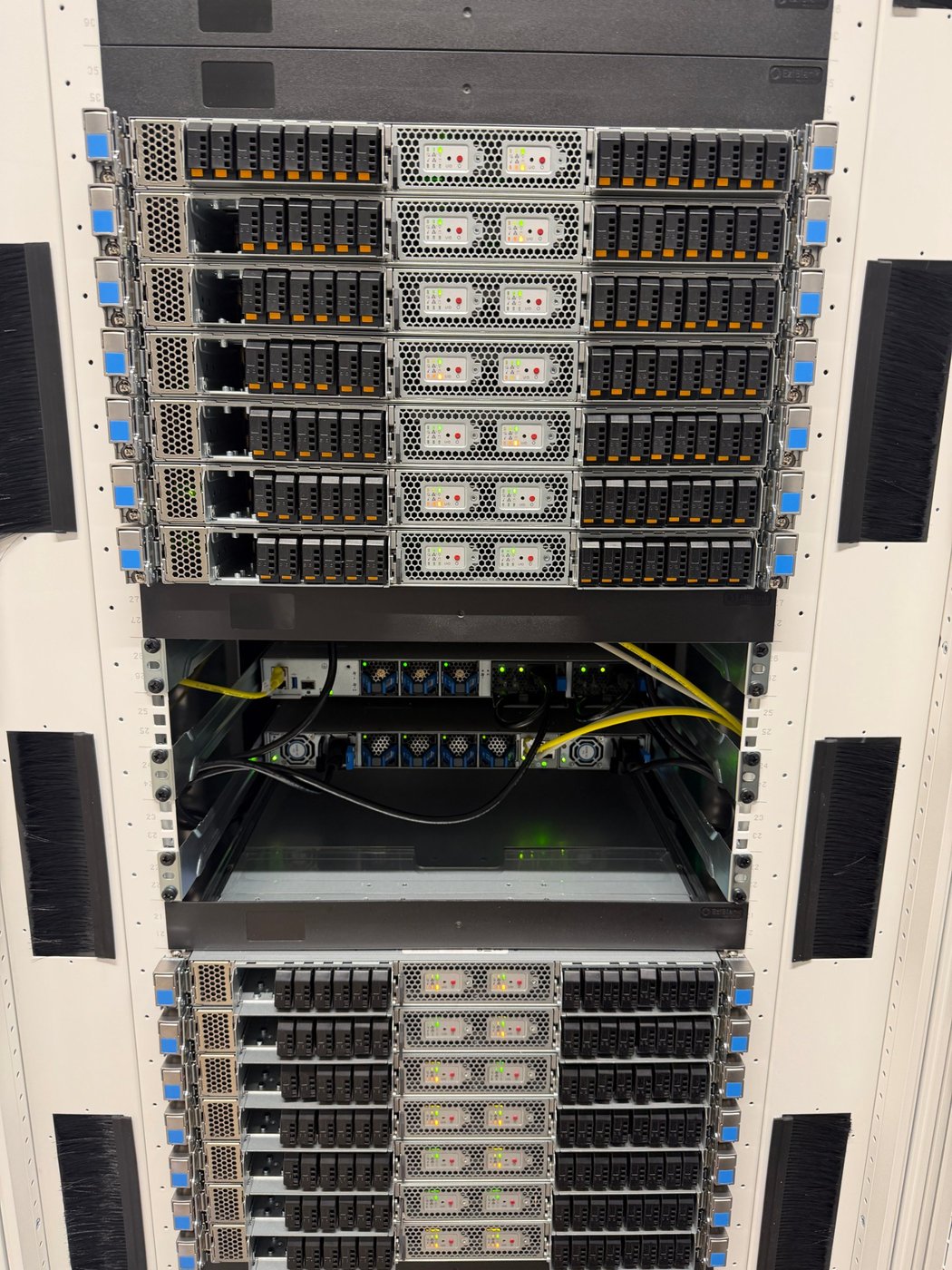
We fitted 98 NVMe SSDs into their brackets and installed them two per unit across the client’s Supermicro servers.

NVMe SSDs in a flight case ready for fitting
NVMe SSDs ready for fitting

NVMe SSDs fitted into brackets
SSDs fitted into their brackets

NVMe sleds going into Supermicro servers
Sleds going into the Supermicro servers

Supermicro servers populated by DataMove smart hands at Kao Data Harlow
Supermicro servers populated

Why use smart hands

Drive installs are simple but slow, and mistakes at this volume are expensive to find later. A dedicated team working through the count frees the client’s engineers for configuration and testing.

DataMove engineer on site at Kao Data Harlow
On site at Kao Data Harlow

Need hands on site?

Read about our onsite and remote smart hands and installation and rollout services, or get in touch.

Data hall at Equinix Frankfurt

Frankfurt Data Centre Move: Three Floors into One in a Day

Data hall corridor

Frankfurt Data Centre Move: Three Floors into One in a Day

In October we moved an online backup provider’s equipment between two Equinix data centres in Frankfurt, from FR5 to FR2. At FR5 the kit sat in racks on three different floors. At FR2 it all went into one location. This Frankfurt data centre move started at 09:00 on a Saturday and finished at around midnight.


We had moved the same client’s London equipment earlier in the year, so this was a second move for a returning client.

What moved

  • 62 devices, 104U of equipment, about 1,760 kg in total
  • 43 × 2U servers
  • 2 × 4U 60-bay storage chassis, around 100 kg each
  • 10 × 1U servers
  • 7 switches

DataMove engineer arriving at Equinix in Frankfurt
Arriving at Equinix, Frankfurt

Why a 12-tonne lorry

At around 1,760 kg, the load was more than a large van can legally carry. We drove a 12-tonne vehicle over from the UK with a crew of four and eight 14U rack-format flight cases.

Servers staged in a flight case and on a pallet for the Frankfurt data centre move
Staged at FR5: a rack-format flight case and a strapped pallet of servers

Three floors into one

Consolidating racks from three floors into one location changes the job. Every device needs a planned position in the new racks before it leaves the old ones, so nothing ends up on the data hall floor at FR2 waiting for a decision about where it goes.

The day itself

Access was delayed by an hour by a system outage at Equinix, which nobody on site could do anything about. With three floors to clear and one location to build, the day ran long. We finished at around midnight, with everything racked at FR2.


When you plan a move inside a data centre campus, allow for access delays. Booking and security systems do go down, and a Saturday window is only as long as the site lets it be.

Three racks at Equinix FR2 after the Frankfurt data centre move
Finalised rack positions in the data hall at FR2

Planning a Frankfurt data centre move?

Read more about data centre relocation between the UK and Germany and our relocation service, or get in touch to plan your move.
Telehouse North to IP House: Storage Servers Moved Across Docklands

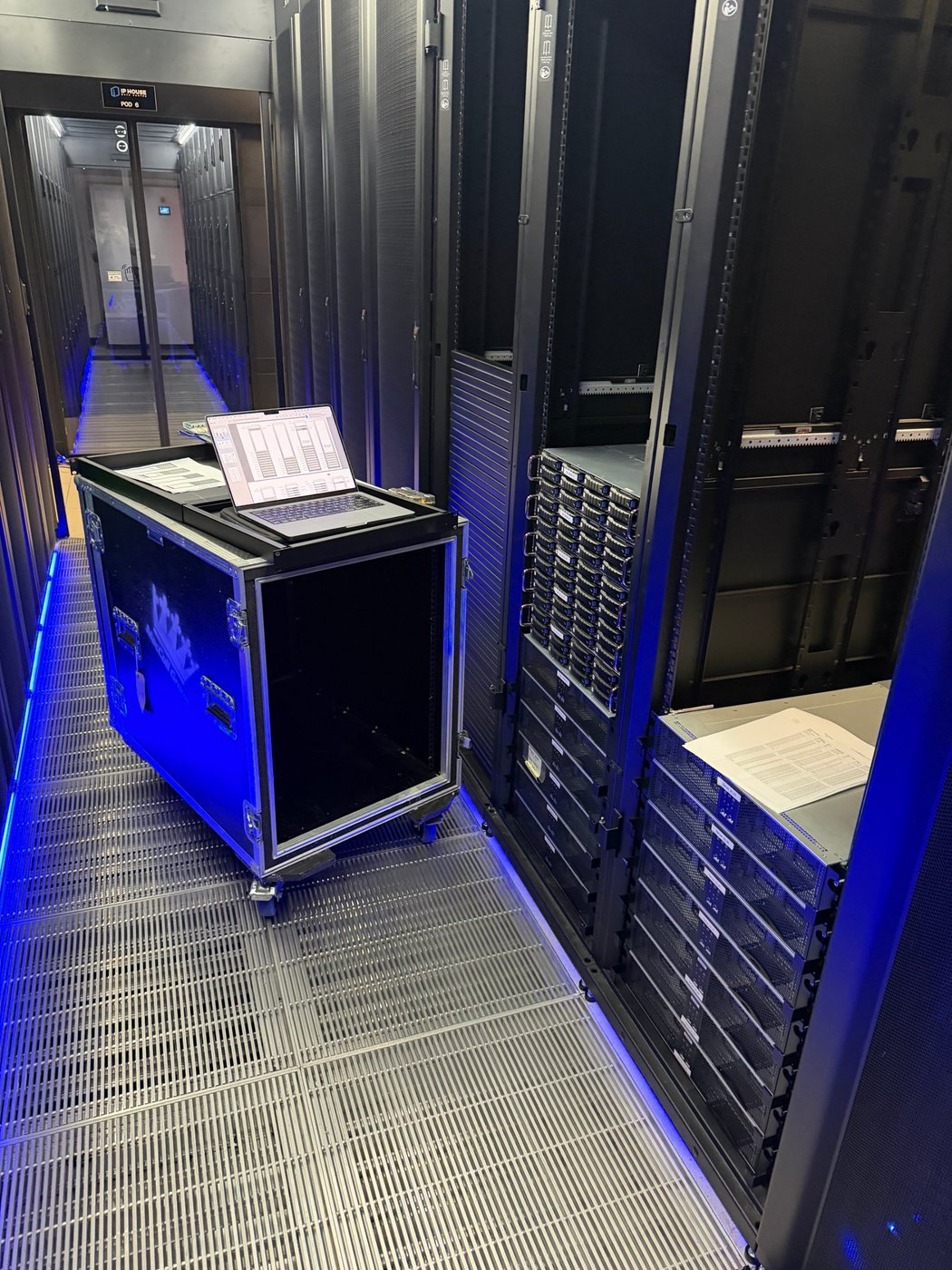
docklands-move-flight-cases-loading-bay

Telehouse North to IP House: Storage Servers Moved Across Docklands

In May 2026 we moved an online backup provider’s storage servers from Telehouse North to IP House. Both data centres sit in London Docklands, so the road leg of this Telehouse North to IP House move was short. The work at each end was not.

What moved from Telehouse North to IP House

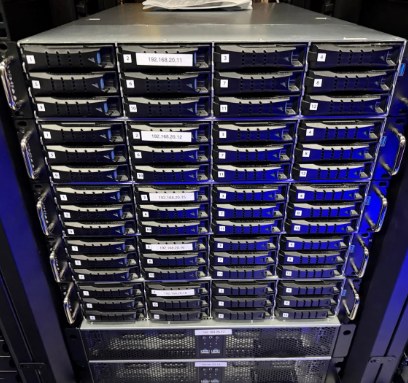
A rack of high-density storage servers, each holding dozens of drives, plus the servers alongside them. Every server carried its IP address on the front, so it went back into the right position at IP House.

Storage servers labelled by IP address at Telehouse North
Drive trays labelled by server IP ahead of the move

Storage servers prepared for the Telehouse North to IP House move
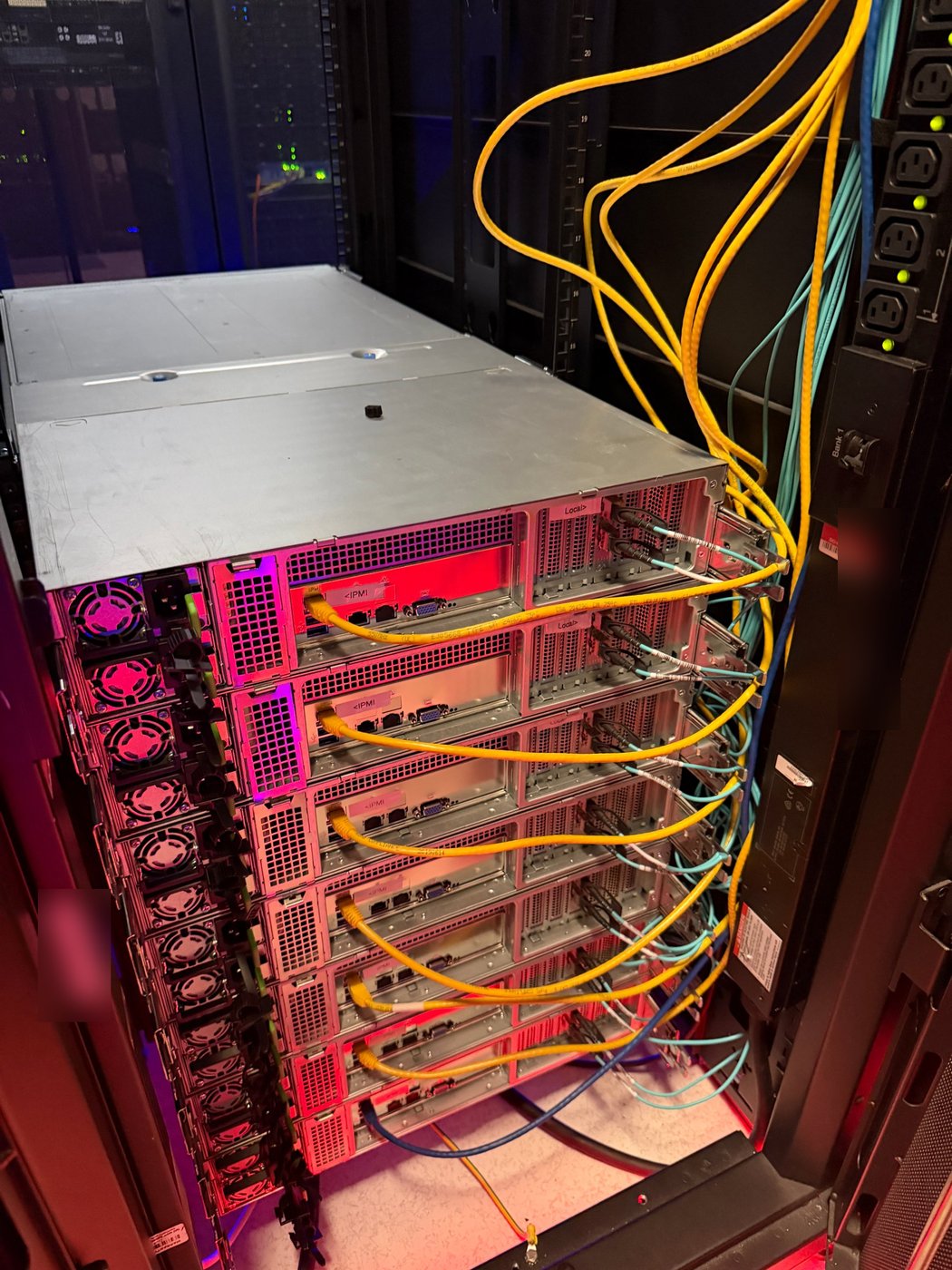
Rear of the storage servers before decabling at Telehouse North

Out of Telehouse North

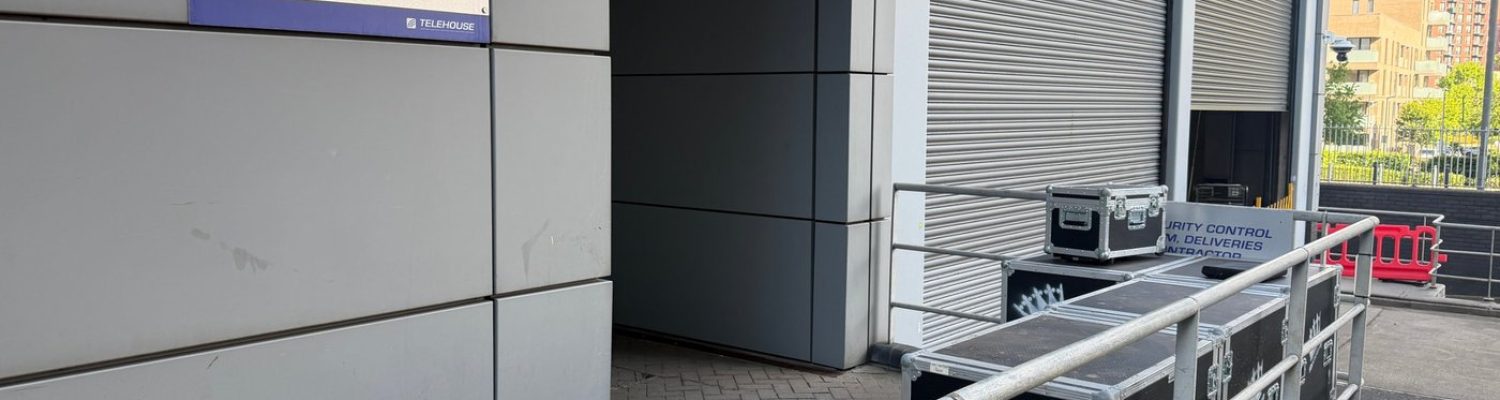
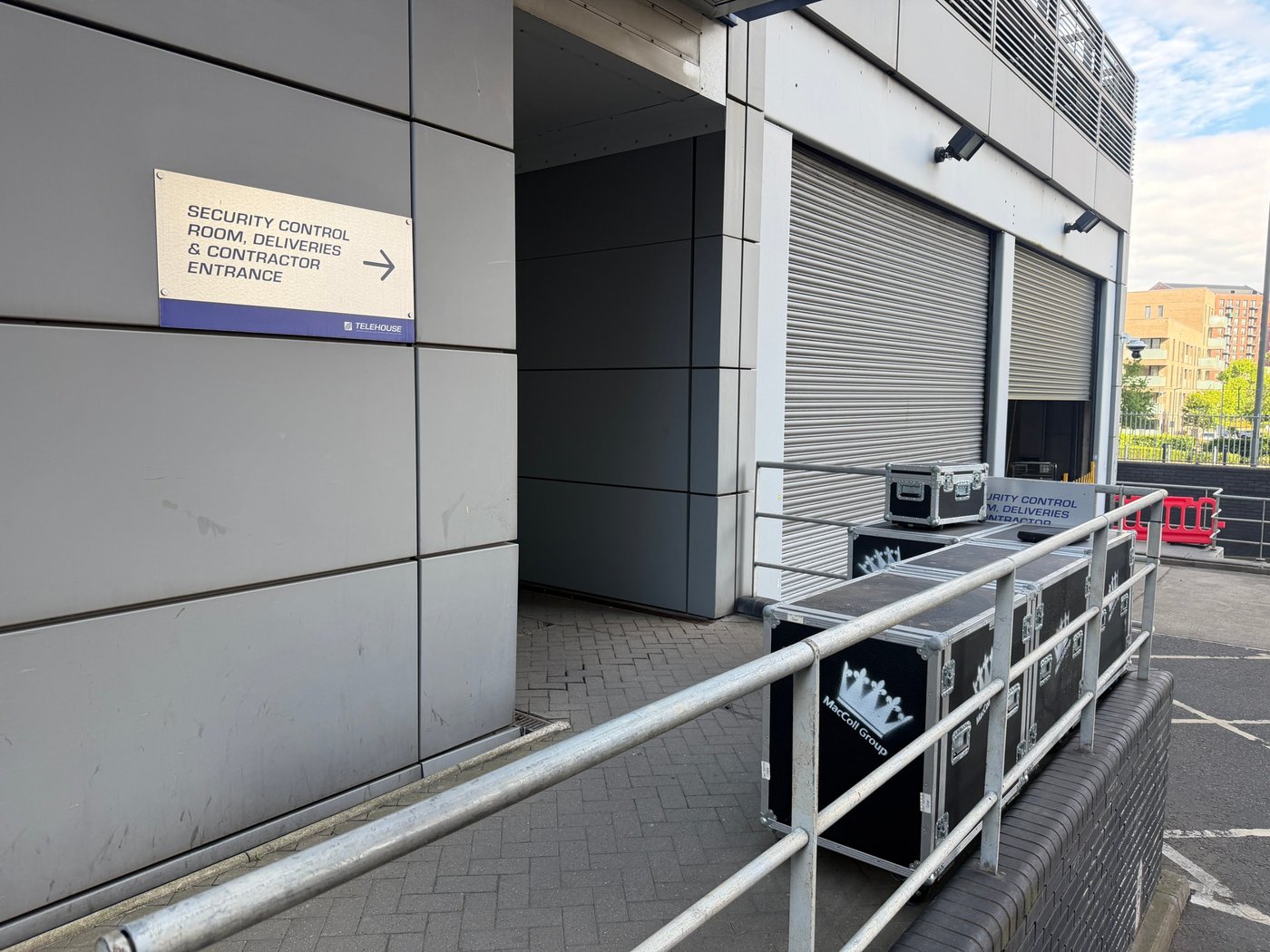
The servers travelled in our own rack-format flight cases, loaded through the Telehouse North delivery entrance. Each server stays on rails, the right way up, for the whole journey.

DataMove flight cases at the Telehouse North delivery entrance
Flight cases staged at the Telehouse North delivery entrance

Into IP House

At IP House the servers were re-racked in the new pod, recabled and handed back to the client’s team.

Flight case and storage servers in a pod at IP House
Re-racking in the new pod at IP House

Short moves still need full planning

A move between two Docklands buildings is a short drive, but the risks are the same as on a cross-country job: kit coming loose in transit, cabling going back wrong, and loading slots at both sites. Labelling, flight cases and booked slots at each end are what keep downtime short.


The same client brought us back in October to consolidate their Frankfurt racks from three floors into one.

Planning a London data centre move?

Read about our London data centre relocation and data centre migration services, or get in touch to plan your move.
Secure Server Relocation: Harrogate to Vantage Newport in Two Vehicles

harrogate-move-flight-case

Secure Server Relocation: Harrogate to Vantage Newport in Two Vehicles

This year we carried out a secure server relocation for a client moving two racks from Harrogate to Vantage Data Centers in Newport, South Wales. Their security requirements shaped every part of the plan.

Sealed and serialised

Every flight case was closed with a digitally marked tamper seal. Each seal carries its own serial number, so a broken or swapped seal shows up straight away.

Network equipment in a rack in Harrogate before the move
Network equipment before decommissioning in Harrogate

Servers in a rack ready for removal
Servers ready for removal

HPE servers in a rack
Servers in the rack

Engineer loading servers into a DataMove flight case
Loading servers into a flight case

Two vehicles, two routes

The load was split between two of our vehicles. One ran south on the M1, the other on the M6, so no single vehicle ever carried the full estate.
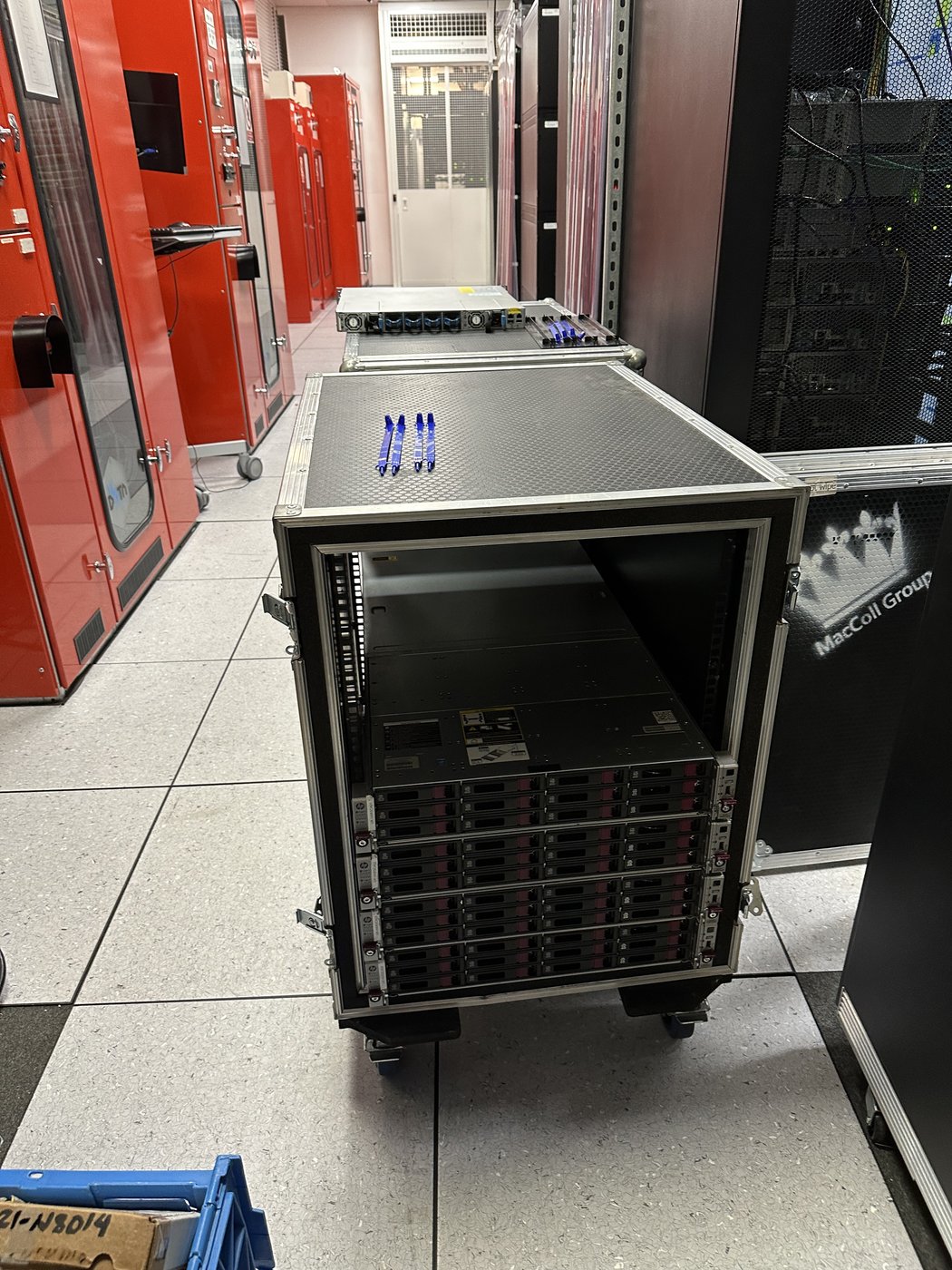
Rack part-emptied during the uplift in Harrogate
Rack part-emptied during the uplift

Flight case loaded with servers for a secure server relocation
Flight case loaded and ready to seal

Arrival at Newport

At Vantage both loads were unloaded, the seals checked, and the equipment racked into its new position.
Planning a secure server relocation?

Read about our rack relocation and data centre migration services, or get in touch.

GPU Server Relocation: Two Racks to Docklands, a Third Sold in a Week

gpu-move-flight-cases

GPU Server Relocation: Two Racks to Docklands, a Third Sold in a Week

Earlier this year a client running GPU servers in central London asked us for a GPU server relocation: two racks to a new site in Docklands. A third rack was being wound down after swings in the crypto market, and the client wanted it turned into cash rather than left idle.

GPU server relocation: moving the two live racks

The GPU servers were powered down, taken out of the racks and packed into our flight cases, then moved across London to the new site. There they were re-racked and the network switches configured before handover.

Rack of GPU servers before the move
GPU servers in place before the move

Rack part-emptied during a GPU server relocation
Racks part-emptied during the uplift

DataMove flight cases ready for loading
Flight cases ready for loading

Engineer configuring network switches at the new site
Configuring the network switches at the new site

Selling the third rack

We went to our own list of established buyers rather than a general reseller. A long-standing buyer made a strong cash offer, and the sale was done within the week.

GPU servers from the third rack ahead of sale
Servers from the third rack ahead of sale

One supplier for both jobs

Using one team for the relocation and the resale meant one plan and one chain of custody, with no gap between hardware leaving service and money coming back to the client.

Moving or retiring GPU servers?

Read about our rack relocation and asset audit and valuation services, or get in touch.

Comms room after clearance

Comms Room Clearance in Poplar: From Audit to an Empty Room

Racks in a comms room before clearance

Comms Room Clearance in Poplar: From Audit to an Empty Room

In August we cleared the comms room at a residential developer’s site in Poplar, east London. The job had two parts: an audit of the three racks in the room, then a comms room clearance that moved everything into secure storage in Bow and left the room empty.

Audit first

We audited the room on 10 August, recording the make, model, serial number and rack position of every item, and what was connected to what.


The client’s equipment list had more on it than the room did. Some kit had been moved elsewhere over the years and never taken off the list. Finding that on audit day, rather than on clearance day, meant the clearance was planned against what was actually there.

Comms room clearance day

The clearance ran on 13 August. Everything was de-racked, packed into rack-format flight cases and carried out by hand on a hot August day, then loaded by tail-lift and driven to a self-storage facility in Bow.


Custody stayed with us from the comms room until the storage facility signed for the delivery.

Flight case on a tail-lift during a comms room clearance in Poplar
Loading by tail-lift in Poplar

Handing the room back

With the equipment gone, the room was ready to hand back.

Comms room after the comms room clearance
The comms room after the clearance

Clearing a comms room or server room?

Read why an asset audit never matches the room, see our decommissioning service, or get in touch to plan your clearance.

MacBook Disposal on the Isle of Man: 800 Laptops Erased and Resold

laptop-disposal-lorry

MacBook Disposal on the Isle of Man: 800 Laptops Erased and Resold

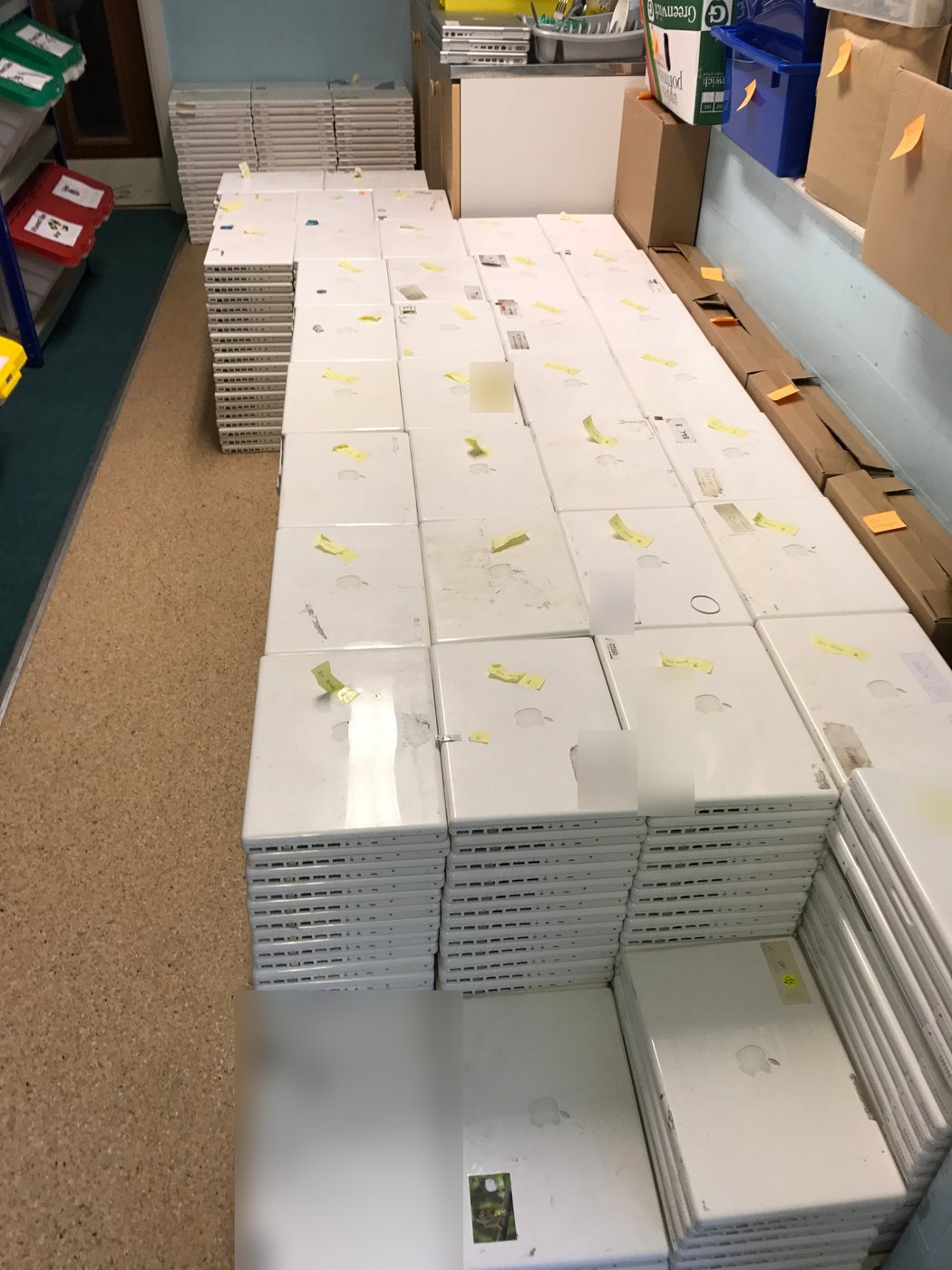
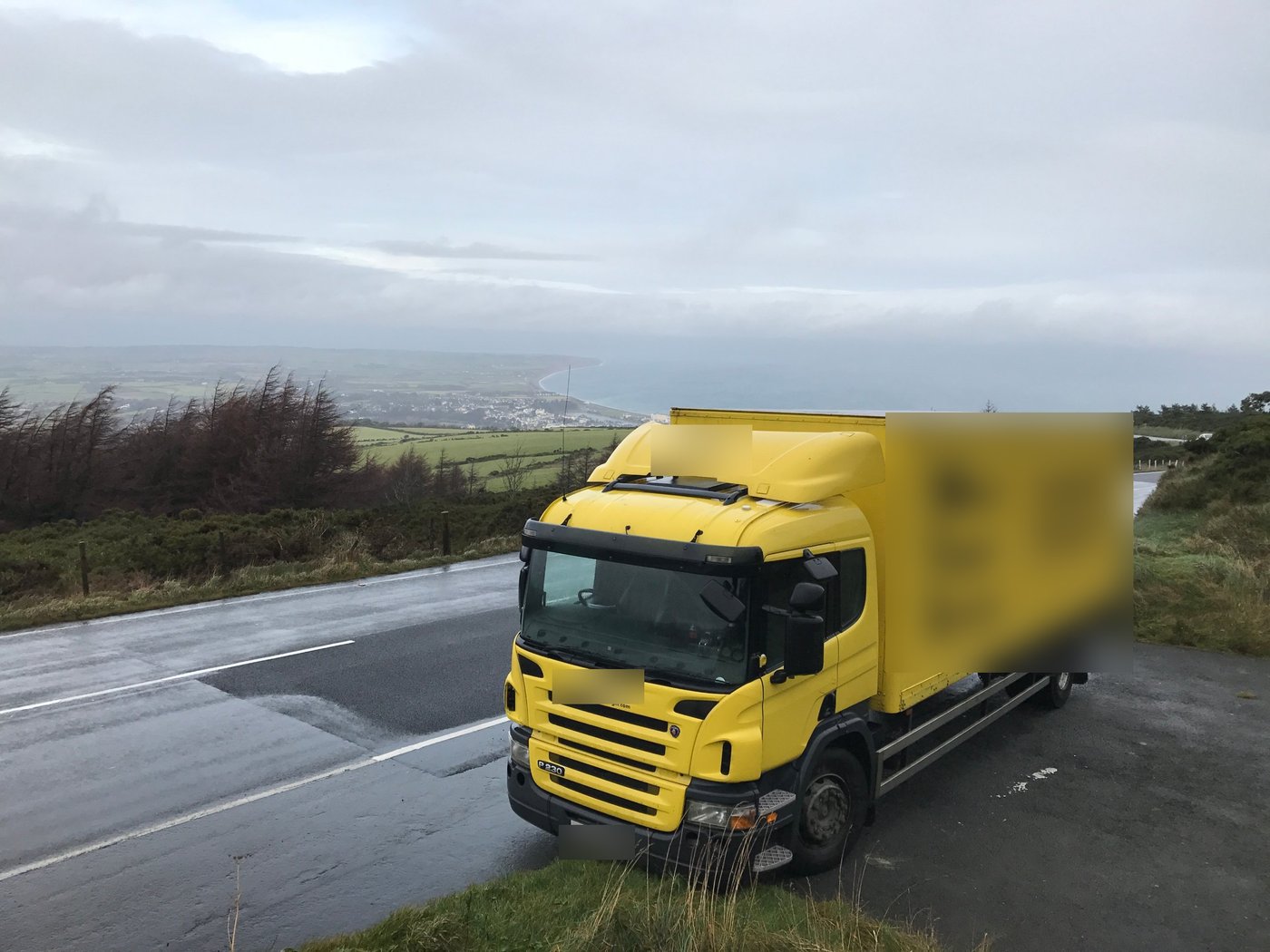
A public-sector client on the Isle of Man needed to retire 800 MacBooks. We handled the whole MacBook disposal: collection on the island, data erasure back at base, and resale through our partners, with the revenue shared back to the client.

Collection on the island

We leased a lorry for the job and took it over to the Isle of Man, where the MacBooks were loaded on site.

Stacks of MacBooks ready for collection on the Isle of Man
Part of the 800 MacBooks ready for collection

Lorry on the Isle of Man for a MacBook disposal job
The lorry on the island before loading

Erasure, not shredding

Every MacBook was erased back at base. With the data dealt with by erasure, none of the machines needed shredding, and each one stayed a working, resaleable device.

Revenue back to the client

The erased MacBooks were sold through our resale partners and the proceeds shared with the client. Hardware that would otherwise have been a disposal cost became income.

Working in the Crown Dependencies

Island jobs add ferry bookings and tighter planning, but the work is the same as a mainland collection: count, collect, erase, resell and report.

Planning a MacBook disposal?

Read about our data erasure and disposal and asset audit and valuation services, or get in touch.

High Density Storage Array Being Moved

Moving a High-Density Storage Array Without Losing Drive Order

Enterprise Hard Drives Individually Bagged and Labelled

Moving a Storage Array: Why Every Drive Goes Back in the Same Bay

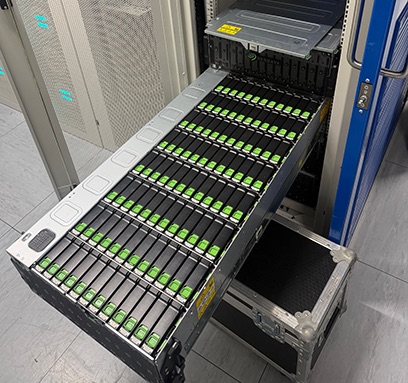
This autumn we moved eight Seagate Exos CORVAULT 4U106 storage chassis, holding 848 drives between them, from Telehouse North in London to a post-production facility in Burbank, California. Each drive was removed, bagged and labelled against its chassis and bay, packed 20 to a carton, and refitted to the same slot on arrival, ten floors up in Burbank. This is how that works, and why it matters.


Moving a storage array is not like moving a server. Most servers can travel with their drives in place. High-density storage cannot.


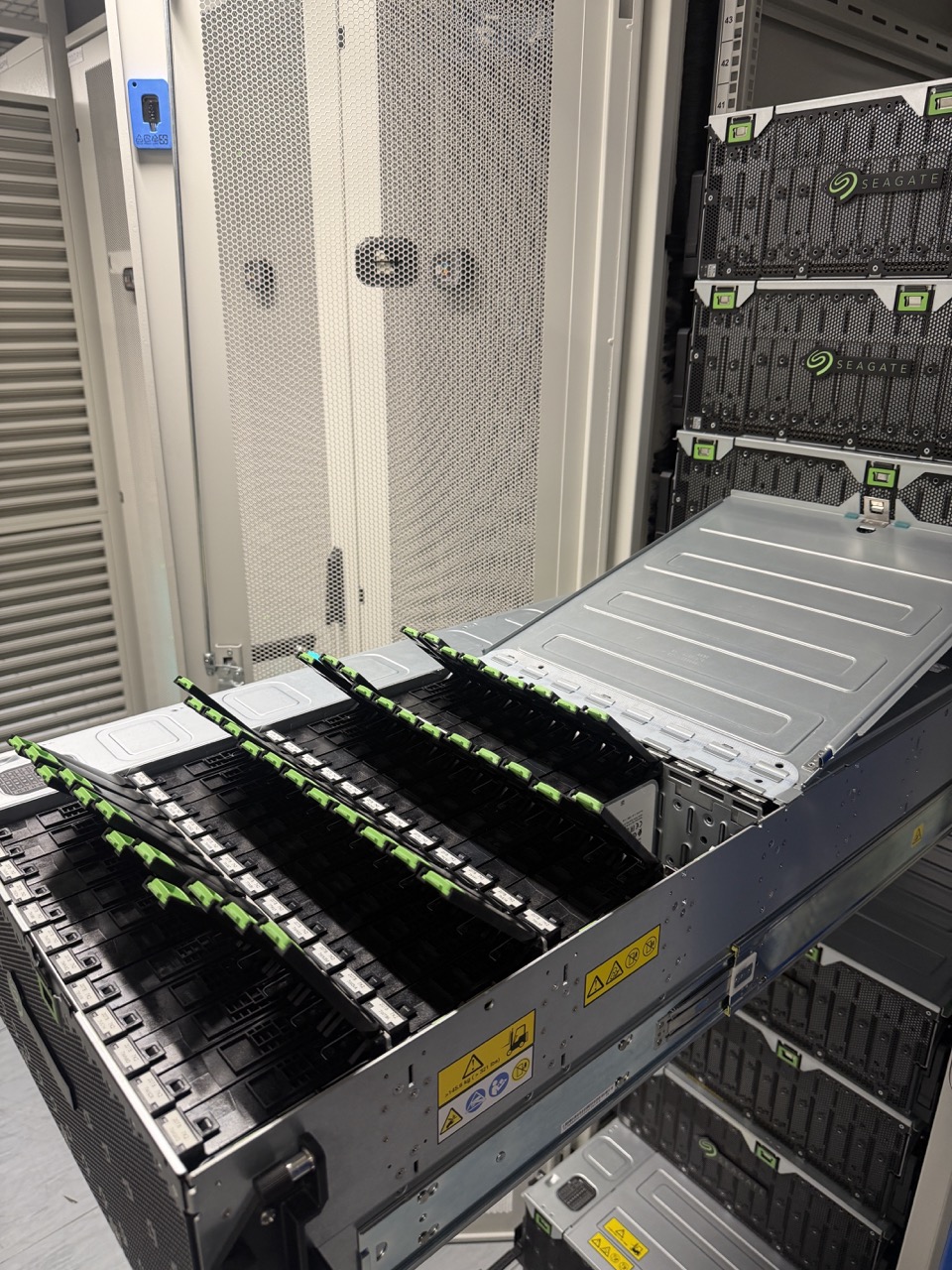
A modern 4U storage chassis can hold over a hundred hard drives. Fully populated, a single chassis weighs around 100 kg, against roughly 43 kg empty. The drives are loaded from the top rather than hot-swapped from the front, and the chassis is not built to carry their weight on the road or in the hold of an aircraft. So before anything moves, every drive has to come out.


That is where most of the risk sits. Not in the lifting, but in what happens when the drives go back in.


Hard Drives Being Removed from Large Array

Why drive position matters

Arrays like these do not treat drives as interchangeable. Data is spread across them using erasure coding, and the controller expects each drive in a known position. Put the right drives back in the wrong bays and, at best, the array spends days rebuilding. At worst, you are restoring petabytes from backup.


So the job when moving a storage array is not simply to remove the drives. It is to remove them in a way that guarantees each one goes back exactly where it came from.


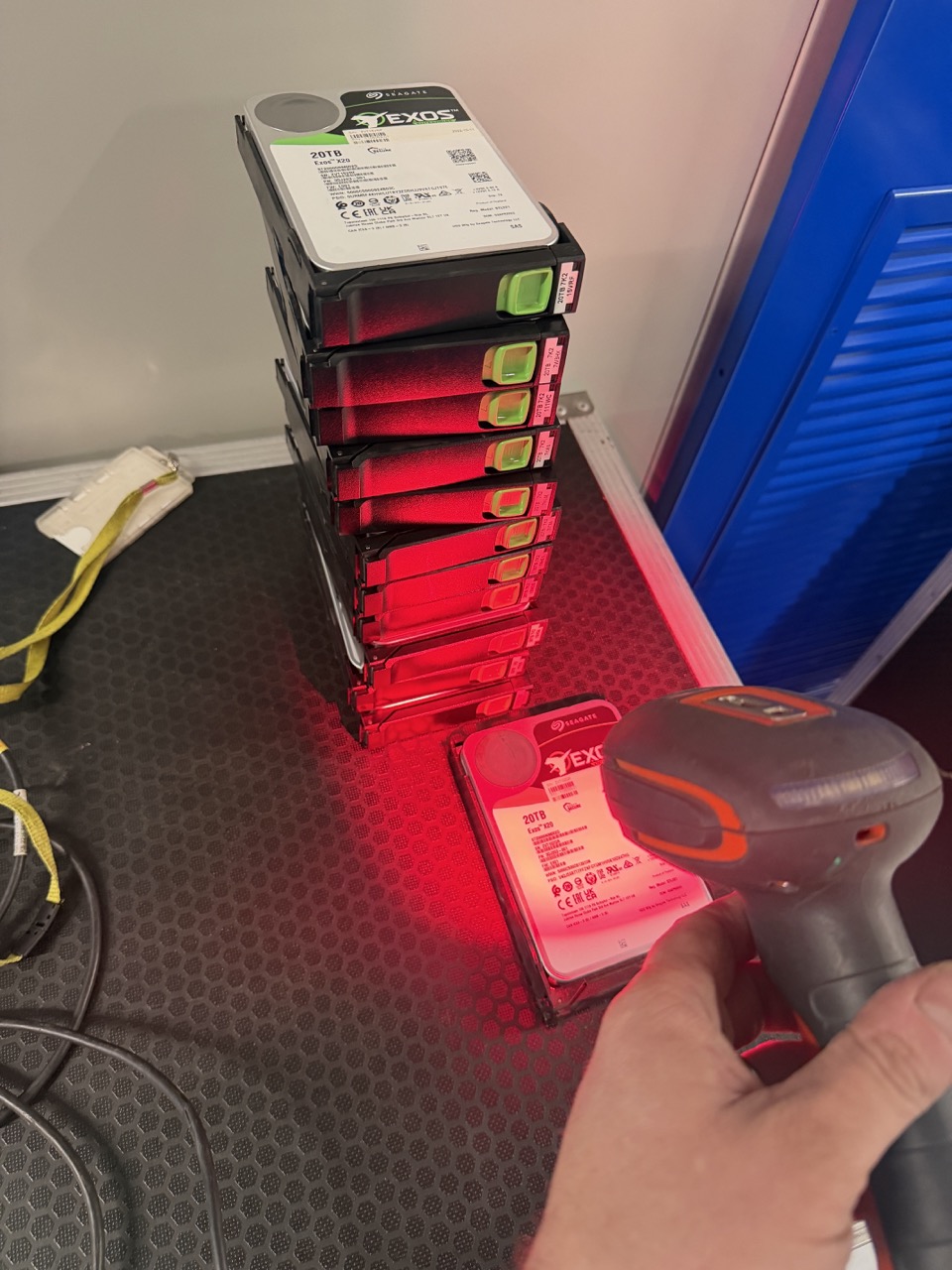
scanning drive serials for audit, and individual labelling for position tracking
Scanning drive serials for audit and tracking on our in house CRM system, and individual labelling for position tracking.

How we approach moving a storage array

Every drive is scanned by serial number as it comes out of the chassis and recorded against two things: the chassis it came from and the bay it sat in.


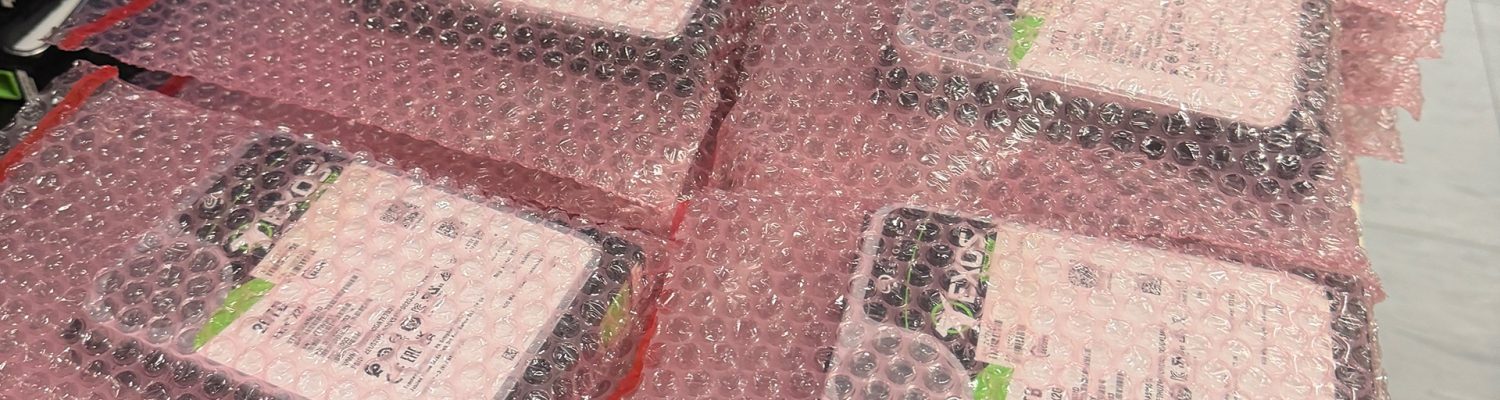
Each drive is then individually anti-static bagged and labelled with that chassis and bay position. The record and the label say the same thing, so the drive can be placed correctly whether you are reading the paperwork or the bag.


The drives are boxed in purpose-made hard drive cartons and travel on the same pallet as their own chassis. Nothing is consolidated across chassis. If a pallet is delayed, the drives for that chassis are delayed with it, rather than arriving separately and waiting to be matched up.


At the destination, the record works in reverse: chassis by chassis, bay by bay, against the serial numbers captured at origin.


Bare chassis ready for removal and packing

Packing for the journey

Empty chassis are packed in anti-static protective material, two to a pallet, with their drive cartons secured alongside. Pallets are built to standard airliner belly-hold dimensions, with no oversize freight and no untreated timber, so there is no reason for the airline or customs to hold them.

What the client is left with

The drive record does not stop being useful once the array is back up. It is a complete inventory of every drive by serial number, chassis and bay, captured on the day the equipment left. That gives the client an audit trail for insurance, a reference if a drive fails in the weeks after the move, and a baseline for the next time the platform is expanded or retired.

The useful question

If you are moving a storage array, ask whoever is moving it how they will make sure every drive goes back in the bay it came out of. If the answer is “carefully”, keep asking.