Author: Alex MacColl
Project Manager - EMEA - DataMove



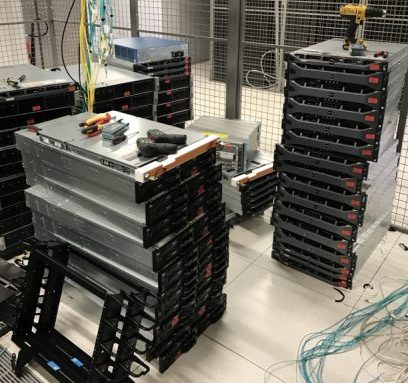
Data Centre Decommissioning: The Other Half of the AI Build-Out
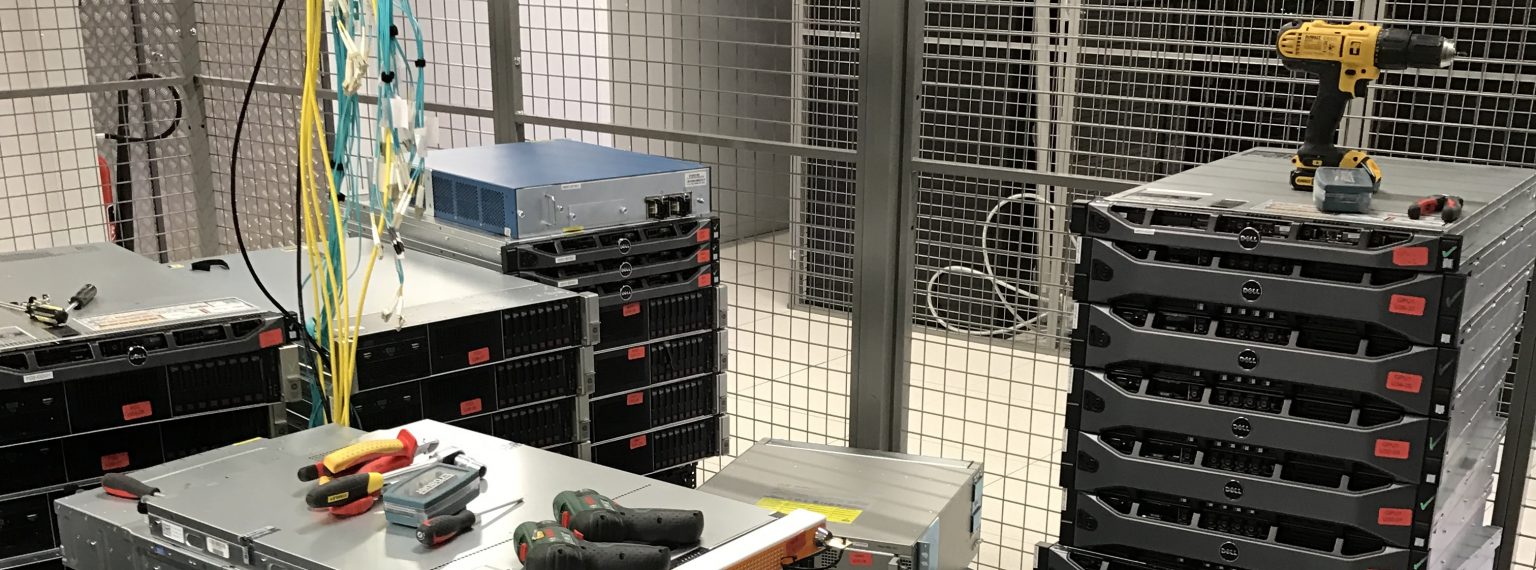
Everyone is watching what’s going up in the AI build-out. Almost nobody is talking about what’s coming out.
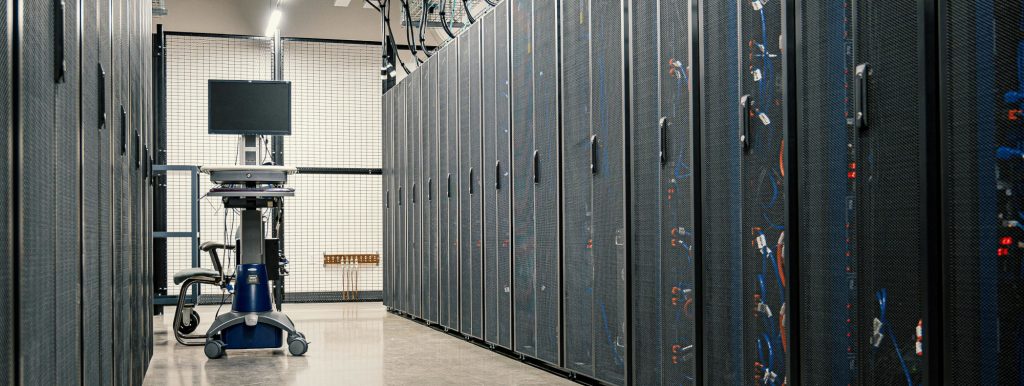
The construction story is well covered — gigawatts, land, grid connections, cooling, the race for capacity. Underneath it, something quieter is happening. As workloads shift into hyperscale AI facilities, a lot of traditional enterprise data centres are being consolidated, moved, or switched off entirely. And the kit inside them — servers, storage, network gear, racks by the thousand — has to go somewhere. Data Centre Decommissioning has quietly become one of the biggest operational problems in the industry and almost nobody is planning for it.
It gets wiped and redeployed. Refurbished and resold. Or scrapped.
So the construction boom everyone is writing about is quietly driving a decommissioning boom alongside it. And unlike the build-out, nobody issues a press release when a floor gets cleared.
The arithmetic of data centre decommissioning has changed
For most of the last decade, decommissioning was simple economics. Hardware got cheaper and faster every cycle. A three-year-old server was worth less than the labour required to work out what was still good in it. So end-of-life meant clear the floor, destroy the data, move on. Disposal was a cost line, and the goal was to make it small.
That assumption is now under pressure from an unexpected direction: memory.
The AI industry has poured extraordinary investment into overcoming infrastructure bottlenecks — GPUs, data centres, power, networking. Memory manufacturers have invested aggressively too. And yet memory keeps re-emerging as a constraint, with executives and analysts expecting demand to outstrip supply for years.
When memory is constrained, the arithmetic on what comes OUT of a site changes long before anything changes about what goes in.
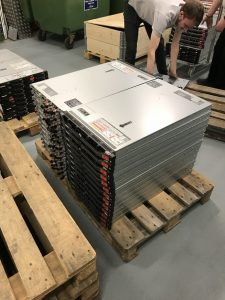
A three-year-old server that would have been scrapped becomes worth harvesting. DIMMs that had no meaningful secondary market get one. The end-of-life decision stops being “recycle or dispose” and becomes “what can we actually recover here?”
We’re seeing it in the most direct way possible: we now get unsolicited approaches from brokers wanting to buy decommissioned GPU servers. That is not a forecast. That’s the phone ringing.
Disposal is a cost. Recovery is an operation.
This is the gap, and it’s a wide one.
Most enterprises still treat decommissioning as a disposal problem, and they’ve built their process around that assumption. Kit goes out of the door on a schedule. The emphasis is on clearing the floor by a date and destroying the data on the way. Nobody is asking what’s worth pulling, because for ten years the honest answer was “not much.”
Asset recovery is a different operation entirely. It needs someone who knows what’s in the rack before it comes out, not after. It needs functionality testing, documented. It needs a route to market. It needs different paperwork. And it needs to happen at the same time as the decommission, not as an afterthought — because once kit is on a pallet in a yard, unlabelled and unrecorded, its recoverable value has already dropped.
The organisations that make that switch will find their decommissioning projects paying for themselves. The ones that don’t will keep scrapping things they’ll want back.
The bit that’s data-bearing
There’s a security dimension that tends to get lost behind the water-and-power headlines.
A lot of the kit leaving these sites holds data. Drives leaving a decommissioned facility are a breach risk unless they’re certifiably wiped or destroyed — and “certifiably” is where this usually falls apart.
Certified by whose standard? The reference points are NIST 800-88 and, increasingly, IEEE 2883-2022. Within those, the distinction most people miss is between Clear and Purge. Clear is a logical overwrite. Purge is what’s needed for anything that held regulated data. They are not interchangeable, and a supplier who uses the words loosely is telling you something.
Then there’s the paperwork. A certificate of destruction has to name the method, the operator and the drive serial. “We wiped it” is not a certificate. If you can’t produce evidence per drive two years later when a regulator or an acquirer asks, you don’t have a defence — you have a hope.
This matters more, not less, as recovery economics improve. The more valuable a drive is, the more likely it is to be sold on rather than shredded — and a resold drive that wasn’t properly sanitised is a breach with a paper trail leading back to you.
The classification trap: used equipment or waste?
The other thing that catches people is a distinction that sounds like pedantry right up until it isn’t.
Your functional servers aren’t waste. Unless you can’t prove it — and then they are.
The distinction is UEEE (used electrical and electronic equipment) versus WEEE (waste). Functional equipment being relocated for reuse falls outside the EU Waste Shipment Regulation — now Regulation (EU) 2024/1157, which came into force on 21 May 2026 and replaced the long-standing 2006 regime — but only if the conditions are met: functionality tested and documented before it moves, moving under a business-to-business contract to somewhere it will actually be used, with the documentation travelling with the load, not emailed afterwards or filed at origin.
The new rules matter here. One of the regulation’s stated aims is to stop waste being passed off as used goods, and shipments are now processed digitally through a new system rather than on paper. In practice the bar for proving your kit is equipment and not waste is higher than it was — which makes the evidence you carry more important, not less.
Miss any of those and the classification flips. It doesn’t matter that the servers boot fine. If you can’t evidence it at the border, the presumption isn’t in your favour, and a routine consolidation becomes an illegal waste shipment.
Where this bites hardest is exactly where the decommissioning boom is happening: consolidation projects. Someone decides to move a few hundred servers from one site to another, treats it as a logistics exercise, and nobody asks the classification question until the load is stopped.
Who feels it first
If hardware stays constrained, the organisations that feel it first probably aren’t the hyperscalers. They’re hedged, they buy forward, and they have the relationships to secure supply.
It’s the mid-market. The organisations that disposed of perfectly serviceable hardware last year, on the reasonable assumption that they could always buy more, and now find that replacing it costs more and takes longer than it used to.
That’s an unglamorous consequence of a very glamorous story, and it’s the one that will show up on someone’s budget.
What this means for infrastructure leaders
The practical implication is that decommissioning is no longer the end of a project. It is a project.
It needs planning at the same time as the migration, not bolted on at the end. It needs someone who knows what’s in the rack, what it’s worth, what has to be destroyed and what can be recovered — and who can evidence all of it afterwards. Those aren’t separable disciplines any more than they are on the way in.
And the questions worth asking are the uncomfortable ones. What’s actually in that room? Which of it is data-bearing? Who signs the certificate, and what does it say? If we’re moving it rather than scrapping it, can we prove it’s equipment and not waste?
The organisations that handle this well are the ones asking those questions before the decommission is scheduled. The ones that don’t tend to discover the answers under time pressure, with a floor to clear by Friday.
How DataMove can help
The AI story isn’t just about what gets built. It’s about what happens to everything it replaces — and that second half is a large part of what we do.
We handle data centre migration and relocation in over 58 countries, alongside asset audit and valuation, data erasure and disposal and onsite erasure and shredding including the cross-border documentation that decides whether your kit travels as equipment or as waste.
If you’d like the detail on what certified erasure actually involves, we’ve written about that here. If you’re planning a consolidation or exit, our migration strategy and site assessment service exists for exactly this — a senior engineer walks your floor and hands you a costed plan you own.
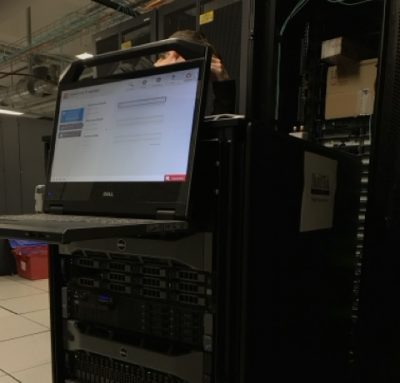
What Data Erasure Actually Involves (and Why It Matters)
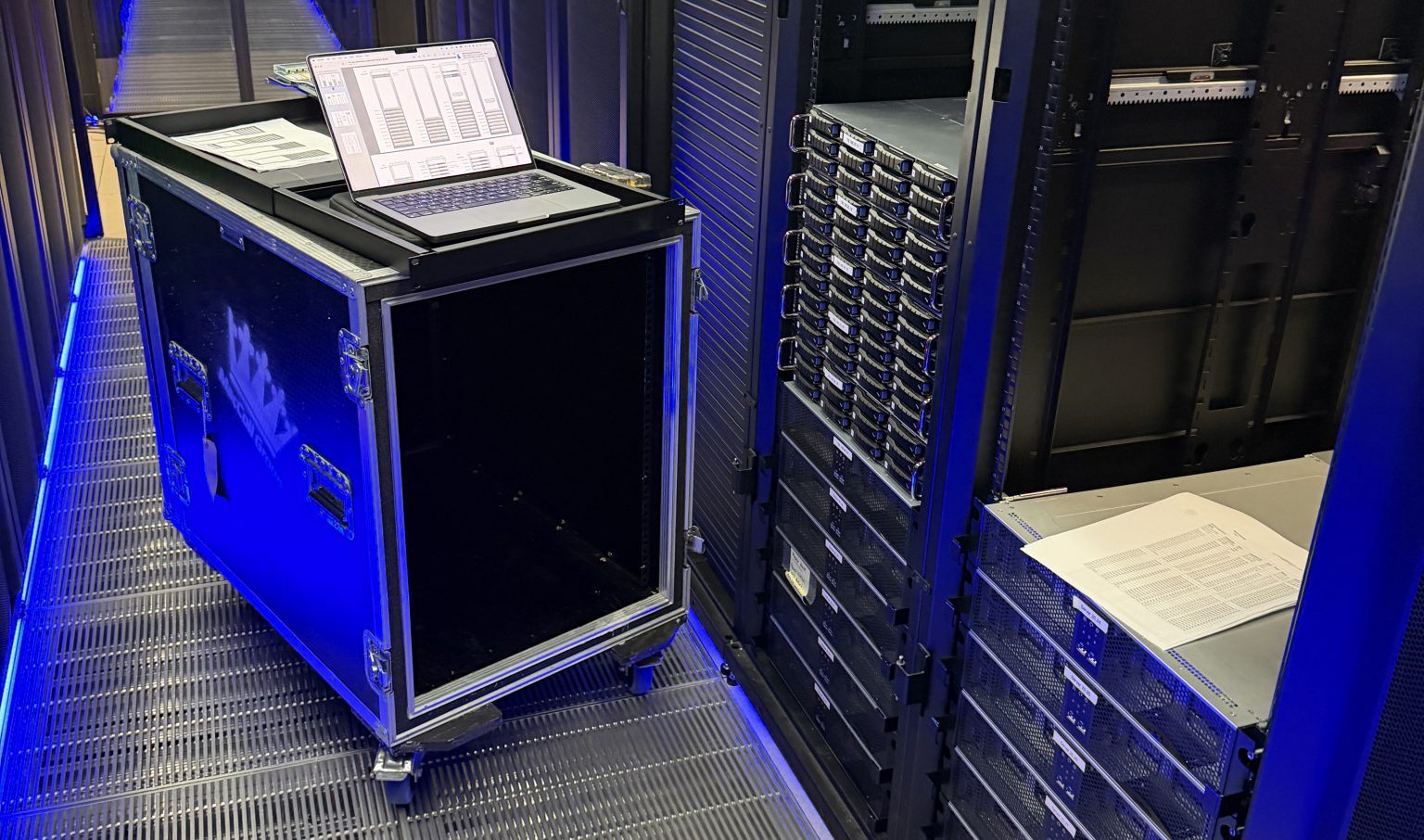
When organisations refresh, relocate or decommission data centre infrastructure, attention naturally focuses on the new kit and the migration itself. What gets less attention — until it becomes a problem — is what happens to the data on the equipment being retired. Done properly, data erasure is a controlled, certified, auditable process. Done badly, or skipped, it’s one of the most serious compliance and security risks an organisation can carry.
This is a practical guide to what data erasure actually involves, why it matters, and what to look for when it forms part of a relocation, refresh or decommissioning project.
Why Data Erasure Matters
Every piece of storage hardware leaving your control — drives, servers, storage arrays, even networking equipment with configuration data — is a potential data breach if the data isn’t properly removed. Deleting files or reformatting a drive doesn’t erase the underlying data; it simply removes the pointers to it, leaving the data recoverable with freely available tools.
For regulated sectors — financial services, healthcare, legal, government — the consequences of getting this wrong are severe: regulatory penalties under GDPR and sector-specific rules, reputational damage, and the direct risk of sensitive data falling into the wrong hands. The obligation doesn’t end when the hardware leaves the building. It ends when the data is provably gone.
The Difference Between Deletion, Erasure and Destruction
These terms are often used interchangeably, but they mean very different things:
- Deletion — removing the file pointers. The data remains on the disk and is easily recoverable. This is not a secure method.
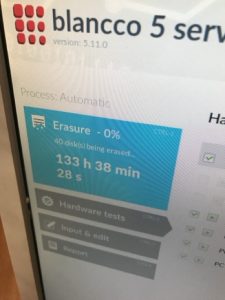
- Data erasure (or wiping) — overwriting the entire storage medium with patterns of data, to recognised standards, so the original data cannot be recovered. The hardware remains intact and reusable.
- Physical destruction — shredding, degaussing or otherwise physically destroying the storage medium so it can never be used again. Appropriate when hardware is end-of-life or when policy requires it.
The right choice depends on the hardware’s onward journey. Kit being redeployed or resold should be securely erased to preserve its value. Kit that’s genuinely end-of-life, or that held the most sensitive data, may warrant physical destruction.
Recognised Standards
Proper data erasure is carried out to recognised standards rather than ad hoc. These define how many overwrite passes are required and how the result is verified. Certified erasure software produces a tamper-evident record for each device processed, which forms the basis of your audit trail.
The certificate is the point. Anyone can run a wiping tool. What demonstrates compliance is a documented, verifiable record showing exactly which device, identified by serial number, was erased, to what standard, when, and by whom.
Onsite vs Offsite Erasure
One of the most important decisions is where the erasure happens.
Onsite erasure means the data is destroyed before the hardware leaves your premises. For regulated data, this is often non-negotiable — the data never travels, never leaves your chain of custody intact, and there’s no window during transport where it could be lost or intercepted. For financial services and similar sectors, onsite erasure (or onsite physical destruction) is frequently the only acceptable approach.
Offsite erasure means the hardware is transported to a secure facility for processing. This can be appropriate for less sensitive data or larger volumes, but it introduces a transport phase that must itself be secured and documented, and it requires complete trust in the chain of custody.
The right answer depends on your data classification, your regulatory obligations and your risk appetite. For the most sensitive data, the principle is simple: the data shouldn’t leave the building until it’s already gone.
Data Erasure as Part of a Relocation
Data erasure frequently arises as part of a wider data centre relocation or refresh. When infrastructure moves to a new facility or jurisdiction, the old hardware often stays behind — and it still holds data. The erasure plan needs to be part of the project from the start, not an afterthought once the new kit is live.
This is particularly relevant for cross-border moves and consolidations, where equipment is being retired in one location while operations move to another. We routinely build certified erasure or destruction into relocation projects, so the retirement of old infrastructure is handled to the same standard as the migration of the new.
The Environmental Angle
There’s a sustainability dimension too. Securely erasing hardware rather than destroying it means it can be redeployed or resold for second-life use — retaining its value and avoiding the considerable embodied carbon and resources that went into manufacturing it. A single server can represent over 1.5 tonnes of CO2 in embodied carbon before it’s ever switched on. Where data classification allows erasure over destruction, it’s both the more economical and the more environmentally responsible choice.
What to Look For
If data erasure forms part of a project, the essentials to insist on are:
- Erasure to a recognised standard, not ad hoc wiping
- A certificate of erasure or destruction for every device, identified by serial number
- The option of onsite processing for sensitive data
- Full chain-of-custody documentation throughout
- Secure handling of any hardware being transported for offsite processing or disposal
- Environmentally responsible disposal or recycling of genuinely end-of-life equipment
How DataMove Can Help
We provide data erasure and disposal services, including onsite erasure and shredding, as standalone projects or as part of a wider relocation or decommissioning. Every device is processed to recognised standards, certified, and fully documented — so you have provable evidence that your data obligations have been met.
Bespoke Data Engineering Case Study | Custom Data Solutions | DataMove

When a publicly listed data company needed a partner to deliver large format, heavily encrypted data sets on physical spinning disk media, they turned to DataMove.
What began sounding like a typical “logistics” requirement quickly transpired into a full digital engineering project. This, for us, is the true definition of a “white glove service”.
The Challenge at Hand
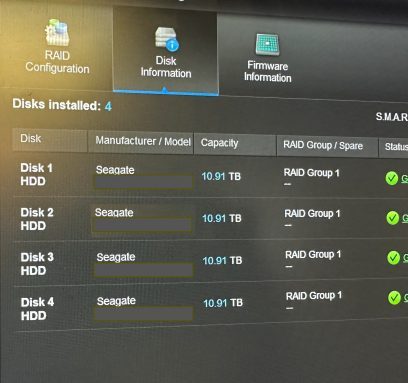
Each project delivery so far has involved between 15TB and 50TB (terabytes!) of data, generally composed of tens of millions of heavily encrypted proprietary files. This data is housed securely in the cloud and needs a careful drawdown process, writing to physical hardware (spinning disks) and then finally delivered in person to the customer.
There were several technical constraints to overcome and find a working solution to finesse:
- Rate limits on downloads from the cloud meant that traditional (naïve) transfer methods would take weeks, maybe even months — not the days that we needed to target.
- Write thresholds on the destination drive hardware created bottlenecks.
- The client specified a particular hardware configuration — an external device running RAID across legacy enterprise-grade spinning disks — chosen for reliability and security over raw speed.
- Delivery deadlines were commercial — this was an ongoing project which needed a reliable delivery mechanism.
Our Approach
Our in-house engineers designed a bespoke solution to tackle the rate limit and throughput bottlenecks.
We developed custom Python scripts — one of which uses a partial segmentation method — to parallelise downloads in a way that both maximises sustained throughput to the spinning disks whilst respecting the source rate limits which would always be apparent in any case. This approach effectively bypasses both choke points.
We already run triple dedicated gigabit fibre pipes on lease from Openreach. This gives us essentially unlimited network capacity (with disk rates in mind) to ingest this data at scale.
The hardware build follows the client’s spec — RAID across enterprise spinning disks, specifically configured for the reliability profile the customer required. The finished projects are delivered by DataMove staff to the customer in person.
Why Does Any of This Matter?
It would be easy to look at this as a layman and see it as a “simple data backup”. It isn’t. This is a bespoke engineering solution with a multi-faceted custom codebase developed just for this one client and their specific data drawdown requirement. No two projects at this kind of scale could ever be the same.
The difference between taking these steps or not would ultimately be failure and an inability to deliver.
This is what “white glove service” means to us — hearing of a problem, figuring out a solution, and then actioning a deliverable time and time again.
“When we urgently needed large quantities of data transferred in ways we’d never done before, we turned to DataMove. They were able to provide a capability that was previously not possible, delivered in an extremely collaborative and timely manner.”
— Customer
The Ongoing Relationship
We have delivered multiple projects for this customer to date and the relationship continues. Every project we carry out benefits from our custom scripts and our infrastructure which is already in place.
We are continually improving this setup, which means subsequent projects run faster, with guaranteed reliability and — ultimately — predictability for the client.
Services Used
- Specialist White Glove Services
- Custom Data Engineering and Python Development
- Dedicated Network Infrastructure (Triple Dedicated Openreach Gigabit Pipes)
- Hardware Build, Configuration and Secure Delivery
Need a Bespoke Solution?
If your project doesn’t fit into a standard service category — if it needs custom development, specialist hardware or a problem-solving approach — we’re happy to talk it through.

Why Location Is the Most Important Decision in AI Infrastructure

Why 2026 is the Year of Cross-Border Data Centre Relocations | DataMove

Simultaneous Server Relocations to Malta and Gibraltar for Major Gambling Operator

The Complete Data Centre Move Checklist for 2026

22-Floor Cisco Network Deployment for International Law Firm

When a major international law firm with over 20 offices worldwide decided to relocate their London headquarters to a brand new skyscraper, they needed a partner who could handle the full deployment of network infrastructure across 22 floors — on time, on spec, and in a building that was still an active construction site.
The Challenge
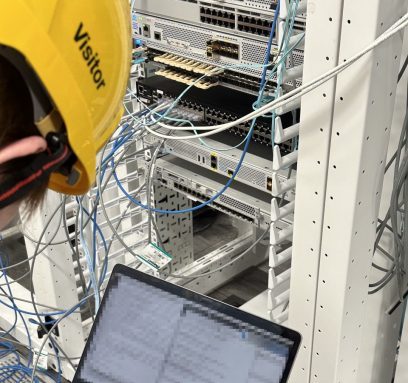
The firm was moving from an existing London high-rise to a newly built skyscraper, occupying the top 22 floors. The project required the deployment of 20 Cisco Catalyst 9400 series Intermediate Distribution Frames (IDFs) — each one needing to be unboxed, physically installed, wired, configured, and loaded with software tailored to the client’s specific requirements.
This was not a simple equipment swap. The Catalyst 9400 series is a high-performance modular switching platform designed for enterprise-grade networks. Each unit required careful handling, precise installation, and detailed configuration work before going live. This is the kind of project that needs a specialist.
To make matters more complex, the building’s original fit-out contractor went into administration in September 2024. This caused significant delays to the overall construction programme and forced the project timeline to be restructured around the new contractor’s schedule.
Our Approach
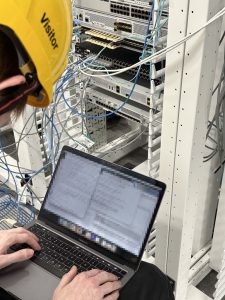
DataMove deployed a team of accredited engineers to work on-site across three stages of deployment over a four-week period. Given that the building was still an active construction site for much of the project, our team needed the correct PPE, site accreditations and materials to operate safely alongside other contractors.
The scope of work included:
-
Unboxing and physical installation of 20 Cisco Catalyst 9400 series IDFs across 22 floors
-
Full structured cabling and wiring to connect each IDF to the building’s network backbone
-
Software deployment, updates and configuration adjusted to the client’s specific network requirements
-
Two additional Ekahau wireless site surveys following client-requested changes to wireless access point placement
-
Multiple reworks to WAP positioning based on evolving client specifications as the floor layouts were finalised
Flexibility was critical throughout. The original contractor’s administration meant the project timeline shifted repeatedly, and the client made several changes to their wireless network design as the building fit-out progressed. Our team adapted to each change without compromising the overall delivery schedule.

The Outcome
Despite the disruption caused by the original contractor going into administration and multiple client-driven design changes, DataMove completed the full deployment on the adjusted schedule. All 20 IDFs were installed, configured and live across 22 floors when the firm moved into their new headquarters.
The project demonstrated DataMove’s ability to operate in challenging environments — working on an active construction site, adapting to shifting timelines, and managing scope changes — while still delivering a fully functional enterprise network infrastructure on time.
Services Used
Need Help With a Similar Project?
Whether you’re fitting out a new building, relocating an office, or deploying network infrastructure across multiple floors or sites, we can help. Our accredited engineers handle everything from planning through to installation, configuration and handover.